April 24: The truth behind the so-called Armenian genocide


.png)
The foundations of what is known as "Armenian Genocide" Day—April 24, 1915—were laid with deliberate falsification from the very beginning.
World War I provided an additional opportunity for Armenians, who betrayed the Ottoman Empire by aligning themselves with the enemy front in pursuit of the dream of a "Greater Armenia." The imperialist powers, seeking to partition and share the Ottoman Empire among themselves, accelerated the process by luring Armenians with promises of establishing an Armenian state. Armenian churches played a particularly active role in this, functioning both as ideological propaganda centers and as arsenals.

Javid Ismayil, PhD in History in an interview with News.Az said in 1915, with the entry of Russian troops into Eastern Anatolia, Armenian armed groups carried out brutal massacres in provinces such as Van, Bitlis, Erzurum, Erzincan, and Kars, among many others—some regions were entirely devastated.
“The Ottoman leadership, which had to fight on both frontlines, initially tried to resolve the threat posed by Armenians with local measures. However, the growing scope of the massacres and the increasing threat forced the Ottoman government to take more serious and decisive steps. On April 24, 1915, the Committee of Union and Progress ordered the suspension of Armenian committees inciting unrest and arming Armenians to destroy Turkish villages. According to some sources, over 800, and according to others, 2,345 leading and active members of these committees were arrested for engaging in anti-state activities.This point must be emphasized: the arrests involved specific individuals accused of crimes against the state. In other words, the date Armenians globally mark as the beginning of the so-called “Armenian genocide”—April 24—is, in fact, the day when leading figures of Armenian committees who committed unimaginable atrocities against civilians and betrayed the state were arrested. Not a single Armenian was killed on that day! Moreover, this date has no direct connection with the relocation—known as the "deportation"—which Armenians later labeled as “genocide.”
On May 27, 1915, the Ottoman government, taking into account the widespread participation of Armenians in uprisings and massacres in Eastern Anatolia, passed the "Relocation Law." After being ratified by the parliament, it came into effect on June 1 when it was published in the official newspaper “Takvim-i Vekayi.” The law emphasized the necessity of relocating villages and towns where espionage and treason against the armed forces had been detected. Notably, it did not mention any specific ethnic group, including Armenians.
Source: Knight Lab
According to Mr Ismayil, despite being passed at the height of the war and during a time of severe hardship for the Ottoman Empire, the government implemented the relocation measures systematically, even though they required significant financial resources:
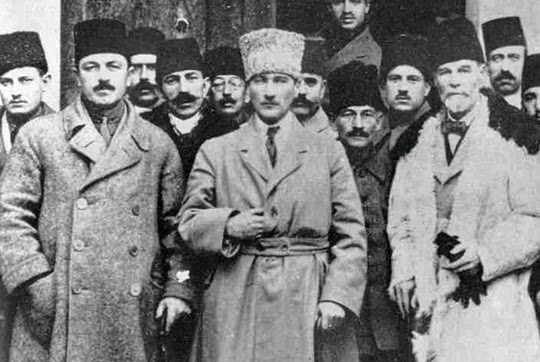
“However, Armenians began to portray this event as “genocide.” While various figures have been claimed, the Armenian lobby has persistently focused on the number 1.5 million as the number of Armenians who allegedly died during the 1915 relocation. Yet, according to 1914 statistics, the total population of the Ottoman Empire was 18,520,016, and the Armenian population was 1,294,851. It is clear that not all Armenians living in the empire were relocated. Armenian historian C. Kirakosyan claimed that two-thirds of the Armenians were subject to relocation. Even if we accept this figure as true, the number of relocated Armenians would still be less than one million. How then could 1.5 million Armenians have been killed? In February 1921, a 25-year-old journalist from the U.S. newspaper “Public Ledger,” Clarence Streit, asked Mustafa Kemal a question regarding the “Armenian genocide.” His response is notable for its clarity and precision: “Beyond the exaggerated claims made by hostile accusers, the issue of the Armenian relocation is as follows: In 1915, as the Russian army launched a major offensive against us, the Dashnak Armenian Committee, in service to the Tsarist regime, incited the Armenian population behind our military lines to rebel. Our wounded convoys were ruthlessly attacked, bridges and roads behind us were destroyed, and Turkish villages were subjected to terror... The world, which remained silent about Britain's actions in peaceful Ireland far from the battlefield, cannot rightfully accuse us for a decision we were forced to take. Contrary to the slanders directed at us, the relocated Armenians are alive, and if the Allied Powers had not forced us back into war, most of them would have returned to their homes.”
Source:Karabakh.Center | Genocide of Azerbaijanis in 1918
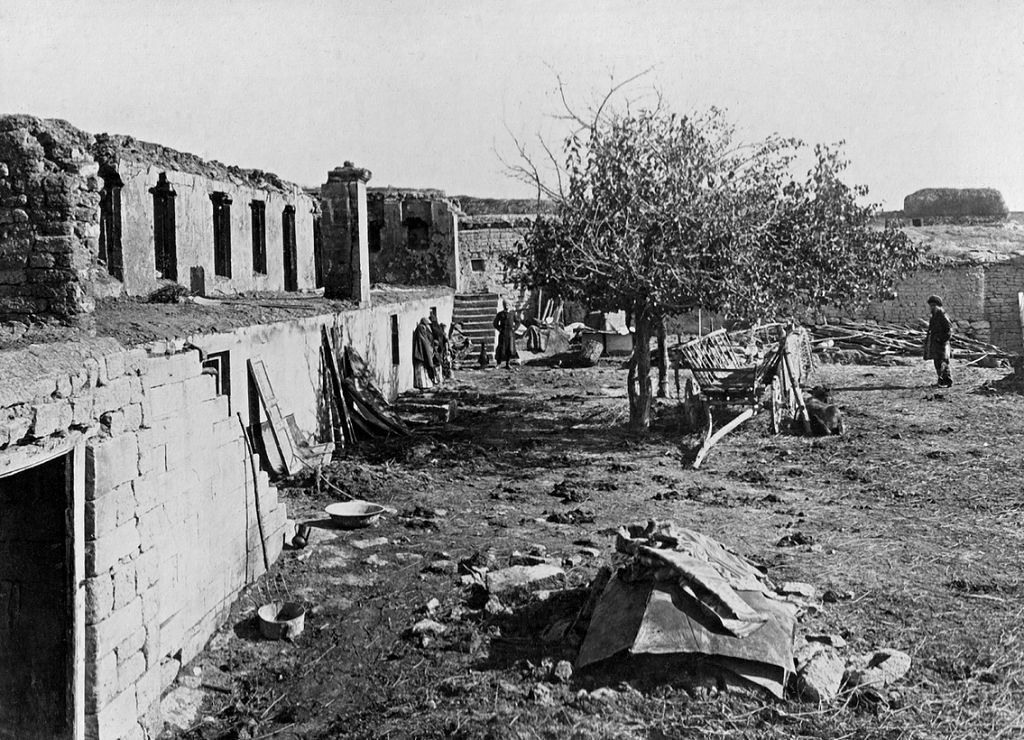
Historical facts show that the real perpetrators of genocide were the Armenians themselves. It is time to boldly state a truth that has long been whispered in political and academic circles: the massacres committed by Armenian bandit groups in March 1918—especially in Baku and across both northern and southern Azerbaijan —were actually acts of revenge for the events of 1915.
Realizing they were no match for a crumbling but still formidable Ottoman Empire, Armenians took their revenge on Azerbaijani Turks. On February 26, 1992, they perpetrated one of the most horrific genocides of the 20th century in the city of Khojaly.
Despite the existence of video footage documenting the Khojaly massacre, the so-called "progressive world" turns a blind eye to it while demanding that Turkey recognize the Armenian “genocide” fabricated on paper and normalize relations with Armenia, which continues to ignore President Erdoğan’s offer to establish a joint historical commission of scholars.


Similar news