Why Poland refuses to punish Zelensky over the UPA scandal


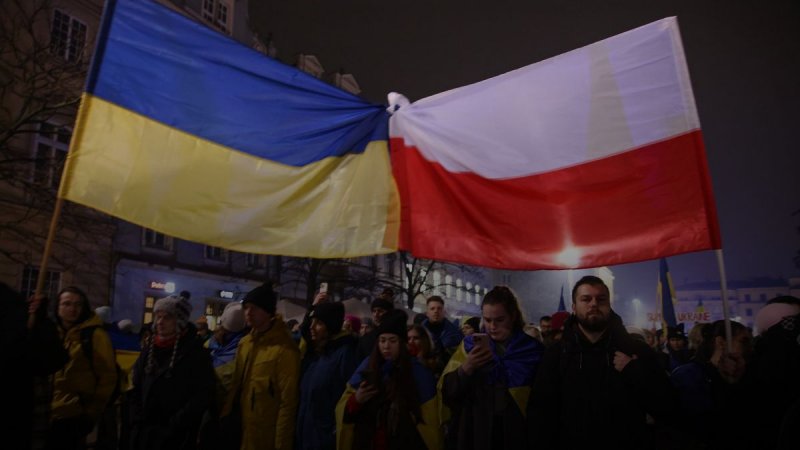
History has once again placed Poland before an uncomfortable choice: to defend its own historical memory or to look away from it for the sake of current political expediency. The controversy surrounding Ukrainian President Volodymyr Zelenskyy and the Order of the White Eagle is not merely another episode in Polish-Ukrainian disputes. It has exposed how painfully Warsaw is trying to balance national dignity, the memory of the victims of the Volhynia massacre, and its determination to maintain support for Kyiv at almost any cost.
On 8 June, the Council of the Order of the White Eagle in Poland considered the possibility of stripping Zelenskyy of the country’s highest state decoration. The reason was the Ukrainian president’s decision to assign the title “Heroes of the UPA” (Ukrainian Insurgent Army) to one of the units of Ukraine’s Special Operations Forces. In Ukraine, this was presented as an attempt to rely on the legacy of anti-Soviet resistance. In Poland, however, it was perceived as a painful insult to the memory of tens of thousands of Poles killed by Ukrainian nationalists during the Second World War.
At first glance, the matter seemed entirely clear. The Order of the White Eagle is not a routine symbol of protocol; it is the highest expression of respect by the Polish state. When a recipient of this award takes a decision that Poland sees as glorifying forces involved in mass killings of Polish civilians, the response should not be vague or diplomatic. It should be principled.
But that did not happen.
The Council considered the issue and submitted its opinion to President Karol Nawrocki. Yet Warsaw did not announce that Zelenskyy would be stripped of the award, nor did it set out any concrete steps. The content of the document sent to the head of state also remains unknown. In effect, the Polish authorities chose to pause — even though the public and political resonance had already become significant. That pause says more than any official statement could.
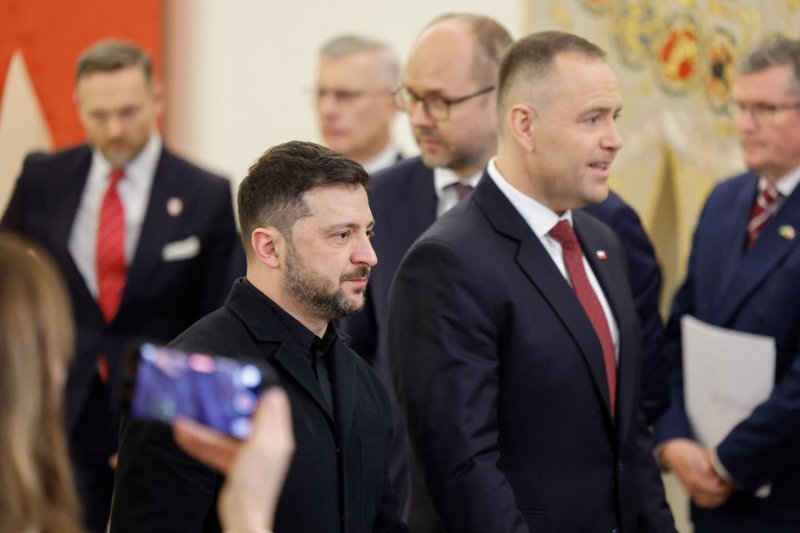
Poland has found itself trapped by its own policy. On the one hand, Warsaw has for years stressed that the Volhynia massacre is an inseparable part of its national memory. Polish politicians have repeatedly demanded that Kyiv acknowledge historical truth, allow exhumations, respect the victims, and stop glorifying figures associated with Ukrainian radical nationalism. On the other hand, since the beginning of the war in Ukraine, Poland has become one of Kyiv’s most important political, military and logistical allies in Europe.
Now these two lines have collided.
The shift in Prime Minister Donald Tusk’s tone was particularly revealing. The Polish prime minister effectively urged restraint and emphasised that support for Ukraine remains the number one task for Poland’s security. In other words, historical memory was once again pushed into the background for the sake of geopolitical necessity.
But this is precisely where the main question arises: if the memory of one’s own victims can be temporarily “paused”, then where is the red line? If naming a Ukrainian military unit after the UPA is merely an “unfortunate gesture” that can be softened through diplomacy, then what does Poland actually consider unacceptable?
The Volhynia massacre is not an abstract dispute among historians. For Polish society, it is one of the most painful chapters of the 20th century. It concerns mass killings of civilians, villages wiped off the map, and families that have waited for decades for recognition and the chance to bury their relatives. The Polish parliament has previously described those events as genocide. That is why Warsaw’s current reaction looks not only cautious, but internally contradictory.
The Ukrainian side seeks to present the UPA mainly as a symbol of struggle against Moscow. But the problem is that historical memory cannot be selective. One cannot take only the convenient part of the past — resistance to the Soviet Union — and discard the other part, linked to violence against Poles, Jews, Roma and others. For Ukraine, this may be part of a wartime national myth. For Poland, it is the memory of a crime.
That is why Zelenskyy’s decision proved so explosive. It was perceived in Poland not as an internal Ukrainian symbolic act, but as a demonstration of historical insensitivity. Moreover, it placed Warsaw in an extremely uncomfortable position: either publicly sanction the president of a country Poland actively supports, or effectively admit that geopolitics matters more than historical justice.
For now, the Polish authorities have chosen the latter.
This decision may be understandable from the point of view of short-term security. Poland indeed sees Russia as a key threat and considers the survival of Ukraine as a buffer state to be an essential element of its strategy. But state policy cannot be built only on fear of an external enemy. If a country refuses to defend its own memory for the sake of a current alliance, that alliance becomes morally vulnerable.
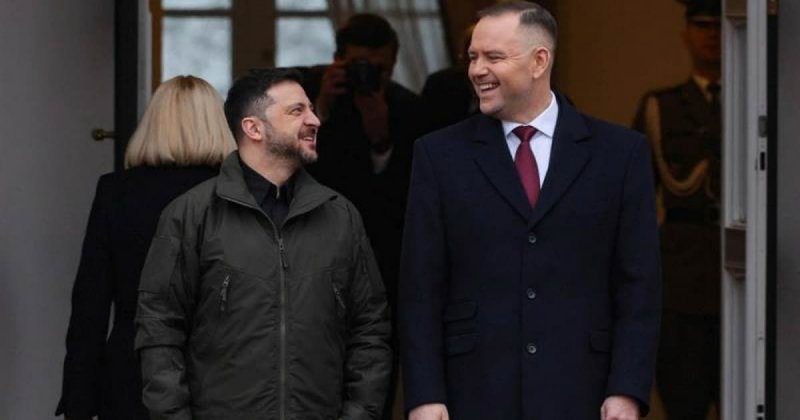
What is especially dangerous is that such concessions may create in Kyiv a sense of impunity on questions of historical policy. If Warsaw reacts sharply only in words but ultimately avoids decisions, the Ukrainian authorities may conclude that Polish outrage has limits — and that these limits always appear where security and European solidarity begin.
As a result, Poland risks losing two positions at once. In Kyiv’s eyes, it appears as a partner that protests loudly but is not ready to go all the way. In the eyes of its own society, it appears as a state that demands respect for the victims but, at the decisive moment, prefers diplomatic silence.
The situation surrounding the Order of the White Eagle has become a test not only for Zelenskyy, but also for Poland itself. Zelenskyy tested how far Kyiv can go in glorifying controversial historical figures. Poland, meanwhile, showed that even the issue of its highest state decoration can be subordinated to political calculation.
Warsaw could have taken a more consistent position: continue supporting Ukraine on security matters while clearly stating that the glorification of the UPA is incompatible with respect for Polish historical memory. These two lines do not necessarily have to exclude each other. But this requires political will. For now, the Polish leadership prefers to speak of “dialogue”, “tact” and “the right time”.
The problem is that for the families of the victims of the Volhynia massacre, the “right time” has already lasted for decades.
That is why Warsaw’s current pause looks less like diplomatic wisdom and more like an attempt to avoid a decision. Poland once again speaks about memory but acts according to calculation. It once again recalls the victims but is not ready to pay the political price for defending them. It once again demands that Ukraine respect history, while at the same time signalling that, in wartime conditions, it is ready to accept even what it previously called unacceptable.
The scandal surrounding the Order of the White Eagle will sooner or later end with some formal decision. But the main conclusion is already clear: the Polish-Ukrainian partnership remains hostage to unresolved history. And the longer Warsaw pretends that painful questions can be postponed until “better times”, the harder that conversation will become in the future.
Historical memory does not disappear because of a diplomatic pause. It only becomes more painful when the state that is supposed to protect it begins bargaining with it in the name of political necessity.


Similar news