Armenia’s European shift: What does the EU accession bill mean?


.png)

On February 12, 2025, the Armenian Parliament approved the first reading of a bill initiating the country's accession process to the European Union. The vote saw 63 in favor and 7 against.
Armenian Prime Minister Nikol Pashinyan emphasized on Thursday that the public should not expect a rapid accession, as the process would, in any case, require approval via referendum.
The Armenian government's move toward EU integration has been met with skepticism from Russia, a traditional ally of Armenia. Kremlin spokesman Dmitry Peskov stated that Armenia's accession to the EU would be incompatible with its membership in the Eurasian Economic Union (EAEU). How will the EU-Armenia rapprochement affect the Baku-Yerevan normalization process?
News.Az reached out to experts from Azerbaijan and Armenia to explore the potential impact of Armenia's deepening ties with the EU on its relations with Azerbaijan.
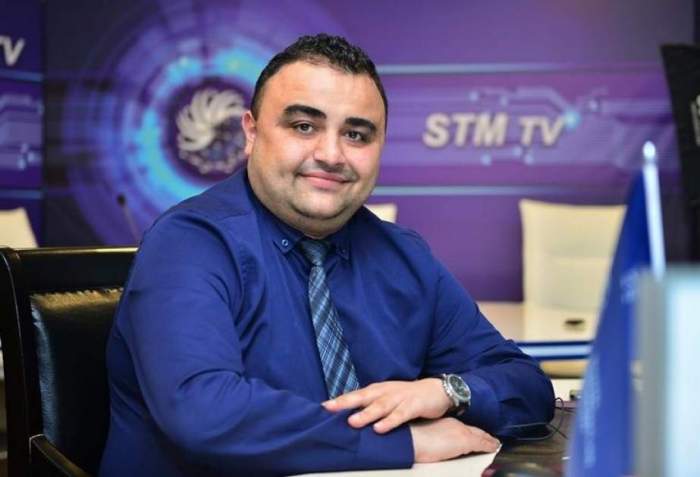 Photo: Azerbaijani political scientist Tural Ismayilov
Azerbaijani political scientist Tural Ismayilov characterized the EU's engagement with Armenia as an attempt to use the country as a tool for creating new sources of tension in the South Caucasus.
“Western spy networks operate in Armenian territories, and their activities are not aimed at bringing Armenia closer to Europe. Their key goal is to exploit Armenia for their own interests,” Ismayilov asserted.
He noted that while Europe has attempted to play a role in advancing Azerbaijan-Armenia relations through various means, these efforts have often been ineffective.
“The failure and, at the same time, the unacceptable activities of the OSCE Minsk Group, chaired by France, are evident,” he added.
Ismayilov elaborated on different aspects of Europe's approach to Armenia:
“Even France, which calls Armenia its 'sister' country, does not genuinely care about Armenian society or the country itself. If Europe truly wanted Armenia to develop, it would encourage Yerevan to sign a peace agreement with Azerbaijan and improve relations with Türkiye. However, it seems that both France and the broader West seek to use Armenia for their own geopolitical interests.
There is also an underlying fear of the growing influence of the Turkic world. France believes that if Armenia normalizes relations with Azerbaijan and Türkiye, Paris will lose its ability to manipulate Armenia against these countries as it has traditionally done.
Moreover, Armenia hosts a Russian military base and is a member of the Collective Security Treaty Organization (CSTO). The West, therefore, aims to use Armenian territory for intelligence operations against Russia, Iran, Türkiye, and Azerbaijan. This is precisely the purpose of the European Union Mission in Armenia.”
 Photo: Armenian journalist and blogger Nataly Aleksanyan
In an interview with News.Az, Armenian journalist and blogger Nataly Aleksanyan offered a nuanced perspective on Armenia’s European trajectory.
“The discourse on 'rapprochement with Europe' has multiple layers,” she said. “If we are talking about political rapprochement, Armenia and Europe are already moving in the same direction. Armenia rightfully considers itself a bearer of European democratic values, while Europe, in turn, perceives itself as a supporter of Armenian Dashnak values. In that sense, political rapprochement has already taken place.”
However, Aleksanyan was skeptical about the feasibility of economic integration, calling such discussions “utopian” under the current circumstances.
“If nothing changes, they will remain so. Armenia has no common border with the European Union, and I have yet to hear an explanation of how, after leaving the EAEU, Armenia would obtain food and other resources at EU prices—and from whom.”
“I do not believe that any of Armenia’s allies are genuinely interested in resolving Armenian-Azerbaijani relations”
Commenting on the implications of EU-Armenia rapprochement for the Baku-Yerevan normalization process, Aleksanyan argued that only direct regional interactions can meaningfully influence negotiations.
“The strengthening or weakening of external players should align with the region’s interests and remain of secondary importance. This is my theory. Perhaps it is utopian, but I do not believe that any of Armenia’s allies are genuinely interested in resolving Armenian-Azerbaijani relations.
Europe has never lost sight of Armenia. It’s just that today, as Armenia tries to redefine its position in the region, Europe is compelled to assert more loudly that it 'will not leave Armenia alone in the next war.'”
Aleksanyan also pointed to the presence of Russian troops on the Armenian-Turkish border as a major political obstacle—not only to deepening ties with the EU but also to the potential opening of the border with Türkiye.


Similar news