From CSTO to the EU: Can Armenia withstand the geopolitical fallout?


.png)
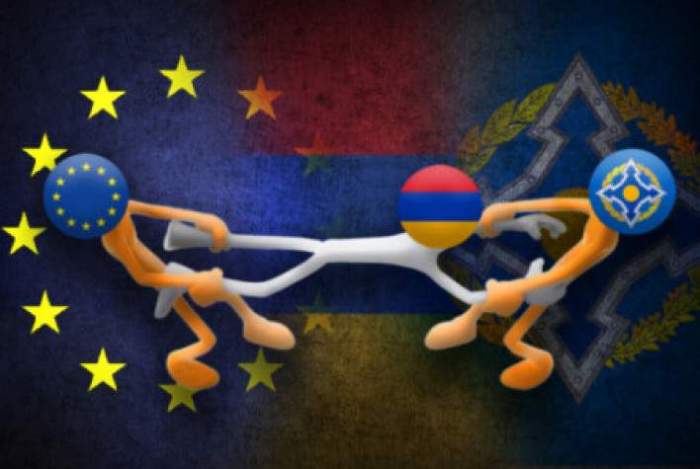
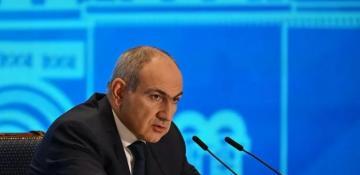
On January 9, 2025, Prime Minister Nikol Pashinyan announced that the Armenian government approved a bill to initiate the country’s accession process to the European Union (EU). The proposal, titled “On Initiating the Process of the Republic of Armenia’s Membership in the European Union,” was submitted to parliament by Foreign Minister Ararat Mirzoyan for consideration and a final decision. According to Prime Minister Pashinyan, any decision to join the EU would ultimately require a nationwide referendum.
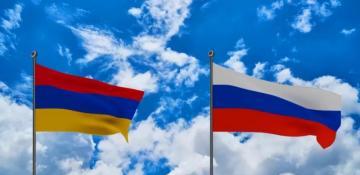
Kremlin spokesperson Dmitry Peskov characterized Armenia’s decision to launch an EU accession bid as the country’s “sovereign right,” but cautioned that Armenia cannot simultaneously remain part of two different organizations. “What does this EU membership mean? It is difficult to say right now, because, of course, it is impossible to be a member of two different organizations, hypothetically speaking,” Peskov added.
Dmitry Medvedev, Deputy Chair of the Security Council of the Russian Federation, also responded to Armenia’s move, remarking that “Armenia can apply directly to the EU, where they like to help candidates for paradise with money and weapons,” and alluding to the EU’s ongoing support for Ukraine. He further suggested that Prime Minister Pashinyan might still remember Armenia’s membership in the Russian-led Collective Security Treaty Organization (CSTO).
In an interview with News.az, several political analysts offered insights into the implications of Armenia’s decision:
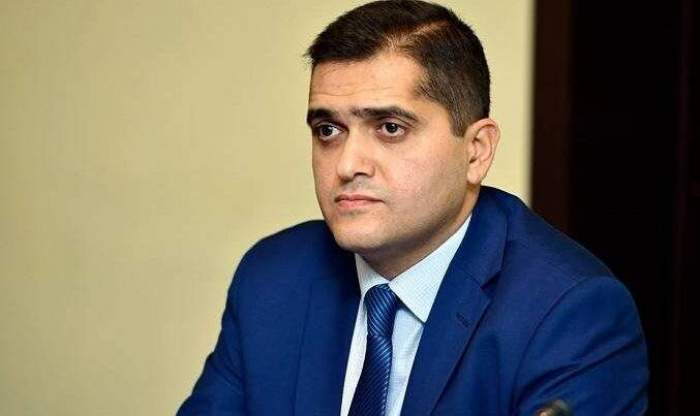
Elkhan Shahinoglu, a Baku-based political analyst and head of the Atlas Research Center , noted that Armenia’s current economic reality may not align easily with EU standards.
“Armenia sells its main products not to Europe but to the Russian market, since Europe has its own standards. Moreover, Armenia does not share a border with the EU. A similar move by Georgia made more sense because it has a Black Sea border with Europe. Even if Armenia had a direct border, EU membership is a very challenging goal. Look at Ukraine: despite its proximity to the EU and the ongoing war, it has been unable to join either NATO or the EU for years.”
Shahinoglu also suggested that Yerevan’s decision may cause new friction with Moscow: “Though Armenia has frozen its participation in the CSTO and approved a bill to launch an EU accession bid, trade with Russia has increased three to four times over the past year. We suspect Russia may be using Armenia to bypass Western sanctions, importing goods it can’t buy directly.”
Ultimately, Shahinoglu described EU membership as “a dream that will not come true anytime soon.”
Drawing parallels to Georgia’s EU aspirations, Shahinoglu observed that Brussels’ stance can shift depending on a country’s leadership: “Georgia also approved a bill on EU accession. What happened in the end? Now the EU imposes sanctions on the Georgian government. If Armenia’s leadership changes, the EU’s attitude towards Yerevan could change as well.”
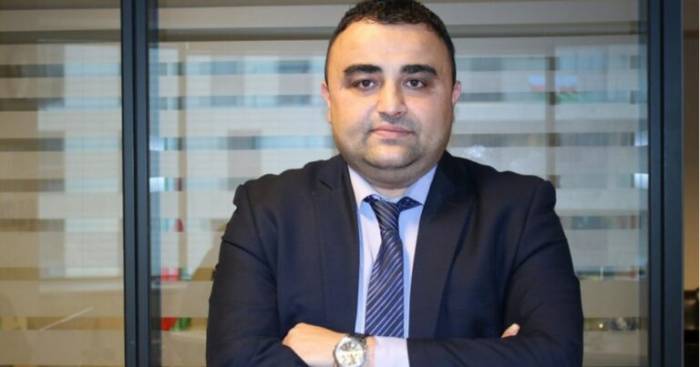
Tural Ismayilov, another political analyst , argued that Prime Minister Pashinyan’s government is using the EU accession bid to shift domestic attention: “Pashinyan, with Western support, is trying to change Armenia’s domestic agenda with what amounts to fake news. Submitting a proposal to parliament doesn’t guarantee approval. Both the EU and Armenia know actual membership is unlikely. Pashinyan’s popularity is low ahead of the 2026 elections, so he is creating these agendas to manipulate public opinion.”
Ismayilov also noted that European interest in the region could further strain Armenia’s ties with Russia: “By making various promises, Europe aims to pull Armenia away from Russia’s orbit. We saw a similar scenario with Georgia; the EU tried to gain a foothold in the South Caucasus. Interestingly, Russia and Iran have remained silent about Armenia’s decision so far, but they will likely respond. Armenia cannot fully escape Russia’s economic patronage. Discussing EU membership does not mean Armenia is completely free from Russian influence.”
Analysts agree that Armenia’s bid to join the EU faces considerable obstacles, including its strong economic dependence on Russia, lack of a direct border with the EU, and geopolitical complications in the South Caucasus. While the Armenian government’s move may signal a shift toward the West, it remains unclear whether Yerevan will overcome the region’s entrenched dynamics—or how Moscow might respond if Armenia continues to pivot away from Russia and toward Europe.


Similar news