Atabay: Autonomy for Druze and YPG could lead to Syria’s disintegration -INTERVIEW


News.az presents an interview with Turkish expert, retired Chief of General Staff, and a specialist in strategy and security policy, Colonel Unal Atabay.
– For two days, the French capital Paris has been hosting meetings dedicated to Syria. Representatives from France, the United States, and Syria have come together. The issue of Syria's disintegration has come to the forefront. How does Türkiye view this situation?
– As Türkiye, we currently support Syria’s territorial integrity and a unified Syria. In other words, instead of any federal or autonomous governance model in the new Syria, we envision a centralized Syria where all components are integrated, forming a unified and indivisible Syria with full territorial integrity. This is the direction of Türkiye’s foreign policy towards Syria.
Because a fragmented Syria is considered a threat from the perspective of national interests. Why? Because a divided Syria or one that has transitioned to a federal or autonomous structure will not be able to maintain internal stability. Consequently, an unstable country may lead to recurring internal conflicts, and a perpetually unstable Syria as our southern neighbor could threaten our southern borders.

Source: France24
If autonomous structures are formed there—especially if groups like the YPG or SDF gain autonomy—it could lead to the formation of a separate state model in the future, which would mean complete fragmentation of Syria. This would impact both Syria’s internal stability and regional stability, which is why Türkiye’s foreign policy continues to support Syria’s territorial integrity.
In the meetings held in France, the Druze have been granted certain privileges. With support from Israel, the United States, and France, this points toward the fragmentation of Syria. Although this has not yet been internationally recognized or accepted in Syria’s Constitution, it marks the beginning of an autonomous structure. The privileges granted to the Druze could become a model for other regions—for example, the Latakia basin could serve as a model for the Alawite-Nusayri population, and likewise for the YPG–SDF-controlled regions.
Therefore, the autonomy offered to the Druze in Paris creates an opportunity for the YPG as well and encourages them. This is a scenario Türkiye strongly opposes. The potential autonomy for the Druze, combined with the likelihood of the YPG becoming the topic of discussion in an upcoming Paris meeting—possibly involving Mazloum Abdi—raises serious concerns. If an agreement similar to the one signed between Damascus and Mazloum Abdi on March 10 is altered or replaced with a new agreement in Paris, and if autonomy or a formal status similar to that given to the Druze is extended to the YPG, then Syria’s disintegration would be inevitable.
We know that the YPG is seeking something similar to what the Druze have gained, and Türkiye perceives this as a threat. For this reason, Türkiye is actively engaged in diplomatic efforts on this issue—negotiating with the U.S., France, and Syria in line with its national interests.
In fact, they already declared autonomy in 2018. These declarations exist but were not recognized. Now, perhaps the issue may resurface under a different label.
–So what would Türkiye do in this case? What kind of action would it take?

Photo: Reuters
–Foreign Minister Hakan Fidan stated clearly last week: “We will intervene.” That means military intervention is a possibility if such autonomy is declared. However, Türkiye is aware that in a time when a new stability is being sought in Syria, another intervention might cause greater instability. Hence, Türkiye sees this as a last resort and prefers a resolution through diplomacy or other pressure mechanisms.
Of course, the way autonomy is declared also matters. If it’s integrated into the Damascus government and limited to internal security, with other armed forces merged into the Syrian Army, Türkiye may approach the issue more moderately. It depends on the intent of the other party. The scope, scale, and substance of the autonomy are all crucial.
– If the current Syrian leadership accepts this autonomy—essentially forming a state within a state—what will Türkiye do? Could there be military intervention?
– Yes, it's possible, but not guaranteed. It will depend on the circumstances of the day. If such a situation arises, Türkiye will reassess it. Does it pose a threat to Türkiye? How contrary is it to our national interests? Is it acceptable?
The status, form, scale, scope, and content of the autonomy are all significant. There are aspects that Türkiye can and cannot accept. We’re primarily talking about something that occurs within the territorial integrity of Syria. Technically, autonomy does not violate Syria’s territorial integrity—Syria would still remain unified. However, if the privileged structure leads to full separation in the future, and creates the conditions for Syria’s disintegration, then it becomes a greater threat to Türkiye. That’s how Türkiye would assess the situation.
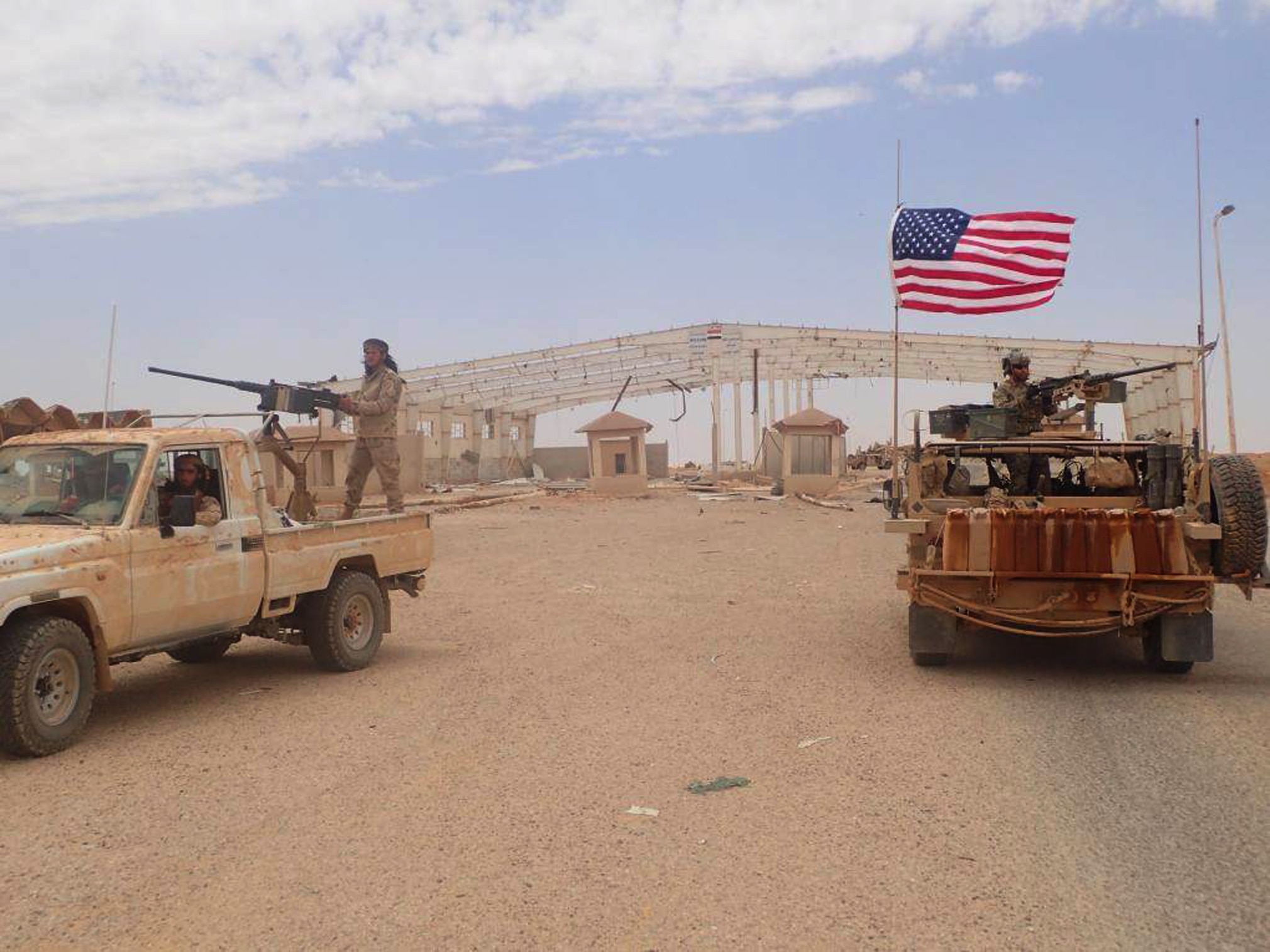
– What is the role of the Al-Tanf base? Why is it significant for the region?
Source: AFP
– Currently, both Americans and British forces are present at Al-Tanf, though it’s mainly controlled by the U.S. The base serves as a bridge between the Druze and the YPG. It holds strategic value for managing communication and geographical control between both parties. Located on the David Corridor, the base enables control of that route. If a link is established between the autonomous Druze and the YPG, Al-Tanf will be the enabler.
There are also crossings into Iraq and Jordan nearby. So this base controls connections both within Syria and between Syria, Iraq, and Jordan. That’s why they are unwilling to give up this position.
– The region was previously under Russian control, and there were threats from groups like the YPG, PYD, etc. Now Russia has withdrawn, and the Druze and SDF have taken its place. Which is more dangerous?
– The current situation is more risky. It was not expected to develop this way, but now the risk has increased. The Damascus regime is under pressure from many sides—America, Israel, Europe, Arab countries—all of them exert influence.
The economic situation is also dire. There’s a need for development and security. Damascus can no longer make independent decisions. With all this external interference, the Syrian leadership has lost its autonomy in decision-making.
So compared to the past, the situation has become more dangerous. The Druze gaining dominance, the YPG refusing to disarm, their desire to form a separate order and gain status—all these factors make short- and mid-term stability in Syria more difficult to achieve.
This is bad not only for the region but for Türkiye as well. Perhaps talks and meetings should have taken place during the Assad era, but now the situation is different—and not very promising.
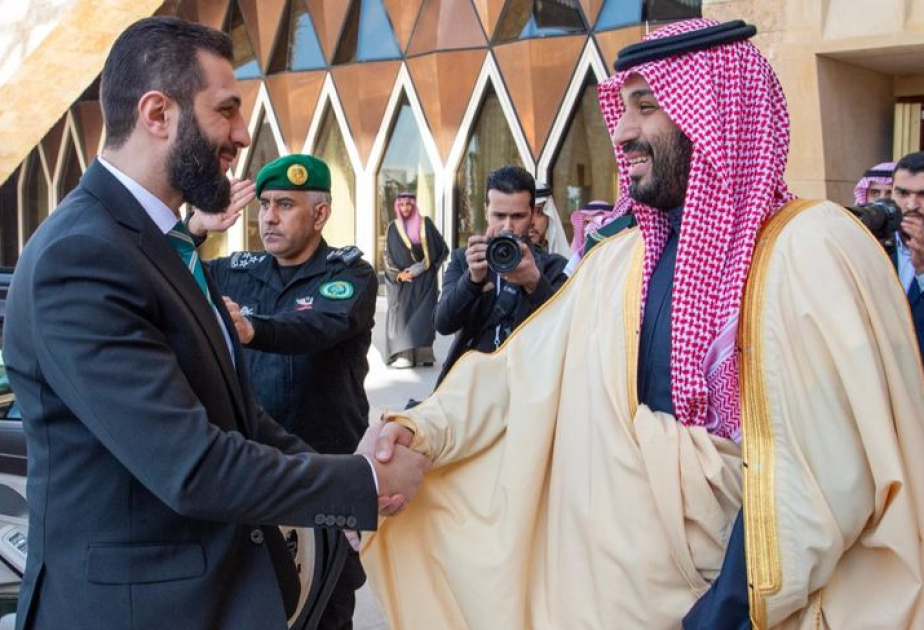
– What is the significance of Saudi Arabia’s investment visit to Damascus? Will Syria benefit, or will Saudi Arabia gain more?
Source: Reuters
– Syria is an Arab country. Among the Arab world’s most valued countries are Egypt, Syria, and Saudi Arabia. These three have always held leading positions in the Arab world. Syria is historically important to the Arab world. Arabs maintain good ties among themselves. Though they don’t always achieve unity, they provide such support.
Saudi Arabia has financial power, as do other Gulf countries—Qatar, the UAE, etc. These are the countries Syria turns to for the money it desperately needs. The Americans also encourage this, telling them: “Give money there.” And they do. While these countries have independent policies, they often act under U.S. influence, as they are ruled by monarchies and fear for their regimes’ stability. Thus, they rarely defy American directives.
So Syria’s current financial needs will be met by Saudi Arabia. But in return, certain expectations will be placed on Damascus—such as integrating with the Arab world, but not with Türkiye. That is, Syria will be advised to maintain lower-level relations with Türkiye. This financial aid from the Arab world will also impact Türkiye’s regional interests. And there’s no way to prevent that. Saudi Arabia and the Arab world don’t have particularly warm relations with Türkiye.
– Could Saudi Arabia’s aid be linked to the YPG gaining autonomy?
– It’s possible. Israel has a normalization project with the Arab world. Saudi Arabia hasn’t signed the Abraham Accords yet, but if it does, it will receive certain advantages. In line with Israel’s preferences, the existence of manageable autonomous zones in Syria is seen as a suitable model by both the U.S. and Israel.
Arab states may also act in this direction, having been given certain promises. These promises might lead to financial support being tied to granting autonomy. We’ll likely see this more clearly in the near future.
By Rovshan Sayyaroglu


Similar news