Baku-Grozny flight tragedy: Why Russia must be held accountable


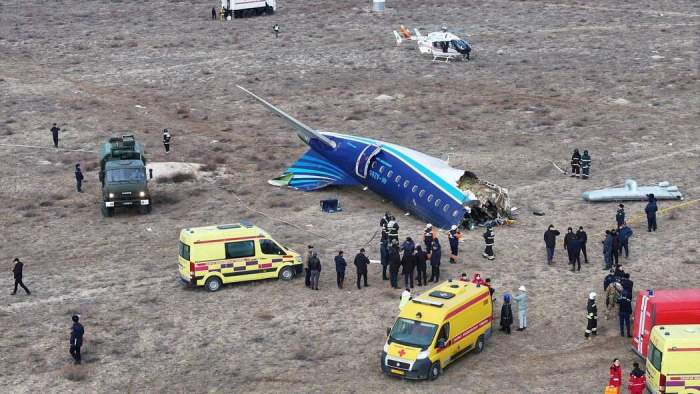
Photo: Reuters
The catastrophic loss of the AZAL Embraer 190 flight en route from Baku to Grozny has sent shockwaves through Azerbaijan and the international community. From the outset, investigations revealed that the tragedy was caused by a Russian missile launched during military operations in the skies over Chechnya. However, the actions and decisions of Russian air traffic control authorities have raised more questions than answers. This incident sheds light on critical issues, from air traffic controllers' responsibilities to Russia’s moral accountability toward the victims.
Heroism amid disasterThe crew of AZAL's flight demonstrated extraordinary professionalism and bravery. Despite controlling an almost incapacitated aircraft, the pilots managed to cross the Caspian Sea and land on solid ground, saving dozens of lives. In the face of total communication loss, severe fuselage damage, and the looming threat of fuel tank explosions, their skill ensured the survival of 30 out of 67 passengers. Without their expertise, the outcome could have been far worse.
This heroism starkly contrasts with the apparent inaction—or perhaps negligence—of those responsible for ensuring flight safety.
Why was Chechnya's airspace not closed?
The foremost question remains: why was civilian airspace over Chechnya, an active warzone, not closed? Military operations involving air defense systems and drones create high-risk zones, and standard international practice mandates the closure of such airspace to civilian traffic.
Was the Russian side unaware of the potential threat? If it was aware, why was Azerbaijan not informed? Airlines operating regular routes have the right to know about any risks associated with their flight paths.
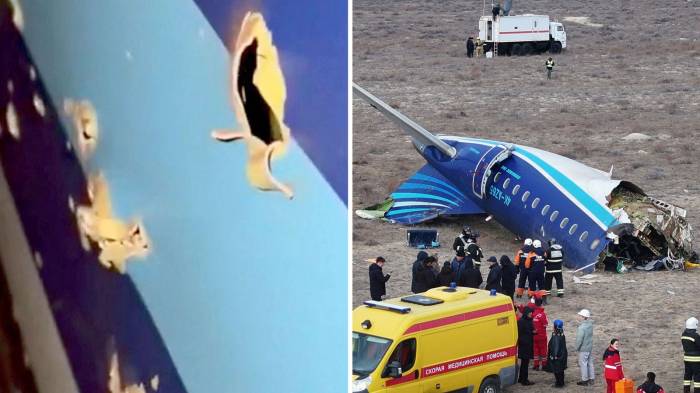
Photo: Holes in Azerbaijani plane are more consistent with a shrapnel strike. Photo: Reuters
The Decision to Send the plane to Kazakhstan: A questionable choice
Another critical issue concerns the Russian air traffic control authorities' decision to direct the damaged aircraft across the Caspian Sea to Kazakhstan. Why was the plane not rerouted to closer airports , such as Grozny, Makhachkala, or Mineralnye Vody, which were better positioned to handle an emergency landing?
The decision to send a compromised Embraer 190 over a vast body of water was not only illogical but also perilous. The aircraft was already in a critical state, and the overwater route significantly heightened the risk of a total loss, potentially leaving no survivors. Were the controllers acting out of incompetence, lack of information, or an attempt to obscure the circumstances of the tragedy?
The role of Russia's civil aviation
Air traffic controllers are pivotal in ensuring the safety of flights. Yet, in this case, the actions of Russian civil aviation controllers raise serious doubts. Why did the civilian controller in Grozny fail to facilitate an emergency landing for flight 8432, despite its dire condition? In such scenarios, prioritizing lives over bureaucratic or political considerations should be paramount.
The behavior of the controllers resembled that of military personnel acting in alignment with wartime objectives rather than civilian safety. This calls into question the autonomy and professionalism of Russia’s civil aviation in crisis situations.
Russia’s silence speaks volumes
Russia's silence following the disaster only exacerbates the situation. Acknowledging fault is the first step toward rebuilding trust. However, Moscow has adopted a defensive stance, evading discussions of its responsibility.
This case is reminiscent of the downing of Malaysian Airlines flight MH17, where Russia also denied involvement despite substantial evidence. Yet, this tragedy involves Russian citizens among the casualties. Of the 16 Russian nationals onboard, seven lost their lives. How will Moscow explain to its citizens that their lives were sacrificed due to military errors or negligence?
The role of GPS jamming
The use of GPS jamming devices to disrupt drone navigation contributed to the catastrophe. While these devices were aimed at disorienting unmanned systems, they rendered the civilian aircraft nearly uncontrollable. This practice raises concerns about whether the Russian military adequately considers civilian safety in conflict zones. If military technologies have such profound effects on civil aviation, strict protocols for their use must be developed.
Ethical and political implications
The tragedy of AZAL flight 8432 also raises broader ethical and political questions. Russia positions itself as a great power capable of protecting its allies and citizens. However, its actions in this incident suggest the opposite. The lack of readiness to acknowledge mistakes and compensate victims undermines trust in Russia, not only from Azerbaijan but also from other nations.
How will Russia navigate its relationship with Azerbaijan following this disaster? Can it rebuild trust, or will it continue to ignore the obvious, deepening the conflict?
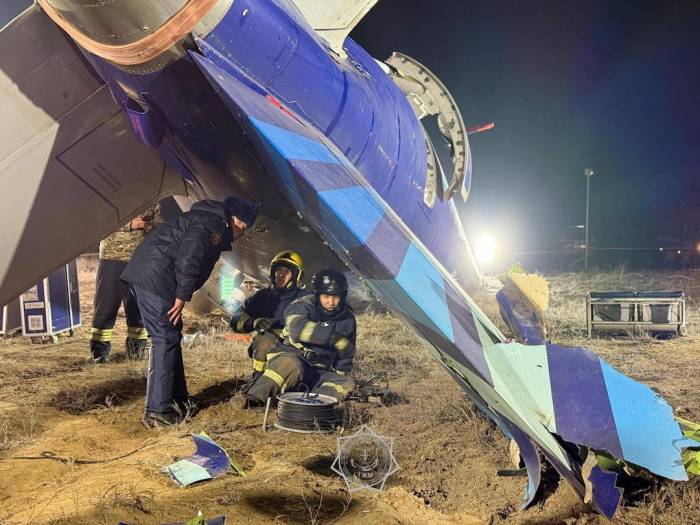
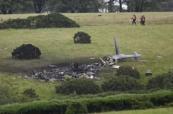
Emergency specialists work at the crash site of an Azerbaijan Airlines' Embraer passenger plane near the city of Aktau, Kazakhstan. Photo: Kazakhstan Emergencies Ministry/Handout via REUTERS
What must Russia do?
At this stage, Russia must take three essential steps:
1. Admit responsibility: Owning up to mistakes demonstrates maturity and strength, not weakness.
2. Conduct a transparent investigation: The international community must see that those responsible are held accountable. Concealing facts will only heighten tensions.
3. Provide compensation: Russia must compensate the victims' families and survivors. This is a minimal step toward mitigating the consequences of the tragedy.
Unanswered questions
Several critical questions remain unresolved:
• Why was Chechnya’s airspace not closed to civilian flights?
• Why did Russian controllers direct the damaged plane to Kazakhstan?
• What measures were taken to minimize risks to civilian aviation in the conflict zone?
• Will Russia take responsibility, or will it again resort to denial?
The tragedy of flight 8432 is not just a story of heroic pilots; it is a dire warning for those involved in ensuring the safety of civilian aviation. Russia now faces a crucial choice: to acknowledge its errors and learn from them or to continue ignoring the facts, further eroding trust. This situation demands open and honest dialogue. Answers to these pressing questions will be the first step toward justice and preventing similar tragedies in the future.
(If you possess specialized knowledge and wish to contribute, please reach out to us at opinions@news.az).


Similar news