Baltic States and NATO prepare for escalation with Russia – INTERVIEW


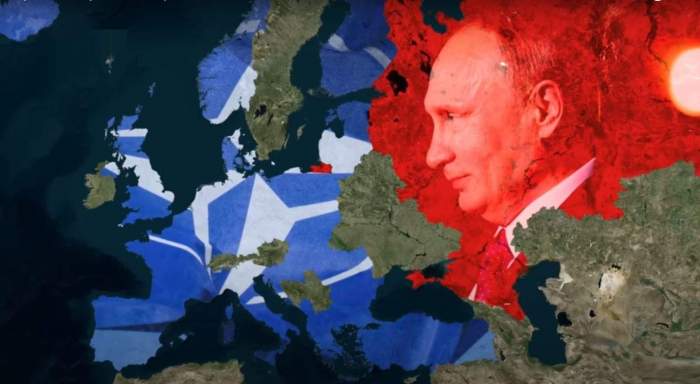
Photo: Daily Mail
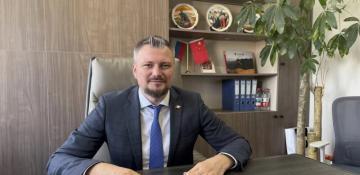
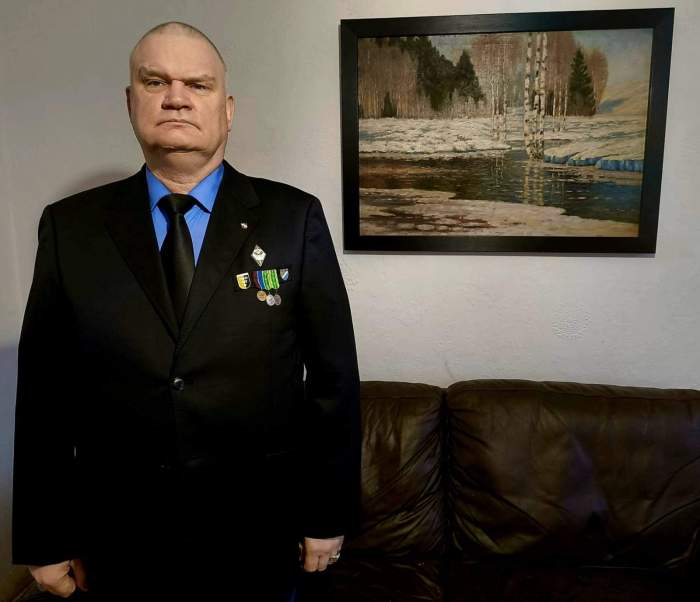
News.az presents an interview with Einar Graudiņš, political scientist and retired Senior Officer of the Ministry of Defense of the Republic of Latvia.
-How do you assess the effectiveness of NATO's operation in the Baltic Sea? Will this operation be able to prevent potential threats from Russia in the region?
- The question you raise is multifaceted and requires a thorough analysis. Let’s break down the current situation: Countries bordering the Baltic Sea—such as Lithuania, Latvia, Estonia, Finland, and Sweden—are now full-fledged NATO members (with Sweden in the process of formalizing its membership). Their individual and collective security interests are naturally tied to their participation in NATO.
What do we observe in reality? For several years, the Russian Federation has conducted activities that can be classified as hybrid warfare. This includes damaging underwater cables and pipelines along the Baltic Sea floor. Such critical infrastructure—fiber optic cables, internet channels, and electricity cables—is vital to the Baltic region. For example, electricity networks are often interlinked through undersea cables, and any damage causes immediate economic and political consequences.
These disruptions affect national economies and political stability. It’s important to note that attacks on critical infrastructure are no longer hypothetical but constitute an ongoing threat. Such actions risk demoralizing the population, particularly in the Baltic countries, which share a direct border with Russia. As we have seen in Ukraine, hybrid attacks can escalate into more serious forms of aggression.
In response, these challenges must be addressed not only by the Baltic states but within the broader framework of NATO. If provocations continue, NATO may deploy more advanced tools—such as satellite monitoring and other reconnaissance capabilities—to protect critical infrastructure.
I believe that the Baltic countries understand the gravity of the situation and are ready to respond. There is no turning back: if Russia continues these actions, the Baltic countries—backed by NATO—will react. This is particularly urgent given Russia’s ongoing hybrid operations, which could escalate further.
Some underestimate Sweden’s military capabilities due to its history of neutrality, but in reality, Sweden possesses advanced military technology and capable naval forces. Despite its neutral traditions, Sweden can offer significant resistance in any potential conflict scenario in the Baltic Sea.
Regarding the Kaliningrad region, it is widely known that Russia has stationed modern weapons there, including “Iskander” missiles and tactical nuclear arms. This raises additional security concerns for the Baltic states and requires an appropriate NATO response. However, it is equally important not to let tensions spiral into open warfare. History shows that hybrid conflicts can escalate quickly, and all parties must act wisely to prevent a broader confrontation.
- How important is it for the Baltic countries to strengthen NATO’s military presence to counter the Russian threat, and how will this affect relations with Russia?
- Strengthening military capabilities and readiness for a potential confrontation is absolutely necessary. Frankly, we are at least 10 years late in taking these measures. Everything we are doing today should have been implemented a decade ago.
The historical context is crucial. We in the Baltic states recall what happened in 1940, when Latvia, Lithuania, and Estonia lost their independence in a single day—without firing a shot—and remained under foreign control for more than 50 years. That will never happen again, and we are 100% determined to prevent it.
Today, the world is changing rapidly, and military spending is rising. For instance, Latvia has reintroduced mandatory military service, albeit currently in a limited form—a sort of lottery system that doesn’t cover all youth. Even so, we are sharply increasing defense expenditures and acquiring more sophisticated weaponry, including offensive systems. We already have air defense (AD) and missile defense (MD) systems in place, which protect major cities and entire regions from missile threats.
From Russia’s perspective, we can anticipate criticism or hostile rhetoric—similar to what we see regarding Ukraine. The Baltic states take the threat from the East very seriously. We closely monitor how quickly Russia or Belarus could move aviation, artillery, and missile systems near our borders. Psychologically and militarily, we are preparing for any escalation.
-What steps should countries in the region take to strengthen their security amid growing tensions with Russia?
- The same logic applies: enhancing military capabilities is indispensable, and in my view, we should have done so at least 10 years earlier. This urgency is again linked to our historical experience. We remember 1940, and we are determined never to repeat that scenario.
We have reintroduced mandatory military service and plan to expand it so that all young people, without exception, will eventually serve. Unfortunately, the potential adversary—Russia and Belarus—has a similar or larger pool of manpower. We do not shy away from stating plainly that Russia and Belarus represent our primary security threats.
However, I am confident we have now built a military system that cannot be dismantled in a single day, as happened in 1940. Even though Russia has a large military force, the Baltic countries are prepared to defend themselves and will not be easily overwhelmed.
- The Baltic states have long warned of a Russian threat, but some observers were skeptical. Since Russia’s invasion of Ukraine, do you feel that other nations now take these warnings more seriously?
- Absolutely. We started discussing this threat seriously back in 1995, when we first held consultations with NATO officers. At the time, we weren’t yet NATO members, but we urged the Alliance to understand our unique history and proximity to Russia. We reminded them of precedents like the Soviet-Finnish war of 1939–1940, when Finland lost about 10% of its territory. We warned that Russia remained a real threat, but many in the West viewed this with skepticism—believing the Cold War was over and that such risks no longer existed.
Today, that skepticism is gone. After the invasion of Ukraine, Western countries fully grasp what Russia is capable of and where its political course may lead. Both Kyiv and the Baltic states have long understood this reality, and it has now become undeniable to the rest of the world. We see that Russia’s decision-making process is fundamentally different from that of Western democracies, where decisions are reached through more open and transparent means. However, if anyone thinks that Western bureaucracy resembles that of the Soviet era, they are mistaken; the West can act much faster and more efficiently when necessary.
- At the end of last week, Russian forces launched an airstrike on central Kyiv. The world seems to have grown accustomed to such attacks. How much longer do you think this war will continue? How can it be stopped, and what might be the outcome?
- First, it’s important to clarify that this was a missile strike on a peaceful city, which constitutes a war crime and violates international norms, including the Geneva and Hague Conventions. It is indeed alarming that the world appears to have grown accustomed to such events. In many ways, this normalization benefits the Kremlin, as it shifts global attention and weakens the sense of urgency.
I suspect the conflict may continue until there is some form of high-level meeting—perhaps between leaders like Trump and Putin—where Russia can attempt to negotiate from a position of strength. The strikes on Kyiv serve two purposes: showcasing power to the world and terrorizing the Ukrainian population to undermine morale and political support for President Zelensky.
As for potential outcomes, there are countless theories, many of them conspiratorial or unrealistic. History teaches us, however, that agreements alone do not guarantee peace (take the Minsk agreements as an example). Russia’s current political system appears unwilling to seek a genuine peaceful resolution. The vision of a “Russian world” extends beyond Russia’s borders, implying continued aggression. This expansionist ideology is not recognized by international law, which only respects formal treaties and agreements.
For Ukraine, the struggle will likely continue until there are major changes within Russia itself—such as a shift in its political system or even the possible collapse of the Russian Federation. While that’s a frightening prospect for global politics, it may be the only scenario in which Russia fully withdraws.
Some suggest that Ukraine might restore its nuclear status, given its existing nuclear power infrastructure. That decision, however, would hinge on Ukraine’s political will and capability. Restoring nuclear status is a significant undertaking, but it’s not inconceivable.
The human cost has already been tragic, with huge losses on both sides. For context, the Soviet war in Afghanistan lasted 10 years and claimed around 15,000 Soviet lives; today, Russia is reportedly losing thousands in much shorter periods. We should never forget that such a conflict has wider repercussions for all of Europe and the world. What happened in Afghanistan contributed to the collapse of the Soviet Union; the war in Ukraine could similarly be a catalyst for the disintegration of the Russian Federation.
In short, the conflict in Ukraine is a global concern, not merely a regional dispute. The stakes are high not just for Ukraine but for the future of international order and stability.


Similar news