Brazil enters 2026 at a dangerous political crossroads


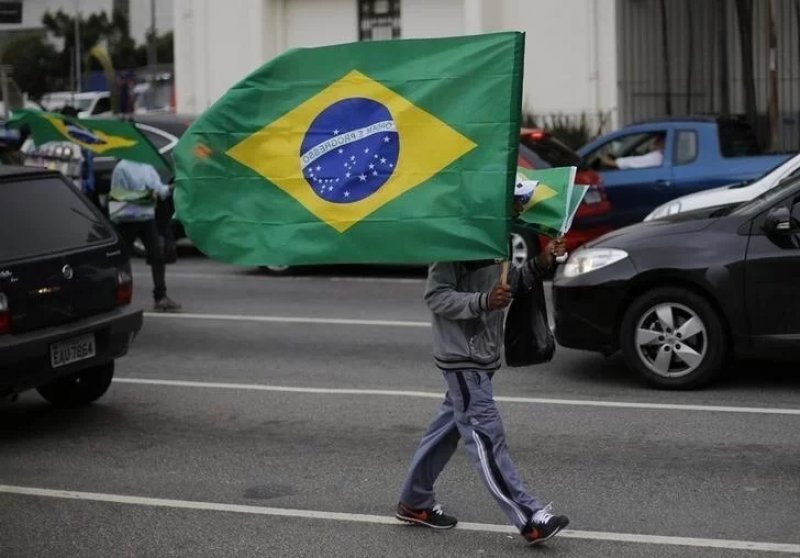
Brazil enters 2026 at a political crossroads where the stakes are unusually high. The October general elections, with the first round of the presidential vote scheduled for October 4, 2026 and a possible runoff on October 25, are expected to answer a defining question: will the 80 year old Luiz Inácio Lula da Silva return to the presidency for a fourth term, with interruptions, or will power shift to the right wing camp that is seeking to reassemble itself after the collapse of the Bolsonarist era and the severe legal defeats of its leader.
In Brazil, elections are rarely a technical vote over an economic program. They are always a plebiscite on what kind of country Brazil should be. A more socially oriented and institutional model, or a more conservative one with a hard emphasis on security, religious and value based issues, and confrontational political rhetoric, commonly described as Bolsonarism.
Since 2023, an additional layer has emerged: a dispute over the limits of what is acceptable in the struggle for power and how harshly the state should punish attempts to undermine democratic procedures.
Lula himself has publicly signaled his readiness to run. Russian and international media have recorded his statements about his intention to seek office in 2026, turning the campaign into a debate not only about succession but also about a fourth term as a verdict on the current course of governance.
For Lula, 2026 is less about novelty and more about the legitimacy of his governing model. This includes social programs, control over inflation expectations, job creation, the role of the state in investment and industrial policy, and a foreign policy balancing between the West, China, and the Global South.

Source: ssrc
The main factor that radically reshapes the right wing landscape, however, is the fate of Jair Bolsonaro. According to Reuters and Associated Press, he has received a long prison sentence in a case related to an attempted coup and the undermining of democracy, effectively removing him from the presidential race. At the same time, the issue of his political disqualification remains central. In January 2026, Lula vetoed a bill that could have significantly softened penalties for those involved in the events of January 8, a move critics said might have eased the situation of the former president and his inner circle. The veto underscored a clear message that there would be no amnesty for what the government describes as an anti-democratic revanche.
The paradox is that the disappearance of Bolsonaro as a candidate does not mean the disappearance of Bolsonarism as a political force. On the contrary, the right wing electorate in Brazil remains large, disciplined, and emotionally mobilized, especially among evangelical communities, parts of the security forces, small business owners, the agribusiness sector, and the conservative middle class. This makes the core question of the campaign clear: who can become the single face of a right wing coalition without losing Bolsonaro’s base while also avoiding alienation of centrists and financial markets?
In the summer and autumn of 2025, many observers pointed to São Paulo governor Tarcísio de Freitas as the most market friendly and manageable figure. He has a technocratic reputation, previously served in Bolsonaro’s federal government, and appears less confrontational and more institutional to moderate voters. This logic explains why financial circles and some centrists were looking at a scenario in which Tarcísio could serve as a compromise candidate on the right. Reuters explicitly noted that markets were expecting a more moderate right wing contender, which is why statements from the Bolsonaro family about succession were perceived as a signal of potential radicalization.

Source: Reuters
By the end of 2025, the situation began shifting toward a family centered scenario. Reuters reported that Senator Flávio Bolsonaro confirmed his candidacy and called the decision irreversible, while Tarcísio publicly expressed support for his campaign. This indicated an attempt on the right to inherit the Bolsonaro brand without Jair Bolsonaro himself.
At the same time, other figures from the Bolsonaro circle are regularly mentioned in public discourse, including Michelle Bolsonaro, who for part of the right wing electorate represents a softer and more electorally marketable image.
Opinion polls currently paint an ambiguous picture. On the one hand, Lula often leads in the first round and in several scenarios maintains an advantage in the runoff. On the other, in some models right wing candidates close the gap to within the margin of error, making the election highly sensitive to any crisis, whether economic, corruption related, or linked to public security. In late November 2025, Reuters wrote about Lula’s lead over potential right wing rivals in an MDA poll and noted a rise in his approval ratings. Brazilian media and polling aggregators in December discussed scenarios in which second round margins narrow to just a few points, especially if the right manages to minimize internal conflicts and present a united front.
This leads to the main risk for Lula. The 2026 election may not become a calm vote for stability after turbulence but rather a referendum on quality of life and trust in the state. If the economy falters, inflation expectations rise, and the Workers’ Party’s budget maneuvers are perceived as a threat to fiscal discipline, a right wing candidate could capture protest votes, even from those tired of constant political warfare.
At the same time, the risk for the right is symmetrical. The Bolsonaro family brand can mobilize the core electorate but may complicate efforts to expand the coalition toward the center. Without the center, winning a second round in Brazil is extremely difficult.
Source: CNN
An important backdrop to the campaign is the conflict between the executive branch and parts of Congress over amnesty and the softening of sentences for participants in the January 2023 events. Lula’s veto of the bill revising penalties is not just a legal detail. It signals that the democratic trauma of recent years remains an open wound and will be politically exploited by both sides.
For Lula, it is an argument about defending institutions. For the right, it is an opportunity to speak of excesses and the politicization of justice, mobilizing supporters around the idea of revenge and the restoration of justice.
In summary, 2026 for Brazil represents a clash of three realities. First, Lula remains the strongest nationwide brand and, according to several polls, enters the campaign year as the frontrunner. Second, Bolsonarist energy has not disappeared and is searching for a carrier, whether Tarcísio, Flávio, or another figure capable of uniting a fragmented opposition. Third, the institutional conflict over accountability for attempts to undermine democracy will intensify polarization and raise the emotional temperature of the campaign.
Under these conditions, the crossroads is not a metaphor. It is a practical choice between two models of political normality. Either Brazil consolidates Lula’s course for another four years and attempts to close the cycle of turbulence through a social and economic agenda, or the right succeeds in converting public fatigue into a new coalition and returns to power in a different configuration, without Bolsonaro himself, who remains a symbol of the movement but increasingly appears less capable of functioning as its operational leader.
By Samir Muradov


Similar news