What weapons of mass destruction are – an explanation without military rhetoric


The term “weapons of mass destruction,” often shortened to WMD, is widely used in politics, media, and international law. It is also one of the most emotionally charged phrases in global discourse, News.Az reports.
Usually, it appears in the context of war, threats, or security crises, which can obscure its actual meaning. Stripped of military rhetoric and political framing, weapons of mass destruction are best understood as a category of technologies defined not by intent, but by scale of harm.
This explanation focuses on what weapons of mass destruction are, why they are grouped together, and how they affect humanity, without resorting to dramatic or militarized language.
What “mass destruction” actually means
At its core, a weapon of mass destruction is not defined by how it is delivered or who uses it, but by the magnitude of its consequences. These weapons are capable of causing large-scale loss of life, severe environmental damage, and long-lasting social disruption in a short period of time.
Unlike conventional weapons, whose effects are usually limited in space and duration, weapons of mass destruction overwhelm normal response systems. They can affect civilians far from the point of release, persist in the environment, and create consequences that last years or even generations.
The term groups together different technologies because they share this defining characteristic of disproportionate impact.
The main categories of weapons of mass destruction
International conventions and academic usage generally recognize three primary categories of weapons of mass destruction: nuclear, chemical, and biological. Some discussions also include radiological weapons, which are related but distinct.
Each category is based on a different scientific principle, yet all raise similar ethical and humanitarian concerns.
Nuclear weapons
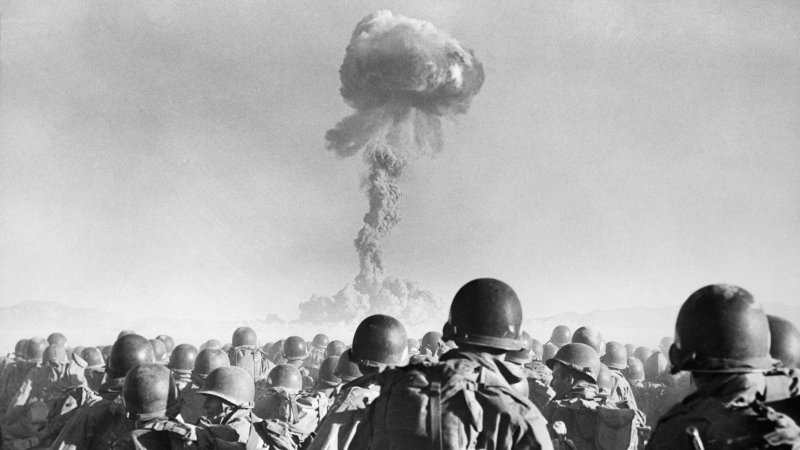
Nuclear weapons derive their destructive power from nuclear reactions that release enormous amounts of energy. This energy appears in several forms simultaneously: heat, pressure, radiation, and long-term radioactive contamination.
What makes nuclear weapons unique is not only the immediate devastation, but the combination of effects. A single detonation can destroy infrastructure over a wide area, cause severe injuries and deaths instantly, and leave behind radiation that affects health and the environment long after the event.
From a non-military perspective, nuclear weapons represent a technology where the scale of harm far exceeds the capacity of emergency response, medical systems, or environmental recovery in the short term. This imbalance is central to why they are classified as weapons of mass destruction.
Chemical weapons
Chemical weapons use toxic substances designed to harm living organisms through inhalation, skin contact, or ingestion. These substances interfere with basic biological functions such as breathing, nerve signaling, or blood oxygenation.
Unlike nuclear weapons, chemical weapons do not rely on explosive force. Their danger lies in invisibility, rapid physiological effects, and difficulty of detection without specialized equipment.
From a humanitarian viewpoint, chemical weapons are especially troubling because they often cause prolonged suffering rather than immediate death. Survivors may experience long-term health problems, including respiratory damage, neurological disorders, or chronic pain.
Their classification as weapons of mass destruction reflects their ability to harm large populations indiscriminately, particularly in enclosed or densely populated environments.
Biological weapons
Biological weapons involve the deliberate release of pathogens such as bacteria, viruses, or toxins that cause disease. Their defining feature is not immediate destruction, but uncontrolled spread.
A biological agent can move through populations silently, crossing borders and affecting people who were never near the initial release. The damage unfolds over time, often before the cause is fully understood.
What places biological weapons in the category of mass destruction is their potential to overwhelm healthcare systems and disrupt entire societies. Even relatively small releases can lead to large-scale outbreaks if conditions allow transmission.
Importantly, biological weapons blur the line between weapon and public health crisis. The same tools used to respond to natural epidemics are required to address deliberate releases.
Radiological weapons and materials
Radiological weapons are sometimes discussed separately from nuclear weapons. They do not involve nuclear explosions but use radioactive materials to contaminate environments.
The harm from radiological exposure is typically slower and less dramatic than nuclear detonation, but the long-term effects can still be severe. Contaminated areas may become unusable, and populations may face increased health risks over time.
Radiological threats highlight an important aspect of weapons of mass destruction: the psychological and social impact can be as significant as the physical harm. Fear, displacement, and stigma often follow radiation-related incidents, regardless of actual exposure levels.
Why these weapons are grouped together
Despite their differences, nuclear, chemical, and biological weapons are grouped under the same label because they share key characteristics.
First, they are inherently indiscriminate. Their effects cannot be reliably confined to specific individuals or targets. Civilians, infrastructure, and the environment are all affected.
Second, they create harm that extends beyond immediate use. Environmental contamination, long-term health effects, and social disruption persist long after the initial event.
Third, they challenge existing systems of response. Medical services, emergency management, and governance structures are often overwhelmed, making recovery slow and uncertain.
These shared traits explain why the international community treats these weapons differently from conventional arms.
International efforts to limit and prohibit them
The classification of weapons of mass destruction is not merely descriptive. It carries legal and ethical consequences.
Over time, global agreements have emerged to restrict or prohibit entire categories of these weapons. Treaties addressing nuclear proliferation, chemical weapons, and biological weapons reflect a shared recognition that certain technologies pose unacceptable risks to humanity as a whole.
These agreements are based less on military balance and more on humanitarian principles. They acknowledge that some forms of harm cannot be justified by political objectives or security arguments.
The human-centered perspective
When military language is removed, weapons of mass destruction can be understood primarily through their impact on people.
They disrupt families, communities, healthcare systems, food supplies, and ecosystems. The harm often falls most heavily on those with the least ability to protect themselves, including children, the elderly, and marginalized populations.
This perspective shifts the conversation away from strategy and toward responsibility. It raises questions about prevention, preparedness, and the ethical limits of technology.
Why the term still matters today
Some critics argue that the term “weapons of mass destruction” is too broad or politically loaded. Yet its continued use reflects a real need to distinguish between levels of harm.
Not all dangerous technologies are equal in their consequences. The term signals that certain weapons cross thresholds where normal rules of risk and response no longer apply.
Understanding what weapons of mass destruction are, without rhetoric, helps clarify debates about safety, regulation, and international cooperation.
A realistic conclusion
Weapons of mass destruction are defined not by fear or ideology, but by scale. They are technologies capable of causing widespread, long-lasting harm that exceeds the capacity of societies to respond quickly or fully.
Nuclear, chemical, biological, and radiological weapons differ in how they function, but they converge in their human and environmental impact. Removing military language from the discussion does not diminish their seriousness. It clarifies it.
Seen through a civilian and humanitarian lens, weapons of mass destruction are less about power and more about vulnerability. Understanding them in these terms is essential for informed public dialogue, responsible policy, and a future that prioritizes prevention over devastation.


Similar news