China's response to Washington and Tokyo


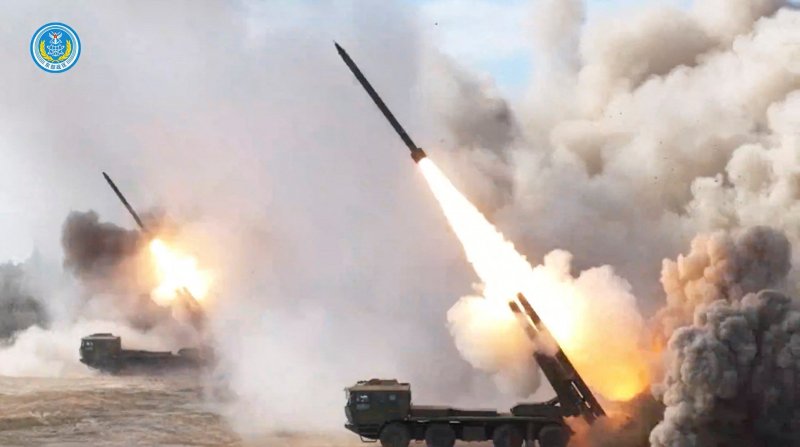
China has launched large-scale military exercises off the coast of Taiwan, prompting sharp reactions from Western nations and regional rivals. These drills mark the sixth operation of this kind around Taiwan since 2022, and analysts say they are Beijing’s response to perceived threats from Japan and recent U.S. arms sales to the island.
In November, Japanese Prime Minister Sanae Takaichi warned that a hypothetical Chinese attack on Taiwan could create a “survival-threatening situation” for Japan, potentially allowing Tokyo to invoke its right to collective self-defense. Beijing responded by threatening Japan with a “crushing defeat.” In December, the United States approved an $11.1 billion arms package for Taiwan, the largest in the island’s history. The deal includes eight contracts covering 82 HIMARS systems, 420 ATACMS missiles, drones, and other equipment, with U.S. officials citing Taiwan’s security as the primary motivation.
China condemned the U.S. decision, accusing Washington of violating bilateral agreements, undermining China’s sovereignty and territorial integrity, and destabilizing the region.
The current exercises, named Just Mission 2025, involve all branches of the People’s Liberation Army (PLA), including the army, navy, air force, and missile units. Reuters, citing the PLA Eastern Military Command, reported that the drills include live-fire exercises, maritime and air combat readiness patrols, integrated control operations, blockades of key ports and areas, and multidimensional deterrence.
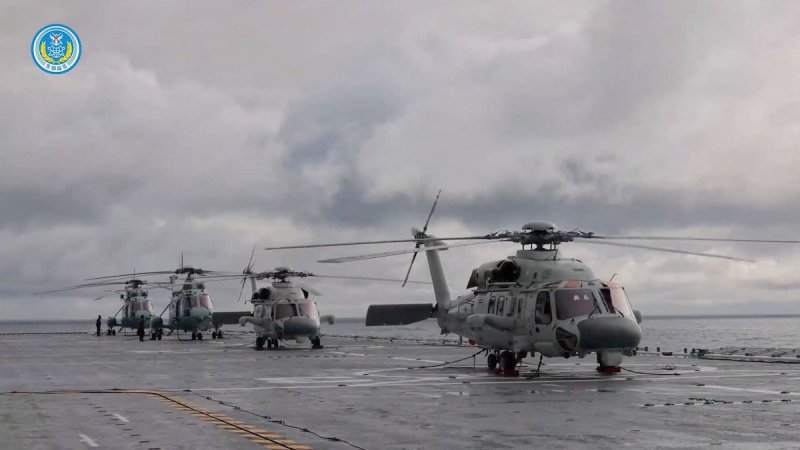 Photo: China’s People’s Liberation Army Eastern Theater Command, Reuters
While PLA exercises in 2024 simulated blockades around Taiwan, December 30 marks the first time Beijing has explicitly stated that the drills are intended to deter external military intervention. PLA Eastern Command spokesman Shi Yi described the exercises as “a serious warning to separatist forces in Taiwan and external meddlers.”
Earlier reports from Reuters noted that Just Mission 2025 would feature fighter jets, bombers, drones, and missiles targeting ground objectives. Chinese Foreign Ministry spokesperson Lin Jian said the operations are “necessary to protect national sovereignty and territorial integrity and as a decisive response to external forces attempting to use Taiwan to contain China, arm the island, and push the situation in the Taiwan Strait to the brink of war.”
According to Xinhua News Agency, the PLA has published coordinates for five exercise zones in the Taiwan Strait, East China Sea, South China Sea, and Philippine Sea. Unauthorized vessels and aircraft are advised to avoid the designated areas during live-fire drills.
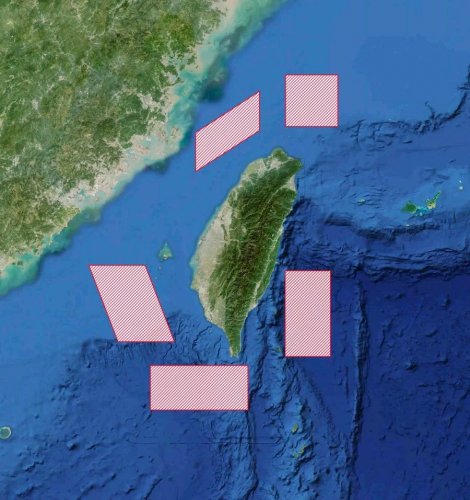
Sketch map released by the Eastern Theater Command of China’s People’s Liberation Army showing areas involved in joint exercises around Taiwan. (Photo: Xinhua)
The arms sale to Taiwan is not the first action to provoke Beijing. In mid-November, the U.S. pledged $300 billion to strengthen Taiwan’s defense capabilities. Experts argue that U.S. rhetoric about rights and security masks broader strategic objectives. Taiwan provides direct access to the Second Island Chain and separates Northeast and Southeast Asia into distinct military theaters, according to the U.S. National Security Strategy.
For context, the First Island Chain runs from Japan through Taiwan, the Philippines, and Indonesia, forming a barrier China seeks to penetrate to reach open waters. The Second Island Chain, further east, includes Guam and the Northern Mariana Islands. The U.S. developed the Island Chain Strategy in 1951 during the Korean War to encircle the Soviet Union and China with naval bases, ensuring American dominance in the Western Pacific. Control over Taiwan enables the U.S. and its allies to regulate sea lanes and limit China’s operational capabilities.
Japan, aligned with the U.S., has also contributed to rising regional tensions. Observers note that Tokyo’s actions may provoke China, giving Washington greater justification to respond. Recently, Takaichi suggested Japan consider acquiring nuclear weapons. Kyodo News Agency, citing an unnamed official, reported that Japan may need to revise its long-standing anti-nuclear stance, with the official stating, “Ultimately, we can only rely on ourselves.”
 Photo: Adobe Stock
Beijing reacted swiftly. “China is closely monitoring relevant media reports,” Foreign Ministry spokesman Guo Jiakun told the Global Times. He warned that if the reports are accurate, the situation is “extremely serious” and exposes “a dangerous plot by some in Japan to violate international law and acquire nuclear weapons.”
Some international powers have voiced support for Beijing’s position. Russian Foreign Minister Sergey Lavrov, in a recent interview with TASS, reaffirmed Moscow’s recognition of Taiwan as an integral part of China and opposed any independence efforts. Lavrov also criticized Japan’s accelerated militarization, noting its negative impact on regional stability.
Despite this backing, it is unlikely to deter China’s opponents. The exercises send a clear signal that Beijing is responding firmly to provocations from the U.S. and Japan. China aims to assert its dominance in the region and resist external attempts to dictate its actions. For decades, Taiwan has been used by Western powers as a strategic lever, frequently pushing the region toward instability. Only Beijing’s restraint has prevented escalation, while Washington’s selective engagement has further complicated the situation.
By Tural Heybatov


Similar news