COMMENT: U.S. and China on brink of trade war after massive tariff hikes


.png)
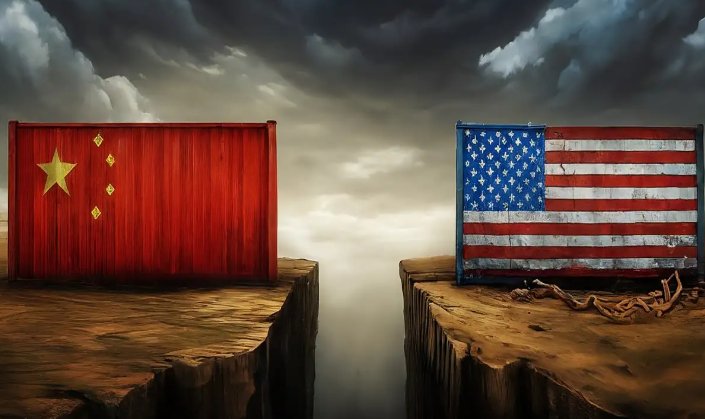
In a sharp escalation of trade tensions between the world’s two largest economies, China has announced a 34% retaliatory tariff on a range of U.S. imports. The move comes in direct response to new tariffs imposed by the United States on Chinese goods earlier this week.
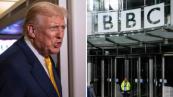
Reacting swiftly, a President Donald Trump warned that the U.S. would impose an additional 50% tariff on Chinese imports unless Beijing rolls back its newly declared 34% hike. "We will not tolerate unfair trade practices," Trump said, adding that China must reverse its decision or face “serious consequences.”
The tit-for-tat tariff exchange has reignited fears of a renewed trade war with potentially global implications. Economists warn that a prolonged standoff could disrupt international supply chains, raise consumer prices, and erode investor confidence.
Beijing, however, has signaled its readiness to defend its economic interests. A spokesperson for the Chinese Ministry of Commerce stated: “China will not bow to pressure. We urge the U.S. to return to rational dialogue.”
According to the U.S. Census Bureau, total U.S. imports from China in 2024 amounted to approximately $427 billion, while exports to China were valued at $149 billion—resulting in a trade deficit of $278 billion. China's 34% tariff is expected to impact roughly $50 billion worth of U.S. goods, including soybeans, automobiles, and semiconductors.
On the American side, the proposed 50% tariff would target up to $300 billion worth of Chinese exports, including smartphones, machinery, and textiles. Analysts at the Peterson Institute for International Economics estimate that a full-scale tariff war could reduce U.S. GDP by up to 0.5% annually and Chinese GDP by up to 0.3%.

In an interview with News.Az, American political scientist Peter Tase noted that Trump had long intended to impose stronger tariffs on China.
“As U.S. stock markets closed after a volatile session, President Trump appears determined to maintain international pressure by imposing new tariffs on several countries. While tariffs might initially raise the value of the dollar by reducing its availability in international trade, proponents of the so-called 'Mar-a-Lago Accord'—a new standard in global finance and trade—argue that tariffs will have little to no effect on domestic prices. However, that claim doesn’t hold up to scrutiny,” Tase said.
He referred to arguments made by economist Stephen Miran, co-chair of the Council of Economic Advisers, and to a 2020 Johns Hopkins working paper by Olivier Jeanne and Jeongwon Son. “Their analysis of Trump’s 2018–19 tariffs on China found that roughly 53% of those tariffs were passed on to U.S. consumers through higher prices. A similar pattern is expected to unfold again, pushing U.S.-China relations into further stalemate,” Tase explained.
He further emphasized that the current U.S. trade policy is creating greater instability in global commerce. “These tariffs are causing more chaos in international trade. By artificially deteriorating economic ties with the People’s Republic of China, the Trump administration is incentivizing Beijing to strengthen its alignment with BRICS and pursue deeper cooperation with EU member states,” he said.
Tase concluded by pointing out a contradiction in Trump’s economic strategy: “The dual approach of devaluing the dollar while imposing tariffs is inherently inconsistent. While the Mar-a-Lago Accord suggests minimal price impact, empirical data says otherwise. It is a serious miscalculation by the U.S. government not to explore more creative avenues for economic cooperation with Beijing’s leadership.”


Similar news