Leaked video exposes severe damage from USS Gerald R. Ford fire - VIDEO


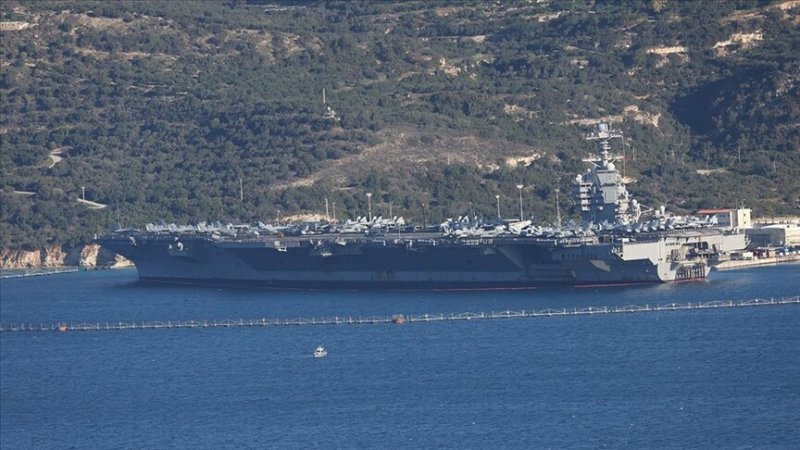
A newly surfaced video reveals that a fire aboard a US aircraft carrier in the Middle East earlier this year was significantly more severe than the Pentagon initially disclosed.
When the blaze broke out in March aboard the USS Gerald R. Ford, the US Navy maintained that the fire was quickly contained, the ship remained "fully operational," and only two sailors suffered non-life-threatening injuries. However, footage obtained by CNN tells a much more chaotic story, with sources confirming that the warship's primary fire-suppression system completely failed during the emergency, News.Az reports, citing Anadolu Agency.
🇺🇸 New video released by CNN allegedly shows extensive damage caused by a March fire aboard the $13 billion USS Gerald R. Ford, beyond what was previously disclosed by the US Navy
📌 Footage allegedly shows sailors’ sleeping quarters destroyed, with charred bunks, twisted metal,… pic.twitter.com/11vjxeDz5o
Far from a minor incident, the fire raged for more than 30 hours before crew members could extinguish it. The aftermath left over 600 service members displaced without beds, forcing them to sleep on floors and tables. Because the fire originated in the ship's main laundry area, sailors were also left without access to clean clothing, while dozens of crew members suffered from smoke inhalation.
RECOMMENDED STORIES
The carrier, home to 4,500 sailors and pilots, has been on a grueling, high-stakes deployment. After a high-pressure mission near Venezuela late last year, the vessel was redeployed to the Middle East amid ongoing regional conflicts involving Iran.
While US Central Command previously insisted the ship's propulsion plant was untouched and operations continued around the clock, crew members have pointed to compounding infrastructure issues, including a plumbing system that leaves hundreds of toilets frequently broken. The leaked footage now raises serious questions about the actual readiness of the Navy's most advanced aircraft carrier during active operations.
By Aysel Mammadzada


Similar news