Corruption in the European Union: Everything is under control


Editor's note: Moses Becker is a special commentator on political issues for News.Az, a PhD in political science and an expert on interethnic and interreligious relations. The article expresses the personal opinion of the author and may not coincide with the view of News.Az.
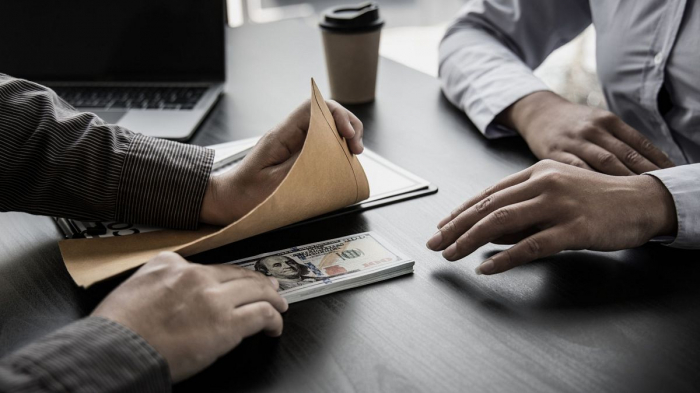
According to the European Commission, corruption in the European Union costs its citizens approximately 120 billion euros per year. The champions in this process are Croatia, the Czech Republic, Lithuania, Bulgaria, Romania, and Greece, where from 6% to 29% of respondents reported either taking or giving bribes. One of the figures in a corruption scandal was the former Prime Minister of the Czech Republic, billionaire Andrej Babis, who was accused of fraud related to a two-million-euro European Union subsidy. In addition to criminal charges, Babis was also caught by the European Commission in a conflict of interest, as his business group Agrofert, which employs over 30,000 people, benefited significantly from funds allocated by European development funds. It turns out that power is sought not to be used for the benefit of the people but for additional profit at the expense of external borrowings.
According to the EU Anti-Fraud Office (OLAF), the losses from corruption in the EU are significantly higher than the declared amounts and amount to 323 billion euros per year. The officially recognized figure of corruption damage at 120 billion euros per year is roughly equal to the annual budget of the European Union or the PPP GDP of a wealthy state like Qatar. This sum does not include corruption in the pan-European bodies of the EU.
In 2013, according to the European Court of Auditors (ECA), EU member states mistakenly (?) spent almost 7 billion euros or more than 7% of the total EU budget. Most of the said funds were "written off" for the development of land that is unsuitable for agriculture. At the same time, the ECA does not consider this to be inefficient spending, unjustified costs, or fraud.
The highest level of corruption among EU countries is noted in Poland, Slovakia, and Hungary. This phenomenon is most prevalent in the healthcare systems of these states. Bulgaria, Romania, and Italy are the main hotbeds of organized crime in the EU, but their activities are nothing compared to the bribery and gray money laundering schemes by white-collar workers and VAT fraud.
In Italy, the anti-corruption law was adopted in 2012. The legislative decree "On the reorganization of the order of ensuring necessary transparency, openness, and dissemination of information by public authorities" focuses on openness in preventing corruption, with the highest risks noted in the field of public procurement. Therefore, special attention is paid to them.

The least corrupt EU countries turned out to be Denmark and Finland. Traditionally, they are followed by Sweden, the Netherlands, Belgium, and Luxembourg. Mostly, these are constitutional monarchies where high standards of state institutions are maintained, and royal power is inherited.
The degree to which EU officials are tainted by corruption is evidenced by the case of Eva Kaili, who was one of the representatives of the European Parliament monitoring the labor market situation in Qatar. On the eve of the World Cup, the European Parliament demanded reforms from Qatar aimed at improving the situation with the exploitation of immigrants. The Greek deputy, on behalf of the European Union, noted Qatar's intention "to continue labor reforms" based on the mission's results.
"The World Cup in Qatar is direct evidence of how sports diplomacy can lead to historic transformation," she said. Speaking from the podium of the European Parliament, Eva Kaili called Qatar "a flagship in labor law," but it turned out that her optimism in this matter was supported by a substantial bribe in the form of a good-sized suitcase. Currently, the strategic issue of supplying "democratic" gas from Qatar to the EU in place of totalitarian fuel from Russia is being successfully resolved. Without it, Europe, and especially Germany, risks losing competitiveness altogether, if not entirely losing its industrial potential.
Against this backdrop, it turned out to be extremely unprofitable to inflate the scandal surrounding the successfully conducted World Cup by Doha. Today, only alternative suppliers of expensive LNG, who are not on the list of banned "authoritarian regimes" and, in this regard, are best suited for the United States, are interested in exacerbating Qatar-European relations.
The extent of corruption at the highest levels of the EU leadership is also evidenced by the following fact. In December 2013, Angela Merkel appointed gynecologist Ursula von der Leyen as defense minister. She had no understanding of tanks but was very good at counting. In 2019, after her resignation, only half of the German Eurofighter and Tornado aircraft, a third of the Puma armored personnel carriers, 23% of the Tiger attack helicopters, and 17% of the German submarines were ready for combat use. In December 2018, the Bundestag launched an investigation into von der Leyen, accusing her of corruption and nepotism in hiring consultants and distributing contracts.
In 2016, the German Ministry of Defense spent 150 million euros on consultants , declaring only 2.9 million. Where the remaining amounts went is anybody's guess. It is enough to say that Ursula's appointees worked in military corporations and handed them contracts. The problem was hushed up due to her transition to the EU. It turned out that Ursula's husband, Heiko von der Leyen, holds the position of medical director at Orgenesis, an American biotechnology company that actively participated in the development of the Pfizer vaccine. In May 2021, von der Leyen signed a third contract with BioNTech and Pfizer for the purchase of another 1.8 billion doses of the vaccine at a price of 19.5 euros each, which is four euros higher than in the first EU contract. Nevertheless, Ms. von der Leyen remains in her position and is currently distributing billions to Kyiv.
The endless migration flows, reminiscent of the ninth wave by their power, have always been a special issue. As it turned out, various swindlers specializing in humanitarian problems and social service employees, as well as smugglers and their kind-hearted helpers with entire flotillas, profited well from this. Due to the war in Ukraine, in Warsaw, the real number of Ukrainian refugees at the reception center of the Global Expo building on Modlinska Street, the largest in Masovian Voivodeship, was found to be overestimated.
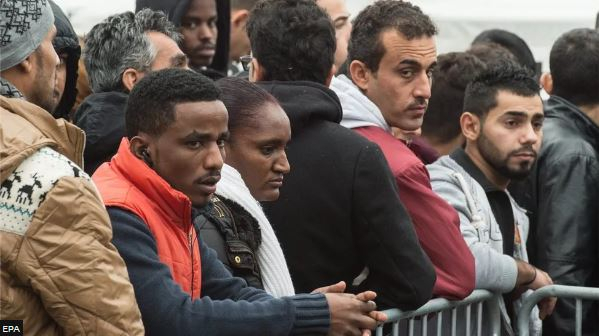
During inspections, instead of the declared 2,000 refugees, there were only a thousand people. At the same time, it turned out that this center has huge debts to dozens of service organizations. But most importantly, the owner of the debtor building and the moderator firm for receiving refugees are connected by family ties, and this is already a classic money-laundering scheme. Now it becomes clear why Germany's leadership so eagerly accepted 1.5 million refugees in 2015 . "We will manage," German Chancellor Angela Merkel said at the time. Apparently, that's what happened, as evidenced by the growth of far-right sentiments in Germany.
(If you possess specialized knowledge and wish to contribute, please reach out to us at opinions@news.az).


Similar news