Finland’s 200km answer to Russian aggression


Editor's note: Einars Graudins is a military expert, retired senior officer of the Latvian Armed Force. The article expresses the personal opinion of the author and may not coincide with the view of News.Az.
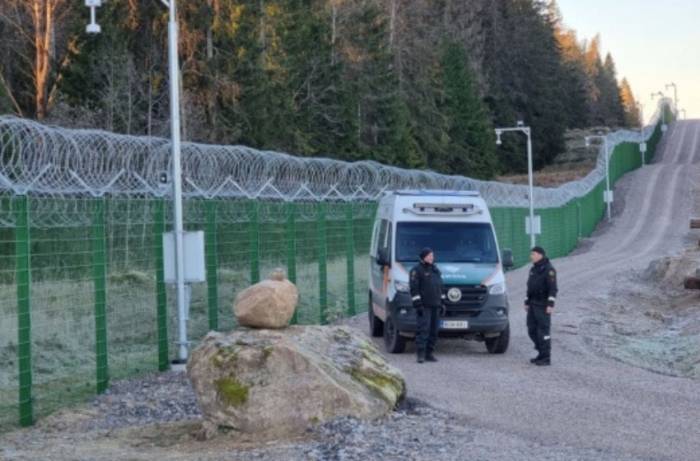
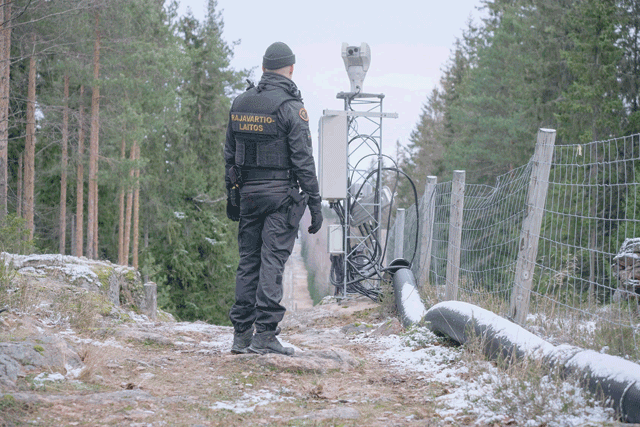
Finland’s decision to accelerate the construction of a 200-kilometer border fence with Russia underscores deep-seated security concerns that have been shaped by history, geopolitical shifts, and contemporary threats. Initially expected to be completed by 2026, the project is now set to finish ahead of schedule, with the majority of the work completed by 2025. This rapid construction reflects Helsinki’s growing urgency in fortifying its eastern border.
The Finnish-Russian relationship has long been defined by a delicate balance between cooperation and caution. Finland's historical experience with Russia—spanning from imperial rule to Soviet attempts at influence—has instilled a persistent wariness in Helsinki’s strategic thinking. The Winter War of 1939-1940 remains a defining moment, where Finland’s ability to resist Soviet aggression reinforced its identity as a resilient nation determined to protect its sovereignty. Though Finland adopted a policy of neutrality during the Cold War, it always remained mindful of the geopolitical realities dictated by its proximity to its eastern neighbor.
The collapse of the Soviet Union allowed Finland to redefine its security policy, maintaining pragmatic ties with Russia while deepening its integration into Western institutions. However, Russia’s full-scale invasion of Ukraine in 2022 shattered any remaining illusions about the stability of the regional security architecture. Finland’s subsequent accession to NATO in 2023 was a direct response to the realization that neutrality was no longer a viable strategy in an era of renewed great-power confrontation.

The construction of the border fence must be viewed in this context. While not a military fortification, the fence serves as a deterrent against hybrid threats, including illegal migration, sabotage, and intelligence operations. The use of migrants as a geopolitical tool, as witnessed in Belarus’s orchestrated border crisis with the EU, has heightened concerns that Russia could employ similar tactics. For Finland, securing the border is not merely a technical measure but a strategic necessity to prevent any vulnerabilities that could be exploited.
The historical context of Finland’s security concerns cannot be ignored. During the 20th century, the Soviet Union attempted multiple times to assert dominance over Finland, using both direct military force and political influence. The Winter War, a brutal conflict that saw Finland heroically resisting a vastly superior Soviet military, still looms large in the national consciousness. The post-war period saw Finland maintaining a careful policy of neutrality, a delicate balancing act between preserving its sovereignty and avoiding direct confrontation with Moscow.
However, the post-Cold War era saw Finland gradually moving closer to the West. Joining the European Union in 1995 marked a significant shift, aligning Helsinki more closely with Western economic and political structures. Yet, for decades, Finland refrained from seeking NATO membership, opting instead to maintain a non-aligned status while fostering strong defense capabilities. The invasion of Ukraine, however, was the breaking point. The realization that Russia was willing to launch a full-scale war against a neighboring country with little provocation fundamentally altered Finland’s threat perception.
For Moscow, Finland’s NATO membership and border fortifications are likely viewed as further evidence of Western encroachment. Russian officials have historically framed NATO expansion as a direct threat, despite the alliance’s defensive nature. The border fence, though not an offensive measure, adds to the broader shift in regional security dynamics, reinforcing Finland’s commitment to securing its borders against potential threats from the East.

While the physical barrier is significant, Finland’s broader strategy involves a comprehensive strengthening of its defense infrastructure. Increased military spending, deeper collaboration with NATO allies, and a more assertive stance on regional security are all part of Helsinki’s evolving approach. Finland’s geography, with its dense forests and harsh winter conditions, has historically served as a natural defense against invasion. However, modern security threats extend beyond conventional warfare, encompassing cyber threats, disinformation campaigns, and economic coercion—areas where Finland is also ramping up its defenses.
Public opinion in Finland has also played a key role in shaping these security policies. The overwhelming support for NATO membership following Russia’s invasion of Ukraine signaled a fundamental shift in the Finnish mindset. Where skepticism about the alliance once existed, now there is broad consensus that collective security is the best safeguard against potential Russian aggression. The construction of the border fence, therefore, aligns not only with strategic imperatives but also with the sentiments of the Finnish public, who demand stronger measures to protect national security.
Despite these measures, questions remain about how Russia might respond in the long term. While a direct military confrontation is unlikely, Moscow has a range of asymmetric tools at its disposal. Cyberattacks, economic pressure, and disinformation campaigns targeting Finnish society could all be used to undermine Helsinki’s security posture. Additionally, the use of energy exports as leverage, a tactic Russia has employed against other European nations, could become a key pressure point in the Finnish-Russian relationship.
Finland’s response to these threats will likely involve deepening its engagement with NATO and the broader European security framework. Joint military exercises, intelligence-sharing initiatives, and coordinated responses to cyber threats will become increasingly important as Helsinki navigates this new geopolitical reality. At the same time, maintaining diplomatic channels with Moscow—however limited—will remain crucial in managing tensions and preventing unnecessary escalations.
The rapid progress of Finland’s border fence is emblematic of a region that has learned from history. While no physical barrier can completely neutralize geopolitical risks, Helsinki’s actions signal a clear commitment to ensuring that its sovereignty remains non-negotiable. Whether this fence ultimately serves as a practical defense mechanism or a stark reminder of the past, one thing is clear—Finland is taking no chances. As the broader European security landscape continues to evolve, Finland’s proactive measures may serve as a model for other nations grappling with similar threats from an increasingly unpredictable Russia.
(If you possess specialized knowledge and wish to contribute, please reach out to us at opinions@news.az).


Similar news