Former president of Azad Kashmir to News.Az: 125 jets, drones, and missiles in unprecedented Pakistan-India clash - EXCLUSIVE


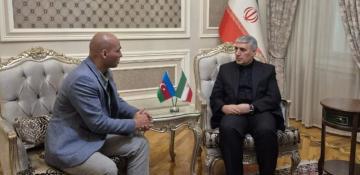
News.Az presents an interview with Sardar Masood Khan, former President of Azad Kashmir and former Ambassador of Pakistan to the United States
- What is the current situation on the border between Pakistan and India? How likely is it that this conflict could escalate into a full-scale war?
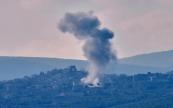
- The current situation is tense and incendiary. Right now, there is ongoing war. In response to India’s unprovoked attack on several places in Pakistan and Azad Jammu and Kashmir on the night of 6 and 7 May, Pakistan struck back and targeted military and air installations inside India and the Indian Occupied Jammu and Kashmir. Following Indian missile and drone attacks on our civilians and infrastructure, Pakistan immediately took out India’s 5 military aircraft and scores of drones. India would not stop or be amenable to diplomacy. Pakistan showed restraint and responsibility, but in the face of India’s provocative aggression, Pakistan is retaliating.
- According to reports by CNN, citing a source in Pakistan’s security services, one of the largest air battles in modern aviation history recently took place, involving 125 fighter jets from both countries. The battle reportedly lasted for over an hour, with neither side crossing into the other’s airspace. What details can you share about this incident? What additional insights can you provide, and what was the outcome?
- Surface-to-surface and air-to-surface missiles have been fired. India by yesterday had sent 77 drones to Pakistan. India deployed largest number of jet fighters along the Line of Control, working boundary, and the international border. Dozens of Pakistan were alert to give a fitting response. India lost five aircraft, including Rafale: Pakistan none. This is the biggest aerial engagement in history in such a short duration.
- Do you believe that the current escalation could lead to a nuclear confrontation between Pakistan and India? If so, under what circumstances might this happen?
- India is on a steep escalatory ladder. It is launching attack after attack against Pakistan and at the same time disingenuously claiming that its posture is non-escalatory. It is inciting Pakistan to signal that it is mobilizing it nuclear deterrent. Pakistan understands that stratagem and would exercise utmost restraint and responsibility. But if, through this constant Indian aggravation, our existence - sovereignty, territorial integrity, economy – are imperilled, nothing can be ruled out. Going nuclear should be and would be the weapon of last choice.
- Pakistan and India are both members of the Shanghai Cooperation Organization (SCO), which positions itself as a platform for ensuring regional security and stability. However, neither China nor Russia has so far shown any visible effort to help resolve this conflict. How do you assess the silence of these key SCO members?
- China has counselled restraint to both India and Pakistan and to resolve their differences through talks. China has also backed Pakistan’s proposal for independent investigation of the Pehlgam attack on April 22. Russian Foreign Minister Sergei Lavrov has offered Moscow’s mediation to defuse the crisis. The SCO eschews taking up resolution of bilateral disputes. That’s why the entry of India and Pakistan into SCO was delayed so much. Bilaterally, China and Russia, together, have considerable influence with Delhi and Islamabad. If India agrees, Pakistan should be willing to use their diplomatic channels.
- In your view, what possible scenarios could unfold next? Is there a chance for de-escalation, or is the situation heading toward even greater tension?
- The first possible, and apparently most imminent, scenario is a more dangerous war involving the militaries and people of the two countries. This would be a real firestorm. Eruption of a full-scale war – conventional or strategic - in South Asia will affect all nations of the world but particularly its neighbouring regions. The trepidations and disruptions would affect supply chains and global markets. The second scenario is that India shows sincere, not fake, willingness to de-escalate, either directly or through a third party, and engage diplomatically. Pakistan would be ready, but India would need to answer a lot of questions about this unwarranted aggression against Pakistan. The third scenario, and the least likely, is a low intensity but continuing drones-and-missiles war. This scenario is not feasible as it has the strong likelihood of a wider conventional and nuclear conflict. Diplomacy is the best course of action and time is of the essence.


Similar news