From Moscow to Manhattan: Smarter bus lane rules Baku should steal


By Tural Heybatov
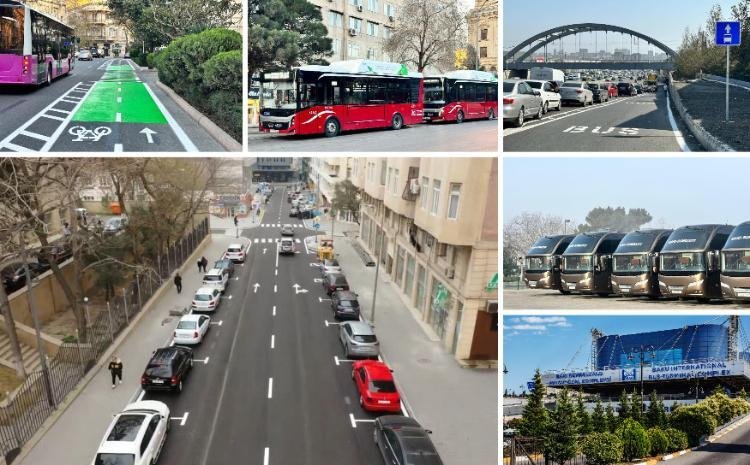
In recent years, Baku has undergone a transformation in the way it organizes urban transportation. The introduction of dedicated bus lanes was meant to bring order to the city’s increasingly congested streets and to promote the use of public transport. In theory, it’s a win for urban mobility. In practice, the rollout has revealed structural flaws — and sparked frustration among residents and drivers alike.
Baku’s road system is under pressure. Narrow streets, rising car ownership, and insufficient infrastructure have turned traffic congestion into an everyday reality. And it’s not just a rush hour problem anymore — bottlenecks plague the capital at all times of day.
To improve public mobility, authorities designated special lanes for buses and emergency vehicles. The results were immediate: travel times for public transport users decreased, and buses became the fastest way to get around the city. But that progress came at a cost. Streets already squeezed for space were further narrowed — often to the point of impracticality — by the addition of bus and bike lanes. For the ever-growing number of private vehicles, space simply ran out.
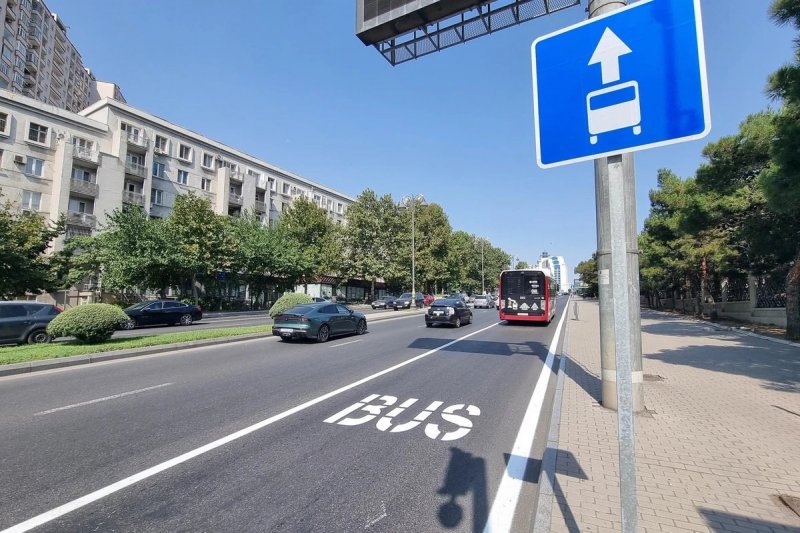
More critically, the planners behind these changes appear to have underestimated just how tight Baku’s streets really are. In some areas, bike lanes and traffic lanes are the same width — a questionable design decision that compromises safety and functionality. The city’s efforts to modernize transport infrastructure are commendable, but they lack nuance and flexibility.
One particular sticking point is the blanket ban on taxi access to bus lanes. In Azerbaijan, only buses and official emergency vehicles are permitted to use the lanes. Motorcycles and taxis are barred entirely — a decision that has proven deeply unpopular. For taxi drivers and their passengers, the consequences are tangible. Picking up or dropping off customers now often requires stopping in the middle of the road, risking both safety and traffic violations.
Azerbaijani law (specifically Article 48 of the Road Traffic Law) lays out the rules clearly: vehicles cannot enter bus lanes marked with solid lines under any circumstances. Broken lines allow brief entry, but only for quick passenger exchanges — and without hindering public transport. Violation of these rules carries a 100-manat fine and two penalty points. And with many lanes separated by solid lines, taxis are left with few legal options, forcing many to break the rules to do their jobs.
It doesn’t have to be this way. Other countries have found more balanced solutions — ones that prioritize both public transport and the practical needs of taxi services.
Russia allows licensed taxis to use bus lanes alongside buses and trolleys. The system is straightforward: those with proper permits are treated as part of the city’s public transport system. Unlicensed drivers, however, face steep fines — 1,500 rubles in most cities, 3,000 in Moscow and St. Petersburg.
Uzbekistan has recently doubled the number of buses in Tashkent and introduced bus lanes to accommodate them. Although the system is still being fine-tuned, lawmakers have begun introducing new penalties to prevent misuse of these lanes, which had previously gone unregulated.
Armenia’s capital, Yerevan, faces a similar issue — rampant misuse of bus lanes by other vehicles. The city’s solution? Concrete barriers separating bus lanes from general traffic. City officials have also pledged to introduce a unified public transport corridor across the capital.
In Georgia, the system is more permissive. Public transport, school buses, mopeds, and category “A” taxis are all allowed in bus lanes — others face fines. And enforcement is strict: nearly 171,000 violations were recorded in Tbilisi alone, each punishable by a 100-lari fine.
Germany takes a stricter approach: driving in a bus lane without permission can cost a driver €170. Still, there are exceptions — for electric vehicles, bicycles, taxis, and emergency services — but only where signs explicitly allow it. In many areas, bus lane rules apply only during certain hours, freeing up space for general use during off-peak times.
In Belgium, a similar violation results in a €58 fine, while in New York City, fines range from $50 to $250 depending on the severity of the violation.
The rules are clear: taxis are encouraged to pick up passengers outside of bus lanes, but brief stops are allowed when necessary. In many areas, parking and deliveries are permitted during non-peak hours.
What’s the lesson for Baku?
The evidence is clear: strict enforcement of bus lane rules is crucial — but so is flexibility. High fines can deter violators, but they must be paired with reasonable exceptions, especially for taxis that serve as an essential part of urban transport.
Baku’s Land Transport Agency (AYNA) would do well to study international best practices. Exempting licensed taxis from the bus lane ban could ease pressure on drivers and passengers alike, while maintaining the integrity of the public transport system. It’s a common-sense compromise — and one that residents are increasingly calling for.
Ultimately, transport reforms should serve the public, not frustrate it. Well-marked lanes and strict rules are important. But unless they’re designed with the realities of city life in mind, they risk becoming symbols of good intentions gone awry. The goal isn’t to paint perfect lines on the pavement — it’s to make the city easier to live in.


Similar news