Future of Ukraine: Will Trump and Putin unlock the key to peace?


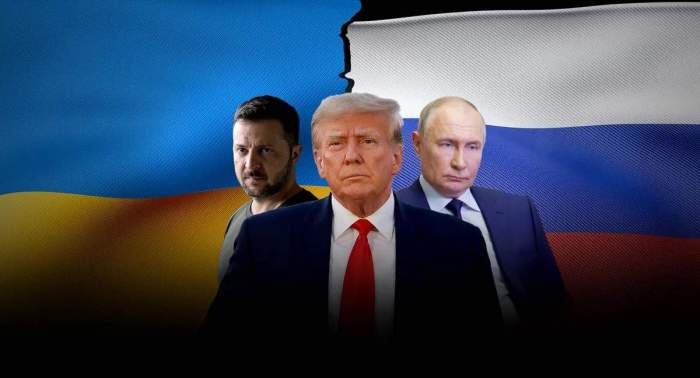
Photo: Bloomberg
The global geopolitical landscape is shifting, with particular focus on the ongoing Russian-Ukrainian conflict. President-elect Donald Trump, set to take office on January 20, has signaled his intent to engage Russian President Vladimir Putin in discussions aimed at resolving the crisis in eastern Ukraine.

In light of these developments, News.az sought insights from political scientist Daria Grevtsova regarding the feasibility and implications of such a meeting.
Grevtsova, who has closely analyzed the conflict, emphasized that Trump's campaign rhetoric strongly favored de-escalation in Ukraine. “Trump repeatedly pledged to work towards ending the conflict,” she noted. “It’s likely that addressing this crisis will be among his initial priorities as president.”
Sources suggest preliminary talks between Trump and Putin are already in preparation. Grevtsova added, “Several countries have publicly offered to host these negotiations, reflecting the widespread importance of resolving this issue.”
However, she underscored the complexity of the situation. “The war is not merely a conflict between Russia and Ukraine—it is also a proxy struggle between Russia and the West, led by the United States. Ultimately, the resolution will be shaped by Washington and Moscow, with Ukraine playing a more limited role in the decision-making process.”
Should these negotiations materialize, they will undoubtedly command global attention. “When two major powers like Russia and the United States engage in dialogue, it sends a signal about the importance of global stability,” said Grevtsova. “While public announcements may be made, key details could remain confidential. What truly matters is whether both sides approach the talks with a willingness to compromise.”
Despite her cautious optimism, Grevtsova acknowledged that a swift resolution is improbable. Instead, she views these discussions as a potential starting point for a longer process. “The initial steps may seem modest, but they are necessary to break the stalemate.”
Reflecting on the lack of diplomacy during the Biden administration, Grevtsova remarked, “Under Biden, there were no direct conversations with President Putin, nor any significant attempts to initiate dialogue. Many are now placing their hopes on Trump, who appears less inclined to perpetuate the conflict and more focused on addressing America’s internal challenges.”
In the near term, she cautioned against expecting an immediate cessation of hostilities. “We may see steps to de-escalate the most intense phases of the conflict. For instance, the U.S. could reduce arms supplies to Ukraine, while Russia might limit its attacks on critical infrastructure. Such measures would help lower tensions and slow the pace of military escalation.”
Looking ahead, Grevtsova suggested that successful phone calls could pave the way for in-person meetings. “There are already offers from several countries to host these talks. Serbia and Switzerland have expressed interest, although Russia is unlikely to accept Switzerland due to its recent adversarial stance toward Moscow.”
She also highlighted Azerbaijan as a strong contender for hosting such a meeting. “Baku has historically served as a venue for key negotiations between Russia and the United States. Its neutral stance and experience in facilitating diplomacy make it a logical choice.”
Other potential locations include Bosnia and Herzegovina, as well as Hungary, both of which have previously hosted Russian-American talks. “For now, all options remain on the table,” Grevtsova concluded.
As diplomatic efforts between the U.S. and Russia take shape, the world will be watching closely. These high-stakes negotiations have the potential to redefine not only the trajectory of the conflict but also broader geopolitical dynamics.


Similar news