A treaty Russia remembers as victory — and China as pain


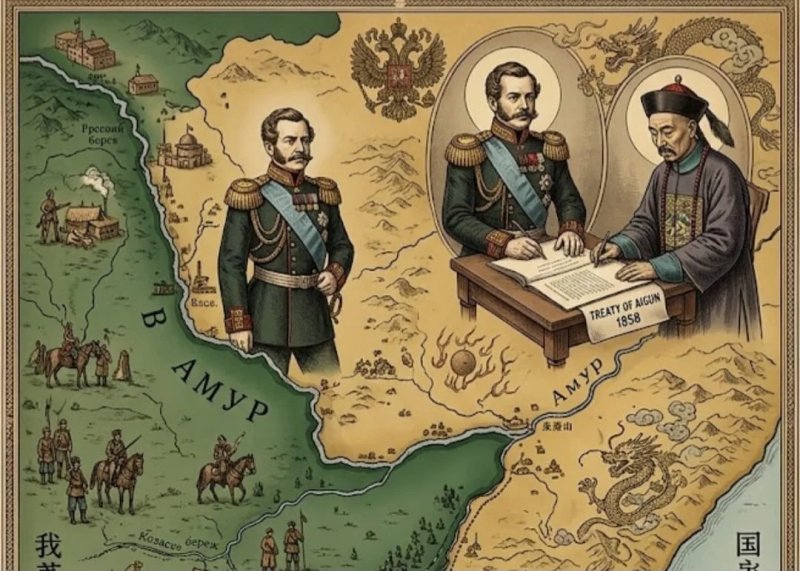
On May 28, 1858, one of the key treaties in the history of Russian-Chinese relations was signed in the town of Aigun — the Treaty of Aigun between the Russian Empire and the Qing Empire. On the Russian side, it was signed by Nikolay Muravyov, Governor-General of Eastern Siberia, who later received the title Muravyov-Amursky. On the Chinese side, the document was signed by the Qing official Yishan. The treaty established a new border between the two empires along the Amur River and effectively secured Russia’s control over vast territories on the left bank of the Amur.
For Russia, the agreement became a major diplomatic success in the Far East. For China, it became one of the painful episodes of the 19th century, often viewed in Chinese historiography as part of the system of so-called “unequal treaties.” The Treaty of Aigun changed the balance of power in the region, opened the way for Russia to strengthen its position on the Pacific, and became an important step toward consolidating Russian presence in the Amur region and, later, in Primorye.
The history of this treaty began long before 1858. As early as the 17th century, Russia and China clashed in the Amur region as Russian explorers advanced eastward and the Qing Empire strengthened its position in Manchuria. In 1689, the Treaty of Nerchinsk was signed, becoming the first major agreement between Russia and China. Under that treaty, Russia had to abandon a number of positions in the Amur region, while the border was drawn in a way that effectively left the Amur outside Russian control. For Moscow, this was a difficult compromise, but at that time Russia did not have sufficient strength for a serious confrontation on its eastern frontier.
By the mid-19th century, the situation had changed. The Russian Empire was actively expanding across Siberia and the Far East, increasing its military and administrative presence in the region, building new settlements, and seeking a reliable outlet to the Pacific Ocean. For St. Petersburg, the Amur was of enormous importance: it was not just a river, but a natural transport artery linking Eastern Siberia with the Pacific coast. Without control over the Amur, Russia’s presence in the Far East remained vulnerable and dependent on difficult overland routes.
Source: oerproject
Nikolay Muravyov played a particularly important role in this process. He understood that Russia’s future in the Far East depended on control over the Amur. Muravyov did not limit himself to diplomatic statements. He organized expeditions, strengthened the military presence, promoted the resettlement of Cossacks, and effectively created a new system of Russian influence in the region. His policy was persistent and, in many ways, assertive: Russia sought not only to reach an agreement with China, but also to formalize on paper what was already gradually becoming a reality on the ground.
China, meanwhile, was in an extremely difficult position. The Qing Empire had been weakened by internal uprisings, above all the Taiping Rebellion, as well as by pressure from Western powers during the Second Opium War. Beijing was forced to respond simultaneously to an internal crisis, British and French military pressure, and Russian activity on its northeastern borders. Russia took advantage of this moment. Muravyov-Amursky negotiated from a position of strength, understanding that the Qing Empire was not prepared to open another front in the north.
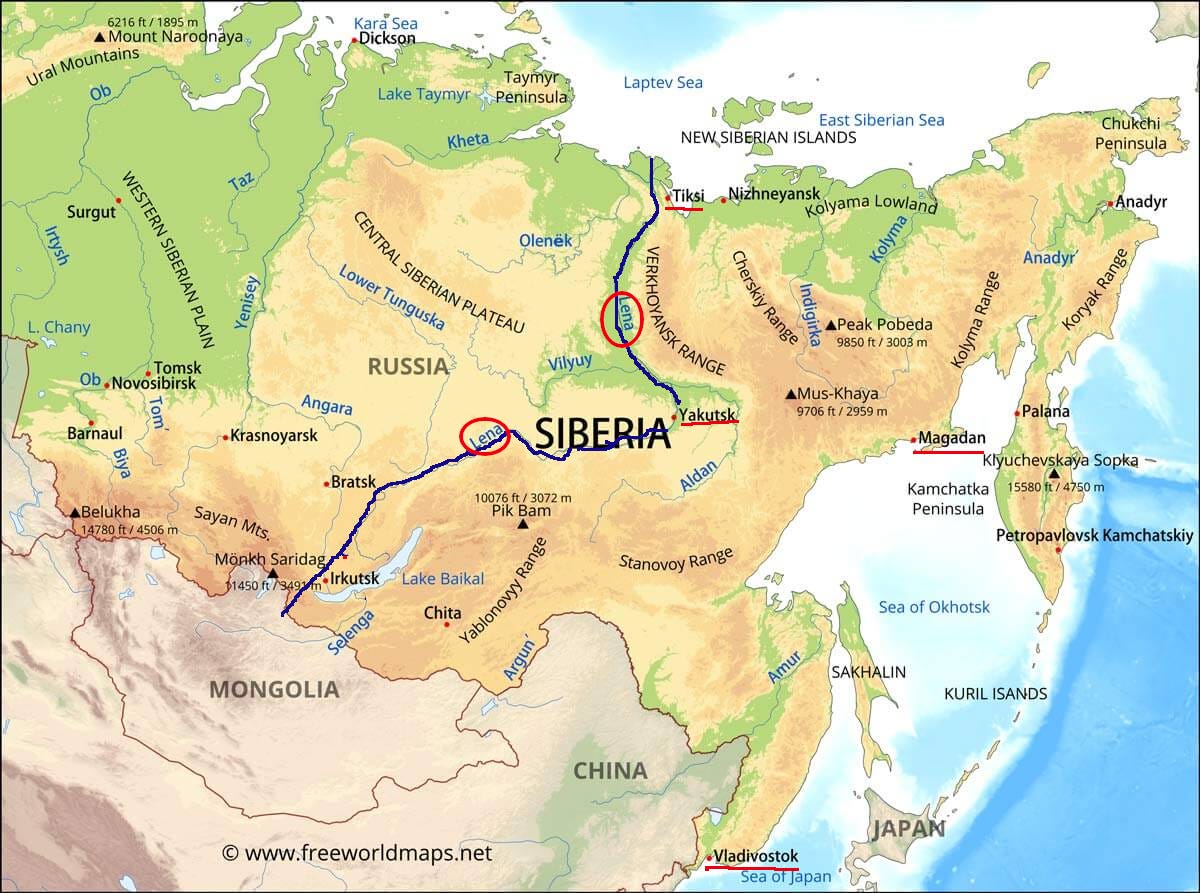
The essence of the Treaty of Aigun was the new demarcation of the border along the Amur. The left bank of the Amur from the Argun River to its mouth was recognized as belonging to the Russian Empire. The right bank remained under Chinese control. At the same time, the Ussuri region — the territory between the Ussuri River and the Sea of Japan — did not immediately come under full Russian control, but was declared a joint possession of the two states until the final border settlement. Later, in 1860, this issue was resolved by the Treaty of Beijing, under which Russia gained control over the territories east of the Ussuri, including the area where Vladivostok would later be founded.
The provisions on navigation were also of special importance. Under the treaty, navigation on the Amur, Sungari, and Ussuri rivers was permitted only to Russian and Chinese vessels. For Russia, this was extremely important, as the Amur became a key communication line. Control over the river made it possible to supply the Far Eastern territories, strengthen the military presence, and develop trade. In effect, Russia received the opportunity to turn the Amur into a strategic corridor for its eastern expansion.
The Treaty of Aigun also included provisions concerning the rights of local populations in certain areas. In particular, Chinese and Manchu residents of the so-called Sixty-Four Villages East of the Amur were allowed to remain in place under the jurisdiction of Manchu authorities. This point later became one of the complex and painful issues in the history of border relations, because the border was not only drawn on a map — it ran through living territories, where different communities, economic ties, and traditional routes already existed.
The territorial scale of the agreement was enormous. According to various estimates, Russia gained control over hundreds of thousands of square kilometers of land. These territories became the foundation of the Russian Amur region and played a key role in the further development of the Far East. The treaty recognized the Amur as the border between Russia and China and significantly expanded Russia’s possessions in Siberia and the Far East.
In Russian historical tradition, the Treaty of Aigun was long interpreted as a restoration of justice after the Treaty of Nerchinsk of 1689. In this interpretation, Russia had supposedly regained lands previously lost because of unfavorable circumstances. In the logic of the Russian Empire, this was not a seizure, but a return to the natural border along the Amur. That is why Muravyov received the honorary title Amursky, and his role was presented as an example of successful state will and Far Eastern strategy.
In Chinese historical memory, the assessment was different. For China, the Treaty of Aigun became part of the “Century of Humiliation” — the period when the weakened Qing Empire was forced to sign harsh agreements with foreign powers. In China, the treaty is often regarded as unequal because it was concluded under conditions of military and diplomatic pressure. The memory of Aigun remains associated with the painful loss of territories on the left bank of the Amur.
It is especially important that the Treaty of Aigun did not become the final point in the redrawing of the border. Two years later, in 1860, the Treaty of Beijing was signed. It confirmed Russia’s gains under the Treaty of Aigun and additionally secured for Russia the territories east of the Ussuri and south of Lake Khanka. It was after this that Russia gained the opportunity to establish and develop Vladivostok, turning it into one of the main centers of its presence on the Pacific.
Source: medium
Thus, the Treaty of Aigun was not merely a bilateral border agreement. It became a turning point in the history of Northeast Asia. Russia gained strategic access to the Amur and strengthened its positions in the Far East. China lost significant territories at a moment of internal weakness and external pressure. A region that had long remained a frontier zone between two empires began to turn into one of the most important spaces of Russia’s eastern policy.
The significance of the treaty is still felt today. The modern Russian-Chinese border was largely shaped by the 19th-century agreements — the Treaty of Aigun of 1858 and the Treaty of Beijing of 1860. Although Moscow and Beijing today officially emphasize their strategic partnership and the absence of territorial claims, the historical memory of these treaties remains different. For Russia, it is the story of Far Eastern expansion and diplomatic success. For China, it is a reminder of a period of weakness when foreign powers imposed harsh conditions on Beijing.
May 28, 1858, became a date that changed the map of East Asia. The Treaty of Aigun secured the left bank of the Amur for Russia, opened a new stage in the development of the Far East, and became one of the key documents in the history of the Russian-Chinese border. At the same time, it left a deep mark on China’s historical memory. That is why this treaty cannot be viewed merely as a legal document. It was an act of major geopolitics, concluded at a moment when one empire was strengthening its position in the east, while the other was going through one of the most difficult crises in its history.
By Samir Muradov


Similar news