How Kazakhstan is building its logistics empire


Editor's note: Maxim Kramarenko, head of the information and analytical center “Institute of Eurasian Policy” (Kazakhstan).
Kazakhstan has some big ambitions, and at the top of the list is becoming a major transport and logistics hub that links different parts of Eurasia. President Kassym-Jomart Tokayev laid out this vision in his address to the nation last year, highlighting the country’s strategic position between East and West, as well as North and South. Even without access to the sea, Kazakhstan sees itself as a crucial bridge for international trade.One of the main pillars of this strategy is developing the railway network. Kazakhstan is pumping money into expanding and modernizing its railways to become a top transit hub in Eurasia. This year, a new multimodal transport and logistics center opened at the Dostyk station on the Kazakhstan-China border. This center has already become a key node in the flow of goods between China and other parts of Eurasia, with a capacity to handle up to 800 TEUs and process 1,200 TEUs daily. This facility speeds up transit times and boosts the volume of goods moving through Kazakhstan.
There’s also ongoing construction of a second railway line from Dostyk to Moyynty, aimed at increasing the line’s capacity by five times. This project is part of a broader plan to enhance the country’s main transport corridors, such as the North-South and Trans-Caspian International Transport Route (TMTM). These corridors are vital for connecting China with Europe and the Middle East, positioning Kazakhstan as a key player in both regional and global trade.
To achieve these bold goals, Kazakhstan is keen on attracting investments and working closely with international financial institutions. The Eurasian Development Bank (EDB) is one of its significant partners, releasing a report this year on the prospects for developing the Eurasian transport network. The report stresses the need to create meridian corridors that integrate with existing latitudinal routes, like those stretching East-West. According to Yevgeny Vinokurov, Deputy Chairman of the EDB, these new corridors will cut transport costs and create a unified network, increasing freight flows by 40%.
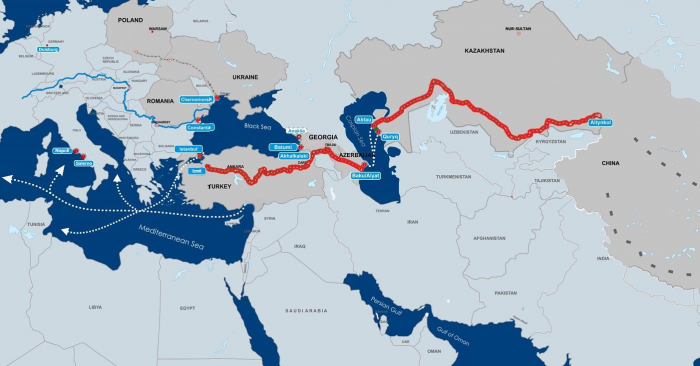
Kazakhstan is in talks with the EDB to secure $1.9 billion for upgrading its railway infrastructure along the North-South route. This funding is expected to boost the capacity of railway segments and help build new logistics centers, which would increase freight traffic from 6 to 10 million tons annually. The country is also looking at bringing in investors from other international financial institutions to further expand and modernize its transport infrastructure.
Beyond railways, Kazakhstan is also focusing on its waterways. The Irtysh Basin, which saw about 1.4 million tons of cargo transported last year, is becoming a key part of the country’s strategy to create multimodal transport corridors. Plans are in place to build a new shipping lock in the Semipalatinsk region and a port in the village of Tuygyl on Lake Zaysan. This initiative aims to establish a new transit corridor linking Russia, Kazakhstan, and China, potentially increasing shipping volumes to 3.6 million tons per year.
There are also discussions about creating a Siberian River Route , which could compete with the Suez Canal. If this idea takes off, the Irtysh Basin would become part of a new route connecting Europe and Asia through Kazakhstan and Siberia.
Western sanctions against Russia have shaken up global trade routes, pushing some of them to bypass Russia and go through Kazakhstan instead. This shift has turned Kazakhstan into a crucial transit hub, opening up more opportunities for foreign investment in its transport infrastructure and expanding its trade networks.
Kazakhstan’s economy is already reaping the benefits. The country is attracting new manufacturing facilities, including assembly lines for South Korean and Chinese car brands. This growth is creating jobs, developing technical education, and raising the skill levels of local workers. Over time, this could lead to even greater development of Kazakhstan as a logistics and industrial center.
Kazakhstan is also going all-in on digitizing and automating its transport corridors. Introducing modern technologies is cutting down the time it takes for goods to move through the country, reducing bureaucratic hurdles and lowering transport costs. Digital logistics management systems and automated warehouse complexes are already making the transport process more efficient and making Kazakhstan an even more appealing option for international trade partners.
Digitization is a crucial part of Kazakhstan’s push to integrate into global logistics chains. Using advanced IT solutions helps improve monitoring and management of freight flows, ultimately allowing Kazakhstan to become more deeply embedded in international logistics networks.
Kazakhstan is making steady progress toward its goal of becoming a central transport and logistics hub in Eurasia. With substantial investments, strategic partnerships, and active infrastructure modernization, the country is becoming an increasingly significant player on the global stage. In the coming years, Kazakhstan plans to continue enhancing its transport and logistics capabilities, attract more investment, and strengthen its position as a trade and transport center in Eurasia.
These ambitious plans are not just about boosting Kazakhstan’s economic potential; they’re also about positioning the country as a vital partner for nations across Europe, Asia, and the Middle East, contributing to regional and global stability and cooperation.
(If you possess specialized knowledge and wish to contribute, please reach out to us at opinions@news.az).


Similar news