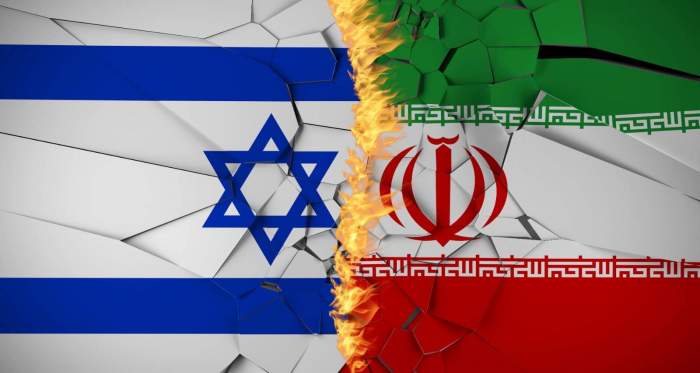
How will Israel's strike on Iran affect the Middle East?


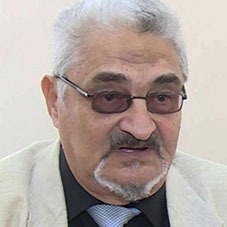
Editor's note: Moses Becker is a special commentator on political issues for News.Az, a PhD in political science and an expert on interethnic and interreligious relations. The article expresses the personal opinion of the author and may not coincide with the view of News.Az.
In 2007, retired Lieutenant Colonel Ralph Peters published an article titled "Blood Borders," in which he explored the future of Middle Eastern countries. Peters, with a substantial career that includes working at the U.S. National War College and serving as an officer in the Defense Department’s Intelligence Office, demonstrated deep insight. Peters is also the author of numerous strategic works, many of which seem to be materializing today.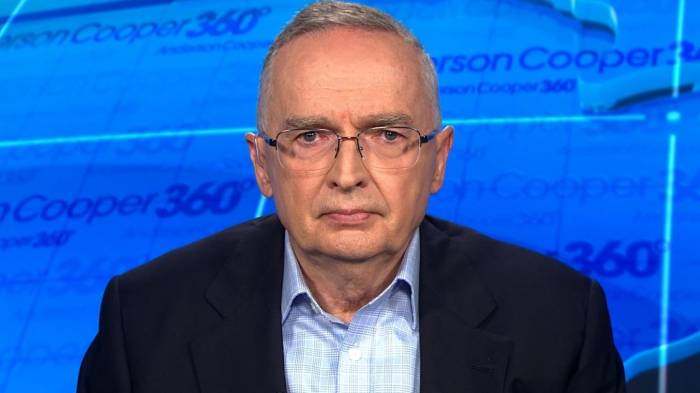
Current events in the Middle East are accelerating and leading toward a major war and a complete redrawing of borders based on tribal, religious, and clan divisions. Peters noted that "international borders have never been completely fair," a statement that resonates strongly in today’s context. It is no longer surprising to see one country bombing another thousands of kilometers away from its own borders.
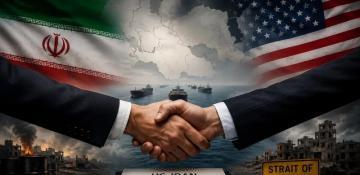
The first strike showcasing modern technological capabilities occurred on April 14, 2024, when Tehran launched drones, cruise missiles, and ballistic rockets against Israel, in retaliation for the elimination of IRGC General Zahidi in Damascus. In response, Israel executed a precision strike on Iran's air defense system at the nuclear site in Natanz. Following the elimination of Hamas leader Ismail Haniyeh in Tehran on July 31, 2024, and Hezbollah leader Hassan Nasrallah in Beirut on September 27, when 83 tons of bombs were dropped on his bunker, Iran retaliated again. On October 1, 2024, Iran launched 181 ballistic missiles at Israel, causing minimal damage but escalating tensions. Israel’s Prime Minister has vowed to respond to this act of aggression from the Islamic Republic.
Iranian President Masoud Pezeshkian seemingly disagreed with this reckless adventure, which undermined his efforts to restore relations with the U.S. and the European Union. However, in the Islamic Republic, the ultimate power lies with the Supreme Leader, who functions much like a General Secretary of the Soviet Communist Party, with an ideology that still binds the nation. But, as history shows, any ideology eventually loses its appeal, leading to its inevitable demise under the weight of circumstances. Just as the red flag of revolution faded to white over time, the green flag of the Islamic Revolution may also change color.
It is important to note that Iran is a multiethnic and multiconfessional state, home to various cultures, traditions, and languages. Moreover, it is well-known that neither language nor religion determines nationality — genetics, which carries centuries of information passed down through generations, plays the key role. While Iran has transitioned through Zoroastrianism, Christianity, and Islam, these changes in religion have not altered the genetic code of its people. Iran, like any empire, has a beginning, a period of development, and ultimately, an end. Israel’s provocation and potential retaliatory strikes may fuel the centrifugal forces already building within Iranian society. If Israel destroys Iran's entire oil and gas complex — the backbone of its economy — it could spark a popular uprising and the collapse of the country. Simultaneously destroying the country's nuclear infrastructure would be catastrophic.
Fearing retaliation, Iran's leadership has begun threatening neighboring countries, hoping to pressure them into restraining Israel and preventing a major war, which appears increasingly likely. The U.S. and Western European countries have signaled their support for Israel. Now, let’s take a closer look at the Persian Empire and the potential disintegration it may face due to the unfolding events.
Around 15 different ethnic groups live in modern-day Iran . Of these, Persians make up about half of the population, while Azerbaijanis account for 25%, Gilaks 8%, and Kurds 7%. The Baloch people, living in the southeastern part of the Iranian Plateau, are another significant group, numbering around 9 million people. Other groups include Arabs, Qashqai, and Assyrians, among others. Iran's complex ethnic composition significantly complicates the resolution of socio-political issues and ethnic conflicts. The presence of divided ethnic groups living outside Iran’s borders in neighboring countries also creates challenges for integration and sets the stage for decentralization.
In addition to the collapse of its ideology, Iran’s exorbitant military expenditures have already strained its economy. The country is actively involved in and funds wars in Syria and Yemen, fully supports Hezbollah in Lebanon, interferes in Iraq, and finances Hamas and Sudan, among others. Hezbollah’s efforts were instrumental in preserving the Bashar al-Assad regime in Syria and defeating ISIS. Iran’s financial struggles are evident: much like in the Soviet Union, illegal currency operations are now punishable by prison sentences — a clear sign of a collapsing financial system.
In the event of military failures, which seem imminent, widespread betrayal by Iran’s leadership and military commanders is inevitable, especially given the strained relations between the IRGC and the army. Iraq has already shown that betrayal in the East, especially for large sums of money, is not an exception but a rule. Moreover, the fact that the children of Iran's elite are mostly studying and living in the West — where the architects of the Islamic Revolution keep their wealth — highlights the elite’s lack of patriotism.
Iran’s elite is largely composed of people from the country's national peripheries, particularly in Iranian Azerbaijan, whose population ranges between 25 and 35 million people. Other regional elites are also eager to form their own national states. Additionally, outside of Iran, there are already independent national states of peoples who live compactly beyond its borders. To the north, across the Aras River, we see a prosperous Azerbaijan, which serves as an example of what a nation can achieve when it controls its own resources.
In the northwest, a de facto independent Kurdistan continues its struggle to create a unified state for all Kurds. President Masoud Pezeshkian was notably impressed by his visit to Erbil. In southeastern Iran, the Sunni Jundallah has long been fighting for the separation of the Sistan-Baluchistan province, relying on support from neighboring Pakistan, where most Baluch people reside. Finally, there is the province of Khuzestan, home to Arab Shiites. This province, with its capital in Ahvaz, contains a significant portion of Iran's oil fields. Many of these Arabs share genetic ties with the majority in neighboring Iraq, where they hold political power. The majority of Iraq's population supports liberating their genetic kin from Iranian influence and reuniting them within a Shia Iraq.
Thus, when blood relations are involved, religious divisions often take a back seat. The dissolution of Iran will trigger a chain reaction across the region, ultimately leading to the creation of a powerful bloc of Semitic states, built not on religion but on economic foundations. Arab resources combined with Israeli technologies will transform the Middle East into a model of prosperity and a center of attraction for neighboring nations.
(If you possess specialized knowledge and wish to contribute, please reach out to us at opinions@news.az).


Similar news