How Azerbaijan became a major player in global diplomacy


Editor's note: Aysel Mammadzada is an Azerbaijan-based journalist. The views expressed in this article are the author’s own and do not necessarily reflect those of News.Az.
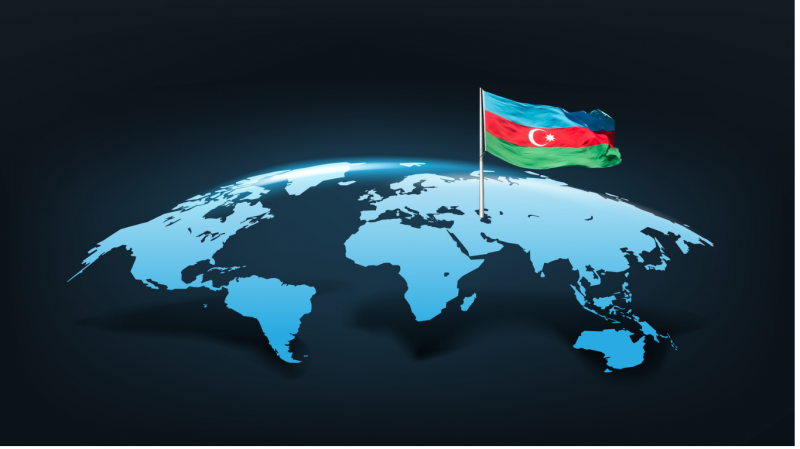
Since restoring its independence, the Republic of Azerbaijan has pursued a consistent and strategically grounded foreign policy aimed at deep integration into the international community. This policy has focused on expanding cooperation with international organizations, strengthening bilateral and multilateral partnerships, and consolidating Azerbaijan’s role as a reliable, active, and forward-looking partner both regionally and globally.
Over the years, Azerbaijan has significantly enhanced its international standing through active participation in political, economic, transport, energy, environmental, and humanitarian initiatives. Major global events hosted in the country, most notably the 2024 United Nations Climate Change Conference (COP29), have further demonstrated Azerbaijan’s growing role in global diplomacy and its capacity to contribute meaningfully to international decision-making processes.
RECOMMENDED STORIES
Cooperation with international organizations
Since independence, Azerbaijan has become an active and respected member of numerous influential international organizations. The country maintains productive cooperation with the United Nations (UN), the Organization for Security and Co-operation in Europe (OSCE), the Organization of Islamic Cooperation (OIC), the Organization of Turkic States (OTS), the Non-Aligned Movement (NAM), the Council of Europe, and the European Union (EU), among others.
These partnerships reflect Azerbaijan’s balanced foreign policy approach, which emphasizes cooperation, mutual respect, and contribution to global stability and development.
Azerbaijan joined the United Nations in 1992 and has since actively contributed to UN programs and initiatives. Its cooperation spans key global priorities, including the Sustainable Development Goals (SDGs), climate action, humanitarian assistance, and peacebuilding efforts.
A landmark achievement in Azerbaijan’s UN engagement was hosting COP29 in 2024. The event brought together tens of thousands of delegates from nearly 200 countries in Baku, making it one of the most significant international gatherings ever held in the region.
Discussions focused on climate finance, energy transition, and sustainable development, further positioning Azerbaijan as an important facilitator of global climate dialogue.

Azerbaijan has been a member of the Non-Aligned Movement since 2011. Its chairmanship from 2019 to 2023 marked a particularly active period in the organization’s history. During this time, Azerbaijan played a leading role in bringing the challenges faced by developing countries, especially during the COVID-19 pandemic, onto the global agenda.
This contribution strengthened Azerbaijan’s relations with countries of the Global South and reinforced its image as a country advocating fairness and inclusivity in international relations.
Azerbaijan is one of the key founding and leading members of the Organization of Turkic States (OTS), alongside Türkiye, Kazakhstan, Uzbekistan, Kyrgyzstan, and other observer and partner states.
Cooperation within the OTS has expanded significantly in political dialogue, economic integration, transport connectivity, energy cooperation, and cultural exchange.
Important decisions have been made regarding transport corridors, trade facilitation, and joint infrastructure projects, reinforcing the unity and strategic partnership among Turkic states.
As a member of the Council of Europe, Azerbaijan actively engages in cooperation on human rights, legal reforms, and strengthening democratic institutions.
These engagements contribute to the continuous modernization of its legal and governance systems.
At the same time, Azerbaijan’s partnership with the European Union continues to expand, particularly in areas such as energy security, transport connectivity, and green energy development. This cooperation highlights Azerbaijan’s growing importance as a reliable energy partner for Europe.
Azerbaijan places strong emphasis on regional cooperation, positioning itself as a strategic bridge connecting the South Caucasus, Central Asia, the Middle East, and Europe. This geographical and geopolitical role has enabled the country to become a key participant in major transregional projects.
Relations between Azerbaijan and Türkiye are founded on the principle of “One nation, two states.” This strategic alliance spans energy, defense, transportation, education, and trade.
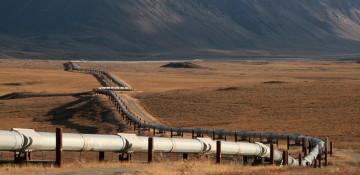
Major infrastructure projects such as the Baku–Tbilisi–Ceyhan oil pipeline, the Trans-Anatolian Natural Gas Pipeline (TANAP), and the Baku–Tbilisi–Kars railway serve as landmark achievements of this partnership, strengthening regional connectivity and energy security.
Azerbaijan’s relations with Kazakhstan, Uzbekistan, and Turkmenistan have deepened significantly in recent years. Cooperation has expanded in energy, logistics, and transport connectivity.
A major milestone was achieved during COP29 in 2024, when Azerbaijan, Kazakhstan, and Uzbekistan signed a strategic partnership agreement on the development and transmission of green energy. This was followed by the establishment of the Green Corridor Alliance joint venture in Baku, marking an important step toward regional renewable energy integration.
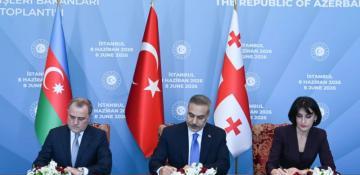
Azerbaijan and Georgia maintain strong strategic cooperation in energy and transport. Key projects such as the Baku–Tbilisi–Ceyhan, Baku–Tbilisi–Erzurum, and Baku–Tbilisi–Kars corridors demonstrate the long-term success of this partnership and its importance for regional connectivity between Europe and Asia.
Azerbaijan’s international energy projects
The Southern Gas Corridor is one of Azerbaijan’s most significant international energy initiatives. It enables the transportation of Caspian natural gas to European markets, contributing directly to Europe’s energy diversification and security.
Azerbaijan is actively transforming itself from a traditional energy exporter into a regional green energy hub. One of the most important initiatives is the planned undersea electricity cable across the Black Sea linking Azerbaijan, Georgia, Romania, and Hungary. This project aims to export renewable electricity to Europe and strengthen long-term energy cooperation.
Azerbaijan plans to significantly increase the share of renewable energy in its electricity production by 2030 and aims to reduce greenhouse gas emissions by 40% by 2050.
In collaboration with international investors, the country is developing renewable energy projects with a total capacity of approximately 10 GW. These initiatives also lay the foundation for future green hydrogen production, reinforcing Azerbaijan’s role in the global energy transition.
Cooperation in transport and logistics
The Middle Corridor is a cornerstone of Azerbaijan’s international integration strategy. It connects China and Europe via Kazakhstan, the Caspian Sea, Azerbaijan, and Georgia, significantly enhancing Eurasian trade and transit potential.
Within COP29, an international ministerial meeting on the “Sustainable and Digital Middle Corridor” further strengthened cooperation in this area, with participation from the United Nations Economic Commission for Europe (UNECE) and the United Nations Economic and Social Commission for Asia and the Pacific (ESCAP).
The Baku International Sea Trade Port in Alat has become a key logistics hub along both the East–West and North–South transport corridors. Its growing cargo handling capacity further strengthens Azerbaijan’s position as a major Eurasian transport and logistics center.
COP29 and Azerbaijan’s role in global diplomacy
The hosting of COP29 in Baku in 2024 marked a major milestone in Azerbaijan’s international diplomatic profile. The event gathered heads of state, international organization leaders, scientists, and civil society representatives to address critical issues such as climate finance, green transition, and support for developing countries.
In 2025, Azerbaijan continued its COP29 presidency activities by launching initiatives such as the Baku Climate and Peace Action Hub within the framework of COP30 discussions.
WUF13 and urban development leadership
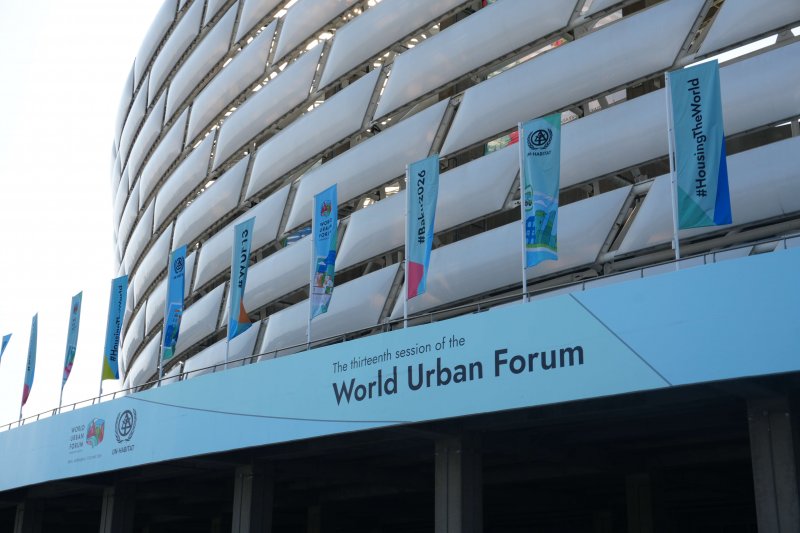
Another significant achievement was hosting the 13th World Urban Forum (WUF13) in Baku in 2026, organized by the United Nations Human Settlements Programme (UN-Habitat). Held from 17 to 22 May 2026 under the theme “Housing the World: Safe and Resilient Cities and Communities,” the forum became one of the largest global platforms on urban development.
WUF13 brought together more than 57,000 participants from 176 countries, including heads of state, UN representatives, urban planners, researchers, private sector leaders, and civil society organizations.
Key topics included housing, climate-resilient cities, smart technologies in urban governance, green energy, inclusive development, and sustainable transport systems. The forum concluded with the adoption of the “Baku Call to Action,” contributing to global urban policy development.
Within the framework of WUF13, Azerbaijan presented its Smart City and Smart Village projects, particularly in the reconstruction of Karabakh and East Zangezur. These initiatives highlighted modern urban planning, innovation-driven governance, and sustainable development approaches.
The successful hosting of WUF13 further strengthened Azerbaijan’s reputation as a global platform for dialogue and international cooperation, following the success of COP29.
In recent years, Azerbaijan has expanded cooperation in digital transformation, including e-government development, digital economy growth, cybersecurity, and artificial intelligence. These efforts enhance administrative efficiency, innovation capacity, and global competitiveness.
Since gaining independence, the Republic of Azerbaijan has successfully established itself as an active and reliable member of the international community. Through constructive cooperation with organizations such as the United Nations, the Organization of Turkic States, the Non-Aligned Movement, the Council of Europe, and the European Union, the country has strengthened its international presence and diplomatic influence.
Strategic energy projects, transport corridors, green energy initiatives, and digital transformation programs have further reinforced Azerbaijan’s role as a regional hub and global partner. The successful hosting of major international events such as COP29 and WUF13, along with the development of the Middle Corridor and Green Energy Corridor, demonstrates Azerbaijan’s growing contribution to global cooperation, sustainability, and connectivity.
Looking ahead, Azerbaijan is well positioned to further deepen its international integration and continue playing an increasingly important role in shaping regional and global development agendas.
(If you possess specialized knowledge and wish to contribute, please reach out to us at opinions@news.az).


Similar news