Why time may no longer be on Russia’s side in Ukraine


Editor’s note: Valeriy Dymov is a Ukrainian political analyst, public affairs expert and commentator specialising in national security, international relations, and Ukraine’s domestic and foreign policy. The views expressed in this article are his own and do not necessarily reflect those of News.Az.
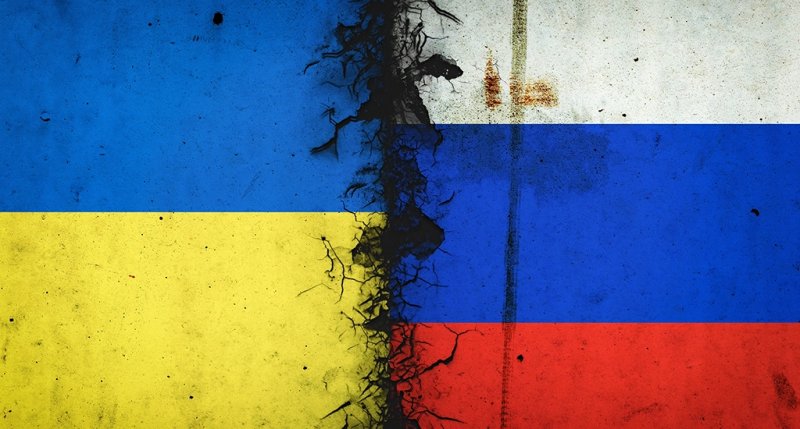
Russia’s full-scale invasion of Ukraine has entered its fifth year, yet the front lines have shifted far less than many observers expected. Despite relentless offensives, thousands of casualties, and unprecedented military expenditure, neither side has achieved a decisive breakthrough. However, describing the conflict as a simple stalemate risks overlooking a more complex reality. While territorial gains remain limited, the strategic balance of the war may be shifting in ways that could shape its long-term outcome.
For Ukraine, the absence of major Russian advances is not evidence of weakness but rather an indication that Moscow’s original objectives have failed. The Kremlin entered the war expecting a rapid victory, believing Kyiv would fall within days and that Western support would eventually collapse. Neither prediction materialised.
Russia’s initial strategic goal was to force Ukraine into submission through military superiority. Instead, Ukraine survived, mobilised, and transformed itself into one of Europe’s most battle-tested military forces. While Russia continues to occupy significant Ukrainian territory, it has been unable to achieve the decisive military and political outcomes that underpinned the invasion.
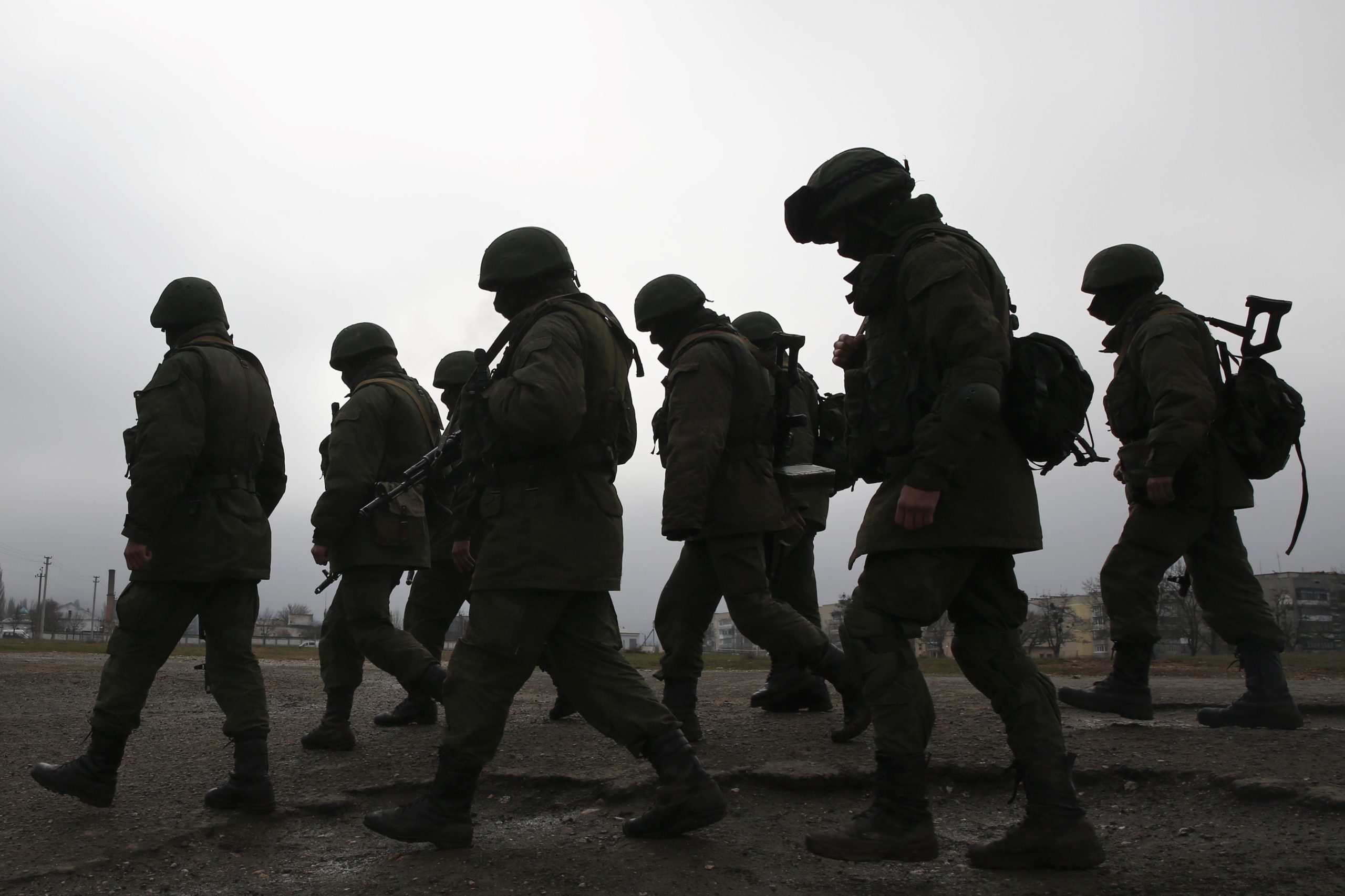
The current battlefield reflects this contradiction. Russia continues to launch large-scale assaults and maintains numerical advantages in manpower and equipment. However, its territorial gains have become increasingly costly and limited. Recent campaigns have produced only marginal advances despite heavy losses. This reality undermines one of the Kremlin’s central arguments: that Ukraine must eventually accept Russian conditions because further resistance is futile. If Russian forces cannot achieve major breakthroughs despite sustained offensives, the threat of unlimited expansion loses credibility. The inability to convert tactical gains into strategic success raises fundamental questions about Moscow’s long-term prospects.
For much of the war, Russia’s negotiating position rested on a simple premise: either accept Moscow’s demands or face continued military escalation. This logic has influenced political debates in Europe and the United States, where some policymakers have argued that Ukraine should agree to territorial concessions in exchange for a ceasefire, on the basis that Russia would otherwise continue advancing. Yet the battlefield performance of the Russian military has weakened that argument. From Kyiv’s perspective, the situation today demonstrates that Russia’s military power is not limitless and that Ukraine’s resistance has fundamentally altered the strategic calculations of its partners.
Source: cepa.org
One of the most significant developments of the past two years has been the emergence of long-range drone warfare. At the beginning of the invasion, Russia enjoyed a substantial advantage in its ability to strike deep inside Ukraine. Energy infrastructure, industrial facilities, transport networks, and civilian targets were repeatedly attacked in an effort to weaken Ukraine’s economy and morale. Over time, however, Ukraine developed its own long-range strike capabilities. Today, Ukrainian drones regularly target Russian oil facilities, logistics hubs, airfields, and military-industrial infrastructure hundreds and sometimes thousands of kilometres from the front lines. These attacks have transformed what was once a one-sided campaign into a two-way contest.
The consequences extend beyond military symbolism. Russia’s energy sector remains one of the primary sources of funding for the war effort. Repeated strikes on refineries, fuel depots, and export infrastructure increase costs, disrupt supply chains, and force Moscow to allocate additional resources to homeland defence. This does not mean Ukraine has achieved strategic dominance. Russia still possesses larger stockpiles of missiles and greater industrial capacity in several critical sectors. Nevertheless, Ukraine has demonstrated that Russia’s rear areas are no longer immune from attack, a development with significant military and psychological consequences.
Wars are ultimately sustained not only by soldiers but also by economies. The longer the conflict continues, the more important industrial production, financial resilience, and technological innovation become. Here, Ukraine benefits from an advantage that is often overlooked: access to a broad coalition of partners. European countries continue investing heavily in defence production. Frozen Russian assets have become a source of financial leverage. Joint weapons manufacturing projects are expanding, and new military-industrial partnerships are being established across Europe.
For Ukraine, these developments represent more than financial assistance. They reflect a growing belief among Western governments that supporting Ukraine remains strategically necessary. Russia, meanwhile, continues adapting its economy to wartime conditions. It has proven more resilient than many early forecasts suggested. Yet that resilience comes at a cost, including rising military expenditure, labour shortages, technological restrictions, and increasing dependence on a narrower group of international partners. History suggests that prolonged wars often become contests of economic endurance rather than purely military strength.
Military developments and diplomatic trends are closely linked. Whenever Ukraine demonstrates resilience on the battlefield, international support tends to strengthen. Whenever Russia appears capable of major advances, calls for compromise become louder. Recent developments suggest that many Western governments are increasingly sceptical of the argument that Ukraine should accept unfavourable terms simply to end the fighting.
Source: ukrinform
This does not mean peace negotiations are impossible. Most observers agree that the war will eventually end through some form of political settlement. The question is under what conditions.
Ukraine’s leadership argues that negotiations cannot be based solely on Russian demands or assumptions of inevitable Russian victory. The longer Ukraine demonstrates its ability to resist, the stronger its position becomes at any future negotiating table.
Several indicators provide a clearer picture of the conflict than territorial maps alone. Russia’s inability to achieve major operational breakthroughs despite sustained offensives suggests that its military options are more limited than often portrayed. Continued Western financial and military support indicates that Ukraine remains strategically important to its partners. Ukraine’s growing capacity to strike deep inside Russian territory has altered the military balance and forced Moscow to devote increasing resources to defence.
Meanwhile, Russia’s economic and industrial challenges continue to accumulate, even as the country adapts to wartime realities.
Taken together, these factors suggest that the war cannot be understood solely through the lens of territorial control. The front lines may appear relatively static, but the broader strategic environment continues to evolve. Ukraine argues that strategic momentum is gradually shifting in its favour — not because victory is imminent, but because Russia has failed to achieve the objectives that justified the invasion. The Kremlin sought a rapid political collapse of Ukraine, a divided West, and a favourable settlement on Russian terms. More than four years later, none of those goals has been fully realised.
Whether that trend continues remains uncertain. Wars rarely follow linear trajectories, and unexpected developments can alter the balance quickly. Yet one conclusion appears increasingly difficult to dismiss: the longer the conflict continues without a decisive Russian breakthrough, the harder it becomes to argue that time automatically favours Moscow. Instead, both sides are discovering that endurance — not speed — may ultimately determine the outcome of Europe’s largest war since the Second World War.
(If you possess specialized knowledge and wish to contribute, please reach out to us at opinions@news.az).


Similar news