Hungary risks isolation within NATO over position on Ukraine war


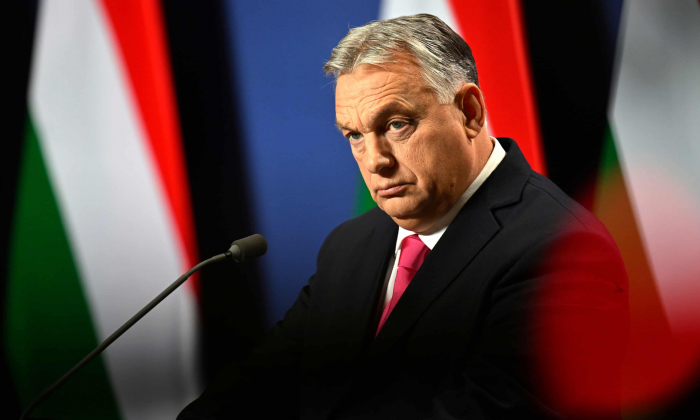
With regard to NATO's imminent Ukraine special mission, Hungary's Prime Minister Viktor Orbán said last week that Hungary's "position within the military alliance needs to be redefined".
This is a watershed moment in the history of the military alliance: for about two years, NATO managed to avoid direct engagement in the Russia-Ukraine war, framing every act of military assistance to Ukraine as a bilateral move by its individual member states.This position allowed member states who believe in a military solution to the war in Ukraine to support the country at their own peril, without involving the allies – most notably Hungary and Türkiye, and under Robert Fico, increasingly, Slovakia – that don't believe such a solution is possible. Hungary's staunch opposition to NATO's institutional involvement in the war was one of the key drivers of this two-year-long restraint.
This is now about to change: following the Stoltenberg-Zelensky summit in Kyiv, NATO announced a special mission to help Ukraine, taking on a direct coordinating role in arms deliveries and military assistance. Once the new mission enters into force, the countries that don't believe in the military victory of Ukraine, as well as the ones who would like NATO to adhere to its own founding treaty and refrain from taking military action outside of its territory will have to make tough choices.
Hungary is the most vocal among this small group of allies: It emphasizes NATO's role as a defensive and not an offensive alliance, having warned on multiple occasions that arms shipments to Ukraine have significantly weakened the alliance's core duty of providing credible deterrence. Now, with the Ukraine special mission making NATO's involvement official, they have to carefully balance two things: first, the fact that, as Orbán said, they "do not want to participate in the conflict, either by providing financial contribution or by sending weapons, not even within NATO's framework"; and second, their ironclad commitment to their membership in the alliance itself. The legal solution to remain a full member of NATO while opting out of extraterritorial military action is the task Orbán described in his radio interview.
Hungary is navigating uncharted waters here, and not just because of the obvious fact that this will require significant legal innovation. The issue is political, too: Hungary needs to be able to make its highly common sense case against continued arms shipment to Ukraine, emphasizing that the Ukrainian military is losing ground and not gaining any with each passing day of the war, and that no amount of arms shipment is going to be able to compensate for the fact that Ukraine suffers from a critical lack of manpower.
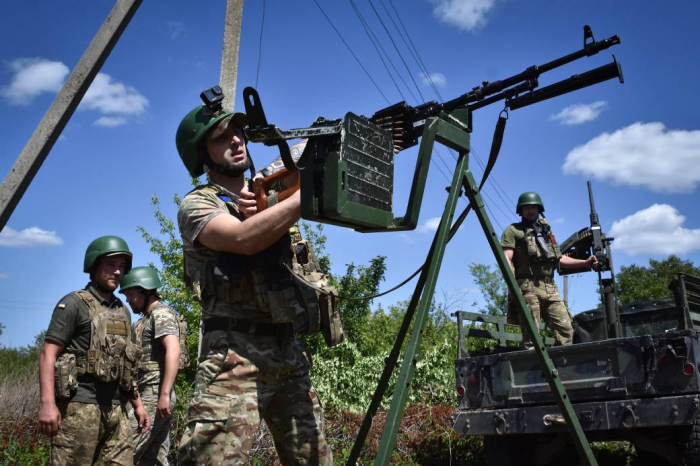 Ukraine is clearly failing to mobilize enough troops in spite of desperate initiatives like attempting to mobilize Ukrainian men who emigrated to Western Europe – a move that flies in the face of the war's democratic legitimation, as the democratic will of people who fled Ukraine before or during the war was precisely not to be drafted. In this context, the West will soon have to make a decision about deploying its own troops in Ukraine, an idea that France's Emmanuel Macron has already floated and leaders like Poland's Foreign Minister Radosław Sikorski enthusiastically latched onto.
As long as this decision is made unilaterally by individual daredevil NATO members, it doesn't involve Hungary. But Hungary wants to avoid at all costs discussing troop deployment at a NATO level. Hungary's opposition to any kind of Ukraine mission has this as the end game: providing a legal basis for the country to stay out of a NATO ground operation in Ukraine.
In the short-run, Hungary risks further isolation within the alliance, with the EU having suspended significant swaths of Hungary's funds for political reasons that are clearly connected to the Hungarian position on the war, and the US already using its embassy as a de facto opposition actor with the ultimate goal of toppling the Orbán government. In the long-run, however, Hungary may reap the best of all benefits: not being involved in a pointless and world-endangering war between NATO and Russia over Ukraine.
The author is Deputy Editor at Mandiner.hu, a Hungarian expert.
(If you possess specialized knowledge and wish to contribute, please reach out to us at opinions@news.az).


Similar news