Hungary’s warning: Why a Ukrainian military victory remains unlikely – INTERVIEW


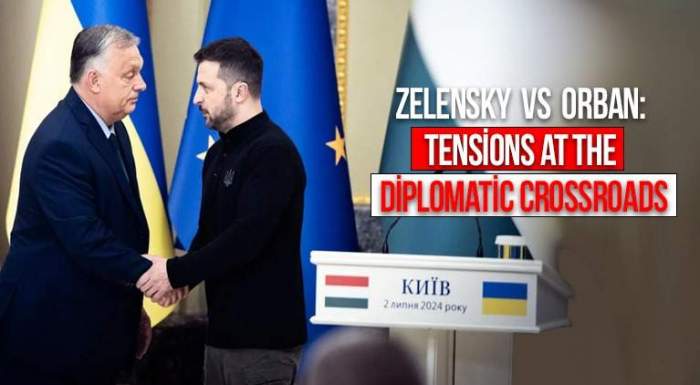
Photo: News.Az
By Asif Aydinli
News.az presents an exclusive interview with Kohán Mátyás, Deputy Editor at Mandiner.hu and a prominent Hungarian expert. In this conversation, Kohán shares his views on the ongoing conflict in Ukraine, offering insights into Hungary’s diplomatic initiatives and the broader European response. He discusses the emergence of a so-called “party of war,” explains the complex interests driving EU member states, and outlines possible scenarios for resolving the crisis. We invite our readers to explore this candid assessment of the shifting political landscape and Hungary’s role in shaping Europe’s future.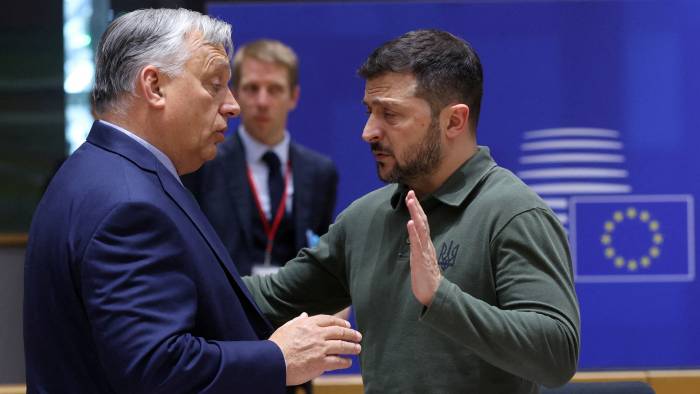
- In a recent interview, Hungarian Prime Minister Viktor Orban predicted that the conflict in Ukraine would end in 2025, stating it would “end with peace negotiations or if one side destroys the other.” What underlies this assessment, and which of these two scenarios seems more realistic?
- Unless there is a total Ukrainian collapse along the front line or a sudden regime change in Moscow—both of which seem rather unlikely—the first option (peace negotiations) is far more probable. This is all the more evident given that Ukrainian President Volodymyr Zelensky recently stated on Lex Fridman’s podcast that he is prepared to negotiate a cease-fire even without securing Ukraine’s full NATO membership or retaking all territories occupied by Russia. He is also willing to address territorial questions diplomatically, without pursuing them further by military means. His only firm requirement appears to be that the United States be among Ukraine’s security guarantors—a relatively easy condition to fulfill.
Hungary has long held that it is in Ukraine’s best interest to seek a diplomatic solution because the basic realities of the war—in terms of manpower and materiel—make a full Ukrainian military victory (i.e., returning to the internationally recognized 1991 borders or even the de facto 2014 borders) virtually impossible. The Ukrainian counteroffensive and Yevgeny Prigozhin’s
mutiny in the summer of 2023 were the only strategic initiatives that could have altered this calculus, but both failed.
Hungary has always based its position on the most realistic scenario and has viewed it as a shared European interest to act on that basis rather than pursue (or assist Ukraine in pursuing) unrealistic objectives. The factors preventing such an approach lay outside Hungary’s control: specifically, the Ukrainian government’s refusal to acknowledge the true strategic situation and the reluctance of both the EU and the Democratic leadership in the United States to condition their support for Ukraine on a feasible strategy. These factors now appear to be subsiding: Ukraine’s military situation is growing desperate enough that the government recognizes its hopes for total victory are unrealistic, and the election of Donald Trump as President of the United States ensures that there is at least one influential player in the West prepared to acknowledge strategic realities.
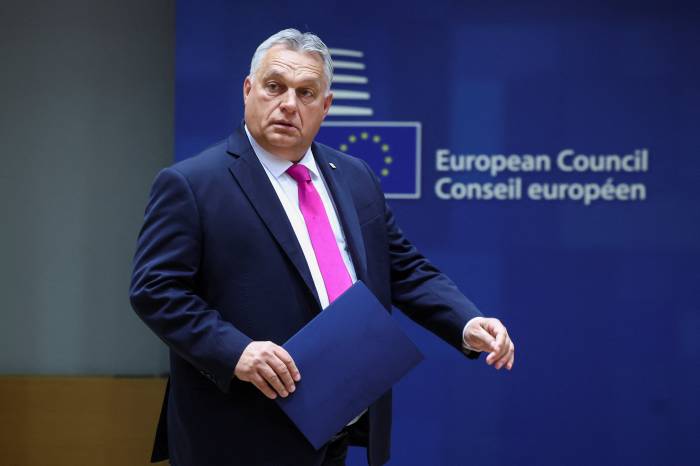
- Hungary is actively putting forward peace initiatives, but these efforts face resistance from a number of EU countries. Who constitutes the European “party of war,” and which forces stand behind it?
- There has been a fundamental shift in the European Union at the turn of this decade: years of failed domestic policies have weakened the traditional Berlin-Paris axis to such an extent that it can no longer fully control the EU. An alternative majority—comprising the Nordic countries, the Baltic states, and several Central European nations led by Poland—has emerged in the Council of the EU, supported externally by the United States and the United Kingdom. At various stages of the war, this alternative majority has succeeded in shaping the EU’s Ukraine policy.
This coalition is composed of governments that—whether sincerely or because of domestic public opinion—believe Russia has both the intent and the military capability to invade NATO’s eastern flank if not stopped in Ukraine. From their perspective, Ukraine is effectively fighting on their behalf, and they must therefore win this war together. Regardless of how unrealistic the premise or the goals of this strategy may be, this alternative majority of influential governments, paired with years of weakness in Germany and France, has had the political clout to impose its strategic vision on the EU.
Under this strategic paradigm, all communications about the war are seen as part of the war effort itself. Acknowledging the genuine military situation or advocating a change in the current (and so far unsuccessful) approach is viewed as betraying Europe’s common cause—hence Hungary’s treatment as a traitor. However, recent political developments in both the United States and Central Europe suggest an end to Hungary’s isolation. Slovakia now firmly supports Hungary’s position; Hungary’s political allies look set to assume leadership in Austria; the outcome of the Romanian presidential election may distance that country from Poland’s alternative majority; and an early election in Germany may reinvigorate one of Hungary’s traditionally strong European partners, enabling it to build new alliances and reclaim leadership from Poland.
- “Hawks” in the EU and the United States still hope to inflict a military defeat on Russia. How realistic is that objective?
- Events over the past year have demonstrated the (lack of) feasibility of defeating Russia militarily. Russia is grinding forward at a slow but steady pace, while the Ukrainian army is forced to thin its ranks along the front because of insufficient manpower. The only successes the Ukrainian forces have scored this year were more akin to PR stunts, such as the raid into Russia’s Kursk region.
At this point, a military defeat of Russia is only possible if some or all NATO countries deploy their troops to fight on Ukraine’s behalf—thereby turning the conflict into a full-blown confrontation between NATO and Russia and dramatically increasing the likelihood of nuclear escalation. Alternatively, the collapse of Vladimir Putin’s regime could prompt a Russian withdrawal, but only if a pro-Western liberal leader replaced him. Given the current stability of the Russian system, a nationalist takeover appears more plausible than a liberal one.
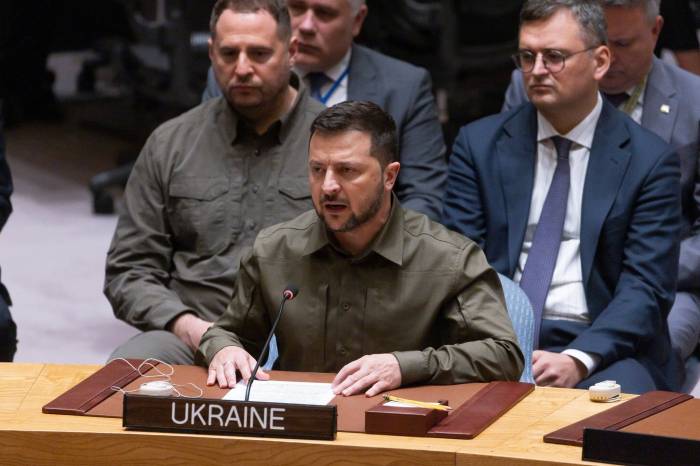
- Ukrainian President Volodymyr Zelensky has reacted nervously to Hungary’s peace initiatives, repeatedly making sharp personal remarks about Viktor Orban. At the same time, Kyiv avoids direct contact with Budapest. How is such behavior by the Ukrainian side perceived in Hungary?
- Hungary’s stance is uncomfortable for Kyiv because it is rooted in a strategic reality Ukraine has—until recently—been unwilling to accept. Although it might seem somewhat absurd, it is unsurprising that Kyiv has tried to isolate Hungary within the EU and support efforts to undermine the Hungarian government (both during the 2022 elections and thereafter) in order to silence the loudest—and for a long time, the only—voice in the EU critical of Ukraine’s now-failed strategy.
Unsurprisingly, this has further depleted whatever goodwill Hungarians might have had toward Ukraine, which was never particularly strong to begin with, largely due to the historical trauma of the Trianon Peace Treaty (which ceded part of Hungary’s territory to what is now Ukraine). Despite this, the Hungarian government has tried its utmost to maintain acceptable relations and remain calm. Former Hungarian President Katalin Novák visited Kyiv in both 2022 and 2023, and in 2024, Prime Minister Orban’s long-awaited visit to Kyiv finally took place, following productive foreign-minister-level talks earlier last year.
Hungary is doing all it can to keep relations civil, but there is no majority support in Hungary for an open-ended war in pursuit of unattainable objectives—and no amount of Ukrainian media campaigns against Hungary will change that.
- What are the prospects for a negotiation process on the Ukrainian conflict in 2025? Which key factors will determine the possibility of concluding a peace agreement?
- Negotiations will have to take place this year. Ukraine is visibly exhausted, Russia seems eager to reduce its military budget and secure peace in its border regions, and the U.S. approach to Ukraine is set for a major overhaul once Donald Trump is inaugurated on January 20. Although a favorable result is not guaranteed, these factors make negotiations unavoidable.
The first key factor is how Donald Trump’s “peace offensive” will materialize. If he has the political strength and credibility to earn President Putin’s respect and the creativity to propose a mutually acceptable plan, he may succeed. If his calculations are faulty, or if he fails to establish at least a minimal level of trust and respect with Putin, he will not be able to broker peace in Ukraine.
The second key factor is the domestic stability of both the Ukrainian and Russian governments and their ability to generate public support for any deal. Ultra-nationalist takeovers cannot be ruled out if either government is seen as too lenient. Conversely, war-weary economies could incite public unrest—especially in Ukraine. There can be no lasting agreement without stable regimes on both sides.
The third key factor is Vladimir Putin’s willingness to compromise and the terms he is ready to settle on. Because Russia currently holds the military advantage, he might be tempted to stall negotiations by offering terms unacceptable to Ukraine and the West, thereby hastening Ukraine’s collapse. His restraint, together with Donald Trump’s ability to persuade (or compel) him to negotiate seriously, will be critical for any successful agreement.


Similar news