Is the US stepping away from Ukraine?


Editor's note: Einars Graudins is a military expert, retired senior officer of the Latvian Armed Force. The article expresses the personal opinion of the author and may not coincide with the view of News.Az.
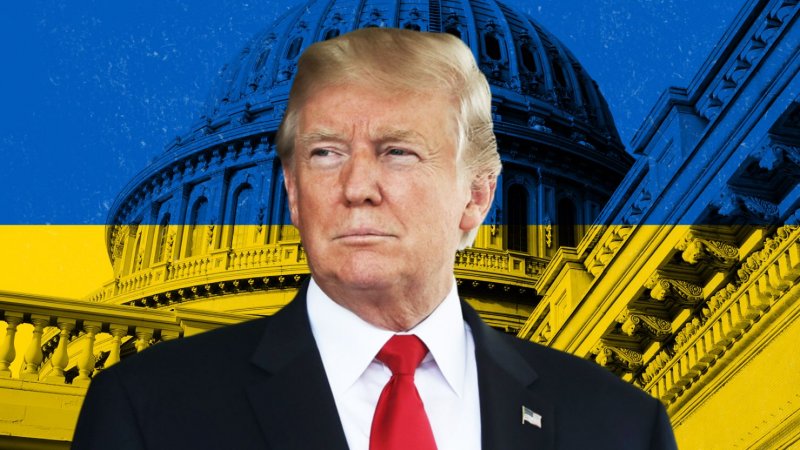
Danish Prime Minister Mette Frederiksen’s recent call for the United States to deploy troops to Ukraine has sparked a wave of speculation. The appeal, made in an interview with Time magazine, seems to contrast sharply with former President Donald Trump’s stance. Trump has repeatedly insisted that if any forces are to be sent, they should be European—not American. But beyond the political rhetoric, the fundamental question remains: is the U.S. effectively abandoning Ukraine?
Trump’s position on Ukraine has been clear—he has little interest in entangling the U.S. in another costly military engagement. His America First doctrine prioritizes financial prudence and strategic restraint, a stance reinforced by his criticism of NATO allies for not shouldering their fair share of defense spending. While Trump theoretically has the power to authorize troop deployments with congressional approval, his broader strategy suggests he has no intention of doing so.
The likelihood of U.S. troops being deployed remains low, particularly given the shadow of America’s failed intervention in Afghanistan. The U.S. military is structured for decisive airstrikes and high-tech warfare, not prolonged peacekeeping missions. With rising scrutiny over military expenditures, the idea of a major American investment in Ukraine appears even less likely.
If the U.S. under Trump distances itself from direct involvement, the question then shifts to Europe. Britain is a natural candidate for military support, given its historically firm stance against Russia. Germany, on the other hand, may be hesitant due to historical sensitivities, but it has demonstrated its ability to contribute in peacekeeping missions, as seen in the Balkans.
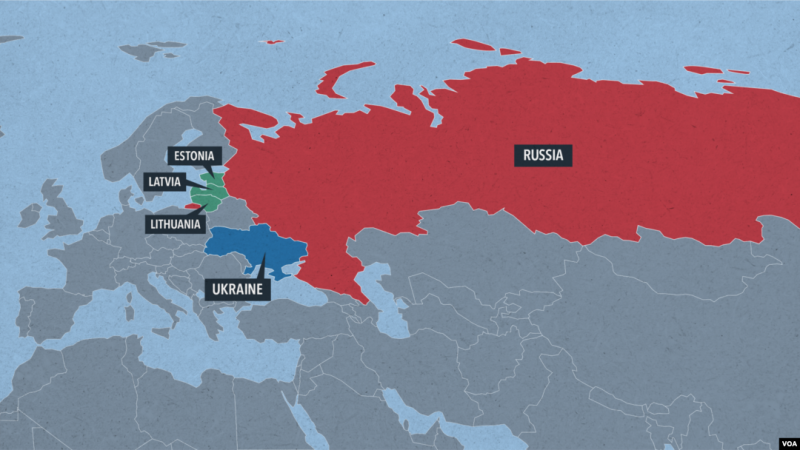 Russia, Ukraine and the Baltic States of Estonia, Latvia and Lithuania. Photo: VOA
Poland and the Baltic states—Latvia, Lithuania, and Estonia—are also key players. These countries perceive Russian aggression as an existential threat, making them more willing to bolster Ukraine’s defenses. However, their contributions alone are unlikely to match the scale of American military support.
Some have speculated that Frederiksen’s call for U.S. troops is linked to Trump’s past attempt to acquire Greenland, a territory under Danish jurisdiction. However, Greenland has been under U.S. protection since World War II, with Thule Air Base playing a vital role in Cold War deterrence. There is no need to “seize” what is already strategically integrated with the U.S. security apparatus.
Rather than a move related to Greenland, Frederiksen’s statement is more likely aimed at reinforcing European security unity. By pushing for U.S. involvement, Denmark may be testing the waters on how committed America remains to NATO under a potential Trump presidency.
For all the political posturing, the claim that the U.S. has abandoned Ukraine is an oversimplification. The U.S. remains a key supplier of military aid to Ukraine, and its NATO commitments are still intact. While Trump’s rhetoric may suggest a shift, U.S. foreign policy operates on long-term institutional frameworks that go beyond any single administration.
However, there is no denying that a second Trump presidency could significantly alter the dynamics. His transactional approach to geopolitics means that American support for Ukraine would be contingent on perceived strategic and economic benefits. If European nations fail to step up, a future U.S. administration could argue that Washington has little obligation to do so either.
In geopolitics, nothing is certain. Trump’s unpredictability makes it difficult to forecast whether he would eventually strengthen or weaken U.S. support for Ukraine. His history suggests he may use ambiguity as a negotiation tool, playing both sides to maximize leverage.
What is clear, however, is that Ukraine’s fate will not be decided solely by American politics. Europe’s response, the resilience of the Ukrainian military, and Russia’s next moves will all shape the battlefield—both militarily and diplomatically. For now, Ukraine remains in the fight, but whether it can count on sustained U.S. backing remains an open question.
(If you possess specialized knowledge and wish to contribute, please reach out to us at opinions@news.az).


Similar news