Riyadh summit: A new global redistribution


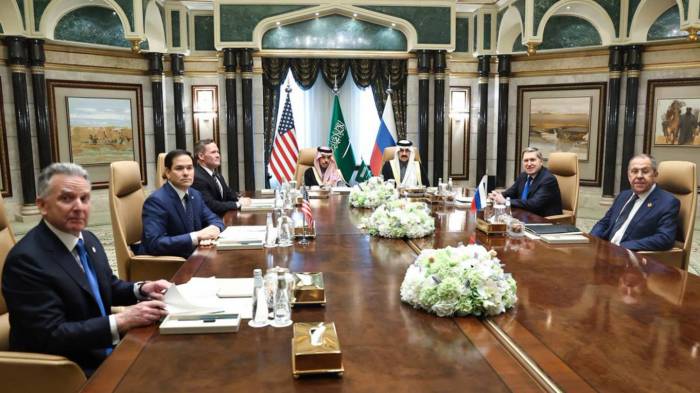
On February 18, long-anticipated negotiations between Russian and U.S. delegations began at the Diriyah Palace in Riyadh. The discussions will not only focus on Ukraine but also on broader bilateral relations. Prior to this event, Vladimir Putin and Donald Trump held their first official phone conversation, which lasted for an hour and a half.
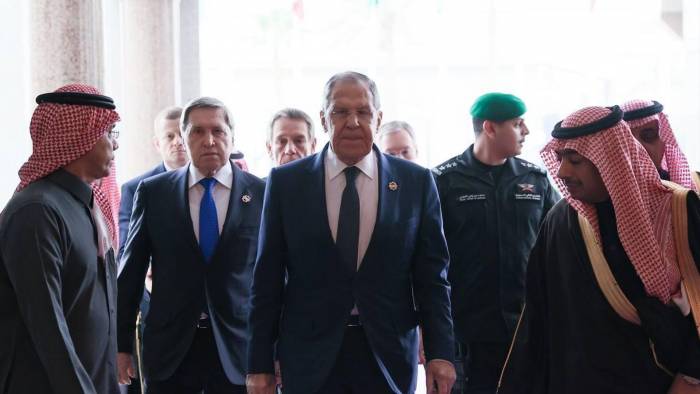
The Russian delegation in Riyadh includes Presidential Aide Yuri Ushakov, Foreign Minister Sergey Lavrov, and Kirill Dmitriev, head of the Russian Direct Investment Fund. The U.S. delegation is represented by Secretary of State Marco Rubio, National Security Advisor Mike Waltz, and Special Presidential Envoy for U.S.-Russia Relations Steve Witkoff.
The summit’s main agenda includes "restoring the full spectrum of U.S.-Russia relations" as well as "preparing negotiations on the Ukrainian settlement and organizing a meeting between the two presidents." According to Ukrainian President Volodymyr Zelensky, Kyiv was completely unaware of these negotiations.
At this stage, it remains unclear how the Russia-Ukraine conflict will be resolved. However, a key indicator could be Pentagon chief Pete Hegseth, who recently stated at the Ramstein format meeting in Brussels that Ukraine’s NATO membership and a return to its 2014 borders are "unrealistic." He also emphasized that Europe must take responsibility for Kyiv’s security, and once the conflict ends, it will be the Europeans—not the United States—who will have to deploy a peacekeeping mission to Ukraine. Such a mission would not fall under Article 5 of the Washington Treaty on collective defense, and it would not include U.S. troops. In other words, the European Union—which has already spent substantial resources supporting Ukraine—will bear the primary burden of resolving the conflict.
Meanwhile, Donald Trump has suggested that the U.S. could sell weapons to Europe, which would then transfer them to Kyiv. According to Bloomberg, Trump’s administration is aiming to achieve a ceasefire in Ukraine by Easter.
It appears that the European Union has been sidelined from the negotiation process despite suffering the greatest economic losses due to sanctions against Russia—a policy largely influenced by the previous U.S. administration. Following the Putin-Trump phone call, the "Weimar+" group—comprising the UK, Germany, Spain, Poland, France, and EU foreign policy chief Kaja Kallas—declared their continued support for Kyiv, emphasizing that "Ukraine and Europe must be part of any negotiations" and that Kyiv must receive "credible security guarantees." However, this statement is unlikely to carry much weight.
Notably, NATO Secretary General Mark Rutte urged European allies to "stop complaining" and instead present concrete proposals and ideas.
At the heart of U.S. foreign policy decisions are economic challenges. While consumer spending remains stable, corporate profits are growing, and businesses are investing in technology and AI-driven innovation, the U.S. economy is entering 2025 with contradictory indicators. Despite GDP growth of 2.8% and a low unemployment rate of 4.2%, the national debt has reached a record $35.5 trillion, while the U.S. faces a massive trade deficit—a symptom of long-term issues in its manufacturing base and deep reliance on global supply chains developed over the past three decades.
These economic realities shape President Donald Trump’s foreign policy approach, as he is known for his financial pragmatism. Perhaps this explains why he demanded that Kyiv repay $500 billion in financial aid provided by Washington in recent years. Critics have already labeled this plan as "economic colonization," arguing that the amount Trump is requesting exceeds the reparations imposed on Germany after World War I.
The proposed repayment is expected to come not only from Ukraine’s natural resources but also from its infrastructure, ports, and future projects. According to a preliminary agreement, the U.S. and Ukraine will establish a joint investment fund that will ensure hostile actors do not profit from Ukraine’s reconstruction.
Summarizing U.S. involvement in the Ukraine conflict, Trump stated that Washington has spent $300 billion on Kyiv and will not allocate additional funds. In reality, the five aid packages approved by Congress total $175 billion, of which $70 billion has been spent within the U.S. on weapons production. A portion of this amount includes humanitarian grants, but the majority consists of lend-lease funds that Ukraine will eventually have to repay. In other words, there will be no more free assistance. The American empire is overstretched and has exhausted its resources, particularly as new global competitors emerge.
 © Photo: Press Service of the Russian Foreign Ministry
This is why Trump has adopted a decisive and uncompromising approach to redefining U.S. alliances—distinguishing true allies from liabilities. His strategy involves offloading domestic and international burdens that have drained U.S. resources in pursuit of an unsustainable Pax Americana. Rather than continuing Washington’s costly and ineffective globalization policies, Trump seeks to consolidate U.S. dominance by securing alliances with select advanced nations that remain militarily dependent on American power.
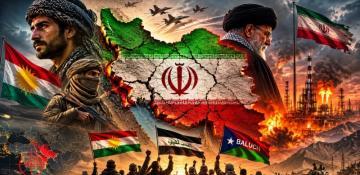
The overarching principle remains U.S. supremacy and leadership, but Washington will no longer bankroll other countries. In the Middle East, Israel—a high-tech powerhouse—is likely to be Trump's primary partner, with the U.S. assisting in neutralizing Iran’s influence. In the post-Soviet space, Russia could become a key player, while Trump intends to redefine U.S. engagement with NATO and Europe’s nuclear umbrella.
Rather than dealing with bureaucratic, supranational EU structures, Trump prefers direct engagement with individual European leaders of sovereign states. This may explain why U.S. Vice President J.D. Vance expressed outrage in his Munich speech over the annulment of the first round of Romania’s presidential election. The leading candidate, Călin Georgescu, was disqualified due to alleged ties with Russia, an accusation Vance dismissed as incompatible with the principles of democracy.
These shifts in U.S. policy have led to the emergence of two political factions in Europe—Trumpists and anti-Trumpists, with whom Trump is cultivating distinct relationships.
Trump and his supporters have made it clear that their priority is securing victory in the next technological and AI arms race. Whether they will succeed remains uncertain, but they recognize that one of America’s key vulnerabilities is its growing technological lag. This challenge has prompted U.S. leadership to redouble efforts to close the gap and reclaim a leading position—particularly in defense, military technology, and security.
The war in Ukraine—framed as Russia’s "Special Military Operation" (SMO)—has vividly demonstrated the shape of future warfare and revealed the West’s significant resource disadvantages.
(If you possess specialized knowledge and wish to contribute, please reach out to us at opinions@news.az).


Similar news