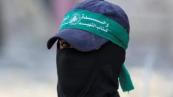
Israel and Iran at war: What does it mean for the world


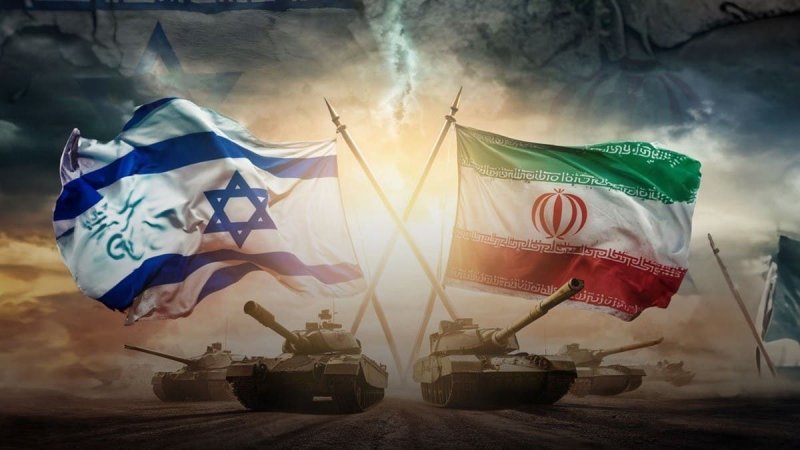
On June 13, 2025, the longstanding shadow war between Israel and Iran erupted into open military confrontation. In a massive and unprecedented aerial campaign, Israel launched a large-scale strike on Iranian territory, targeting nuclear facilities, military infrastructure, and senior leadership figures. Tehran responded with a wave of drone and missile attacks against Israel. For the first time in decades, the Middle East is witnessing direct military engagement between its two most bitter adversaries—an escalation with far-reaching geopolitical, security, and humanitarian consequences.
Israel’s preemptive strike: Scale, strategy, and targets
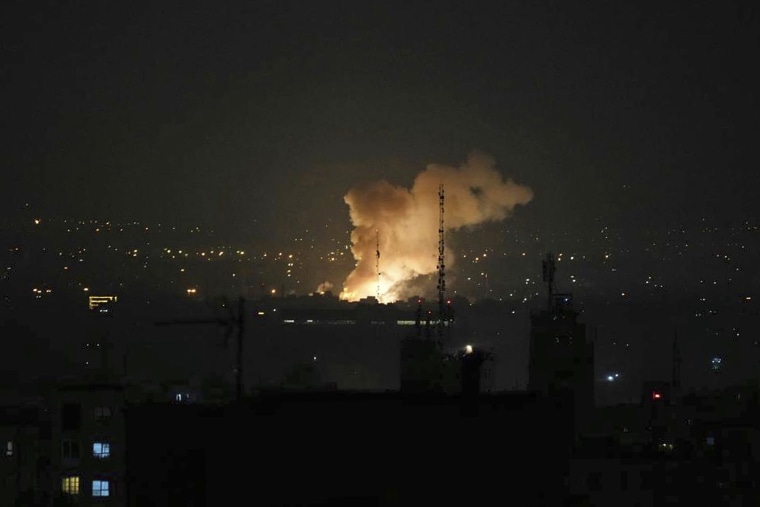
Source: Reuters
The Israeli operation, named “Rising Lion,” was a demonstration of overwhelming air power and technological sophistication. In the early hours of June 13, approximately 200 Israeli fighter jets, including F-15s, F-16s, and F-35 stealth aircraft, crossed into Iranian airspace with support from refueling aircraft and AWACS systems. The scale of the operation alone places it among the most significant air campaigns in modern history.
Israel’s primary targets included key Iranian nuclear enrichment sites such as Natanz, Fordow, and Arak—facilities at the heart of Tehran’s controversial nuclear program. Additional strikes were conducted on long-range missile silos, radar installations, command centers, and anti-aircraft batteries. Iran’s S-300 and S-200 systems reportedly suffered extensive damage.
According to military sources, more than 330 precision-guided munitions were used in the first wave of attacks. This arsenal included bunker-busting bombs, air-to-surface missiles, and electronic warfare systems designed to jam or disable Iranian communications and radar. Notably, reports suggest that Israeli cyber units simultaneously launched digital offensives to paralyze Iran’s early warning and air defense systems.
Furthermore, covert operations by Mossad agents are believed to have targeted high-level figures within Iran’s military and nuclear establishment. Unconfirmed reports indicate that six nuclear scientists and three senior IRGC generals, including Major General Hossein Salami and General Mohammad Bagheri, were killed in the strikes.
Iran’s retaliation: Drones, missiles, and regional echoes
Source: Times of Israel
In retaliation, Iran launched a barrage of more than 100 drones and several ballistic missiles toward Israeli territory. The attack was coordinated by the Islamic Revolutionary Guard Corps (IRGC) and involved Shahed-136 and Shahed-129 drones—models previously used in regional proxy conflicts.
Most of the incoming threats were intercepted by Israel’s layered air defense systems: Iron Dome, David’s Sling, and Arrow-3. Air defense units in Jordan and Iraq also reportedly engaged incoming drones flying over their territory. The drone and missile assault did not cause major damage but sent a clear message that Iran retains the capacity for long-range asymmetric retaliation.
In response to the threat, Israel placed its military on high alert, shut down civilian airspace, and cancelled mass gatherings, including Tel Aviv’s Pride Parade. The Israeli Defense Forces warned of possible follow-up strikes from Iran or its proxies, including Hezbollah in Lebanon and Shia militias in Syria and Iraq.
Regional reactions and the risk of wider war

Source: Ndtv
The international community reacted swiftly to the escalation. The United States reaffirmed its commitment to Israel’s security but called for restraint to avoid a broader regional war. France, Germany, and other EU nations expressed concern over potential environmental fallout from attacks on nuclear sites and called for an emergency session of the UN Security Council.
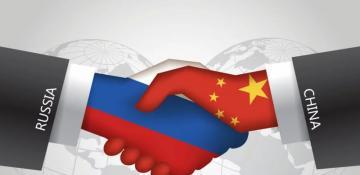
Russia and China, both of which maintain close economic and political ties with Tehran, condemned the Israeli strikes and urged dialogue. Gulf Arab states, particularly Saudi Arabia and the United Arab Emirates, remained cautious, with some reports indicating they temporarily suspended diplomatic outreach to Tehran.
The conflict also threatens to ignite multiple secondary fronts. Hezbollah has already declared that “any threat to Iran is a threat to the resistance axis,” suggesting the potential for escalation in southern Lebanon. Syria’s Assad regime, reliant on Iranian support, may also be drawn in. In Iraq, pro-Iranian militias have threatened to attack U.S. and Israeli interests.
Strategic objectives and long-term implications
)
Source: Reuters
Israel’s rationale for the preemptive strike is rooted in a strategic assessment that Iran was approaching the “nuclear threshold” — the ability to produce a nuclear weapon within a short time frame. Tel Aviv has long maintained that a nuclear-armed Iran poses an existential threat, and that diplomacy has failed to curb Tehran’s ambitions.
For its part, Iran insists its nuclear program is peaceful and within the framework of the Nuclear Non-Proliferation Treaty (NPT). However, Tehran’s recent refusal to cooperate with the International Atomic Energy Agency (IAEA), coupled with evidence of uranium enrichment well above civilian levels, has raised alarms globally.
This conflict may also reshape the strategic landscape of the Middle East. It comes amid broader shifts in U.S. foreign policy, a new wave of great power competition, and evolving energy alliances. Israel’s actions demonstrate its willingness to act unilaterally when it perceives an existential threat. Iran’s response underscores its capacity to challenge Israeli dominance, both directly and through its network of regional allies.
The open military conflict between Israel and Iran marks a dangerous turning point for the Middle East. What was once a shadow war conducted through proxies, covert operations, and cyberattacks has now erupted into direct confrontation between two of the region’s most powerful states.
Whether this war will remain limited in scope or spiral into a full-scale regional conflagration remains uncertain. But one fact is clear: the fragile balance of power in the Middle East has been shattered, and the world is now watching closely as history is made—again—under the shadow of war.


Similar news