Europe fears possible refugee wave from Iran amid conflict


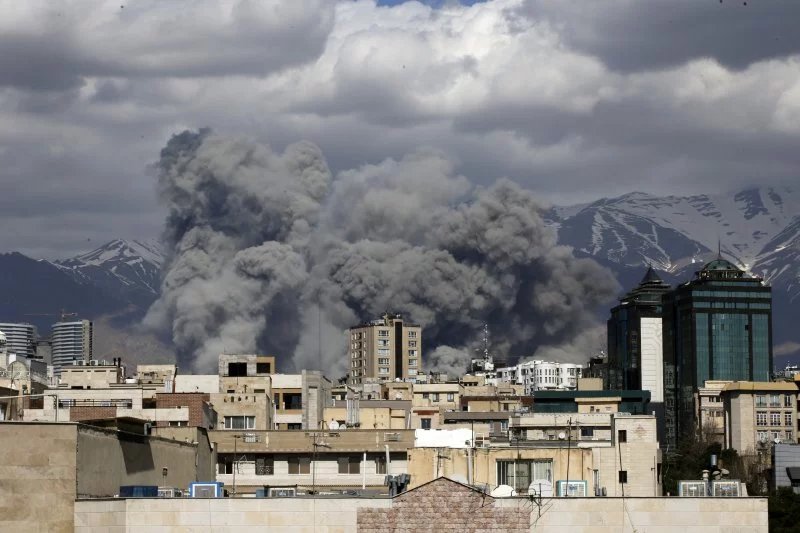
Europe is increasingly alarmed about the possibility of a new refugee influx — this time originating from Iran.
The European Union has expressed serious concern about the potential consequences of the escalating conflict between Iran and the United States, which could trigger a refugee crisis of unprecedented scale, The Independent reports.
According to an emergency report by the European Union Asylum Agency (EUAA), the current escalation poses a threat to regional stability. Experts warn that if even 10 percent of Iran’s population — roughly nine million people — were displaced, it would create a migration flow comparable to the largest refugee waves of recent decades. For comparison, only about 8,000 Iranians applied for asylum in the EU throughout 2025. Under the scenario outlined in the report, those numbers could increase a thousandfold.
At present, there is no clear evidence of large-scale displacement within Iran. However, analysts warn that if the conflict continues or expands, millions of Iranians could be forced to flee the country. Such developments would not be unprecedented. In the past, waves of Iranian political refugees have spread across the world — first during the fall of the Shah’s regime and later following the establishment of the Islamic Republic.
RECOMMENDED STORIES
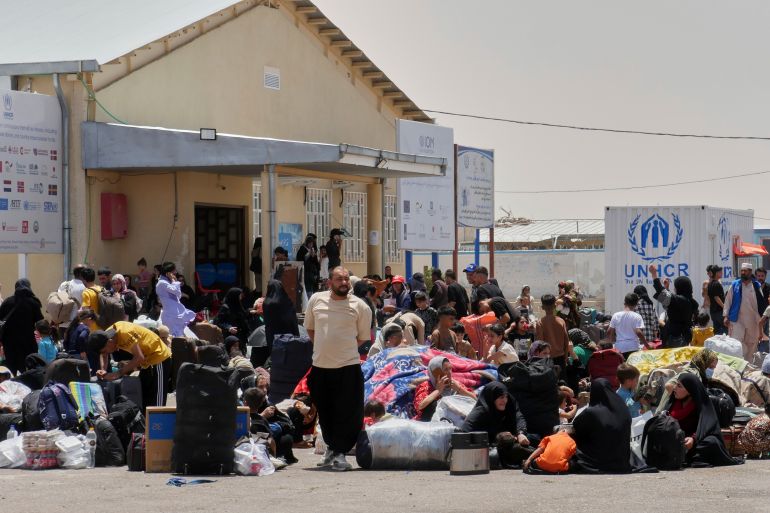
Many of those fleeing persecution settled not only in Europe but also in the Soviet Union, particularly in Azerbaijan. Historically, Baku served as an important refuge for Iranian political émigrés, including democrats, communists associated with the Tudeh Party, and nationalist activists escaping repression at various points during the 20th century, particularly after the 1953 coup and the 1979 Islamic Revolution. Organizations advocating the democratization of Iran or autonomy for Southern Azerbaijan operated in the city. During the Soviet era, central Baku hosted groups known as the Iranian Democrats. These activists published newspapers, organized political meetings, and helped shape opposition discourse against Iran’s ruling authorities.
 Source: AP
For the Soviet Union, however, Iranian refugees were not treated purely as a humanitarian issue. Admission policies were heavily influenced by political considerations. Those accepted typically included members of left-wing movements, democratic organizations, and ethnic Azerbaijanis from Iran seeking cultural or political autonomy. Meanwhile, the majority of those leaving Iran moved westward.
A similar pattern has been observed among refugees from other Middle Eastern countries, whose arrival in Europe in recent years has posed serious challenges to political stability within the European Union. European institutions now view the situation surrounding Iran as a potential long-term risk. If a large-scale refugee flow from Iran emerges, Europe may struggle to accommodate it.
At the same time, the overall influx of refugees into Europe from the Middle East has recently declined. According to DW, around 822,000 people applied for protection in 2025 across the 27 EU member states as well as Norway, Switzerland, Iceland, and Liechtenstein — a 19 percent decrease compared with the previous year. Analysts attribute this decline largely to the stabilization of the situation in Syria and the overthrow of Bashar al-Assad in 2024. EUAA data shows that asylum applications from Syrian nationals dropped sharply by 72 percent in 2025. Applications from Turkish citizens fell by 40 percent, while those from Bangladeshi citizens declined by 15 percent.
Germany remained the leading destination for asylum seekers in Europe last year, according to DW, continuing a trend seen in previous years. It was followed by France, Spain, Italy, and Greece. Together, these five countries accounted for approximately 80 percent of all asylum applications across Europe.
Despite the overall decline in refugee arrivals, European governments began tightening migration policies in 2025, partly inspired by stricter approaches adopted in the United States. A major EU migration reform package is scheduled to take effect in June 2026. In addition, according to the BBC, member states of the Council of Europe are expected to discuss revising the European Convention on Human Rights at a summit in Chisinau in May.
The initiative to review the convention was put forward by the prime ministers of Denmark and the United Kingdom, who argue that the current asylum framework was designed for a different historical context. “The existing asylum system was created for another era,” they say, noting that in a world of large-scale population displacement, traditional mechanisms are no longer effective.
The modern asylum system in Europe emerged after the devastation of the two world wars, when millions of people were displaced across the continent while fleeing Nazism, communism, famine, and widespread destruction. However, migration flows that intensified after the Cold War have differed significantly from earlier patterns. Many refugees now originate from countries in Africa and the Middle East, including states affected by Western military interventions — Afghanistan being one example.
Iran is not Afghanistan, but analysts warn that a prolonged conflict could still push large numbers of Iranians toward Europe, particularly those opposed to the continuation of the clerical political system.
 Source: Reuters
The idea of comprehensive migration reform within the EU dates back to 2016, when it was first proposed by the European Commission. During the coronavirus pandemic and the years that followed, refugee flows temporarily decreased, reducing political urgency around the issue. Negotiations also stalled because EU member states struggled to reach a consensus on burden-sharing mechanisms.
However, developments such as the Taliban’s return to power in Afghanistan and the outbreak of war in Ukraine pushed annual refugee arrivals once again above one million. As a result, migration reform returned to the forefront of the European political agenda.
Under the proposed system, quotas for 2026 are based on the principle of “either accept refugees or contribute financially.” Countries already hosting large numbers of asylum seekers would be able to redistribute about 21,000 migrants to states with lower refugee populations. Alternatively, those countries could receive financial compensation of €20,000 for each person they continue to host. The new rules still require approval from the European Parliament, and human rights organizations have criticized the reforms, describing them as punitive.
In an interview with Politico last autumn, U.S. President Donald Trump argued that major European capitals such as London and Paris were already experiencing pressure from migrants arriving from the Middle East and Africa. According to Trump, if current migration policies continue, some European states could “lose viability.” He also pledged to support political figures in Europe who advocate stricter migration policies, including Hungarian Prime Minister Viktor Orbán.
Most of these warnings and political statements were made before the latest escalation in the Middle East. The attack on Iran, subsequent retaliatory strikes across the region, and the broader deterioration of security conditions could eventually trigger significant population displacement if the conflict persists.
By Tural Heybatov


Similar news