Jakub Korejba: U.S. strategy aims to reduce Iran’s ability to influence its region - INTERVIEW



The world is no longer conquered; it is switched off. Capitals are not bombed; instead, states are deprived of the right to influence, to speak, and to choose. Maps are redrawn without annexations, regimes are reshaped without formal changes of power, and entire countries are turned into “white spots” on the map of global politics.
Why has Iran today found itself at the epicenter of this new logic?
Is chaos becoming a tool of global governance?
Who ultimately pays the real price for political decisions — those who make them, or those who live next to war?
And is neutrality even possible in a world where gray zones are disappearing faster than diplomatic illusions?
News.Az discusses a new world order without rules, the “if I can’t have you, no one will” strategy, the roles of the United States, Israel, China, and Russia, and why for some countries war is a tragedy while for others it is an abstraction on a screen, with Middle East specialist and Polish political scientist Jakub Korejba.
– Are we entering an era in which states are no longer conquered or destroyed, but stripped of the right to influence? Is this the new world order?
– We are living through a period in which a new world order is being formed. And this new order will differ from the old one. The old order has officially ended. The America‑centric world that existed since the collapse of the Soviet Union was formally declared over in the U.S. National Security Strategy published in December.

Source: framerusercontent
The United States is no longer responsible for anything, takes on no obligations, and acts strictly unilaterally. By unilaterally, I mean that it resolves issues on its own, as it sees fit at a given moment, without taking into account the interests, desires, or values of other actors, or subjects of international relations, as they are called. The Middle East, or the Greater Middle East, as Dick Cheney, a neoconservative, once put it, is one of the key regions in the world by many parameters.
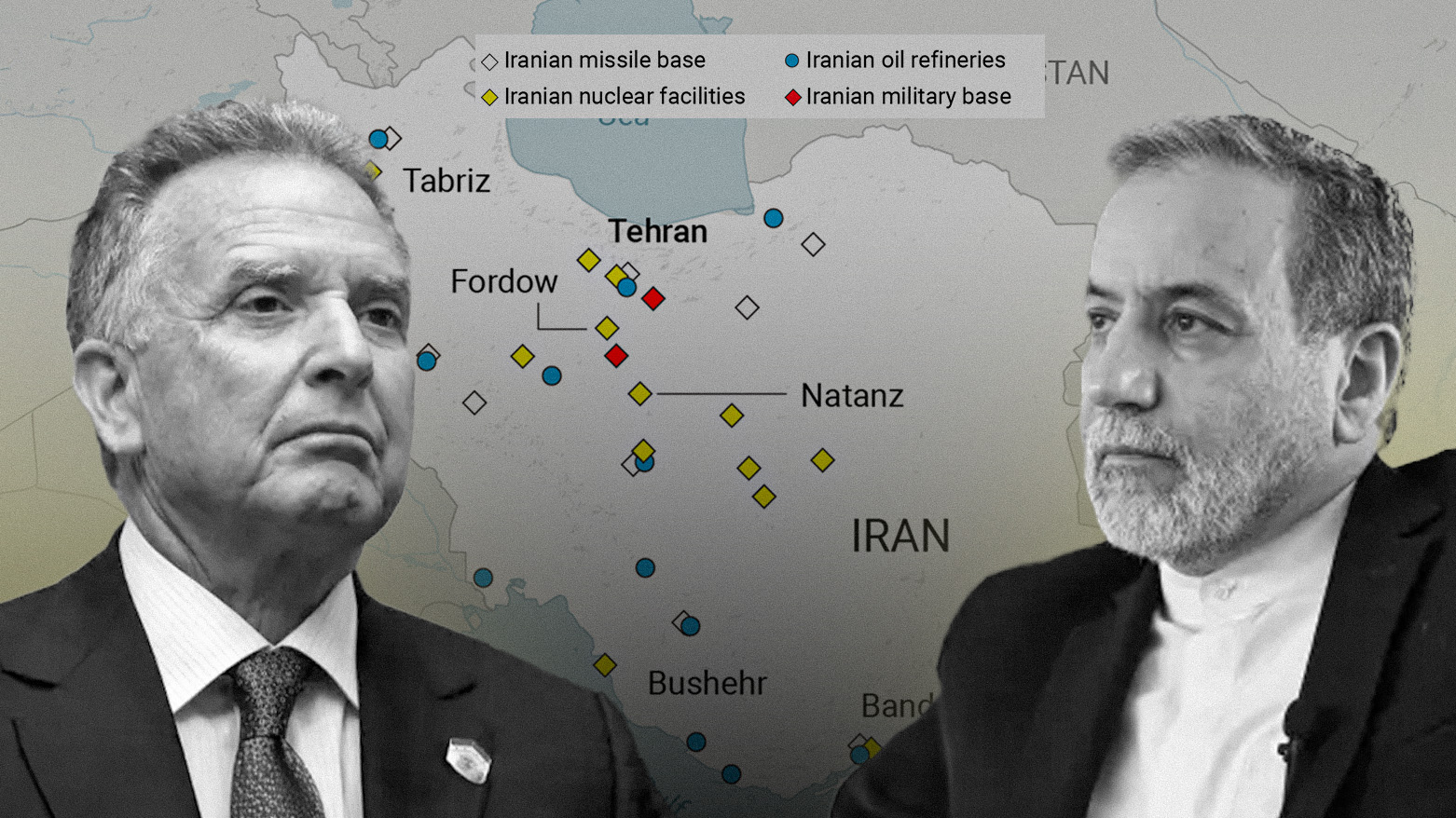
And in this key region, the central place is occupied by Iran. In the context of the reformatting of the global order, the United States considers it necessary to reformat Iran. Not internally, because that is an extremely difficult task. It seems to me that even Americans, even Republicans, even Trumpists understand that reformatting Iran from within is beyond their capacity.
Therefore, they limit themselves to reformatting Iran’s international role, changing its ability to play the role it has played for the past 47 years, almost 50 years. The aim is to ensure that Iran, despite its ideological principles and agenda, is unable to do anything beyond its own borders. In essence, the United States is acting to neutralize Iran as a subject of international relations.
– Is the goal of U.S. policy toward Iran not regime change, but the dismantling of the country as an independent subject of world politics?
– What happens inside the country is the Iranians’ own business. But in international politics, Iran, from the U.S. point of view, must not have the ability to realize its goals, because this is perceived as an obstacle to the achievement of U.S. objectives. This is the same strategy applied in the cases of Iraq and Afghanistan.
Source: CNN
Many say that Iraq and Afghanistan represent failures of American policy. But those are experts and analysts who look at the situation from the perspective of various interests, not from the perspective of U.S. interests. Many argue that after the U.S. invasions of Iraq and Afghanistan, conditions there worsened, even becoming catastrophic. And indeed, they did. But again, this does not factor into the American equation.
From the standpoint of U.S. interests, what matters is that Afghanistan and Iraq play no independent role, just as Libya does, for example. Under Saddam, Iraq played a role and could act in international politics. After the invasion, it cannot, and most likely will not be able to, do anything for many years to come.
– If a state is turned into chaos for the sake of control, is this still politics, or is it already a geopolitical scorched‑earth strategy?
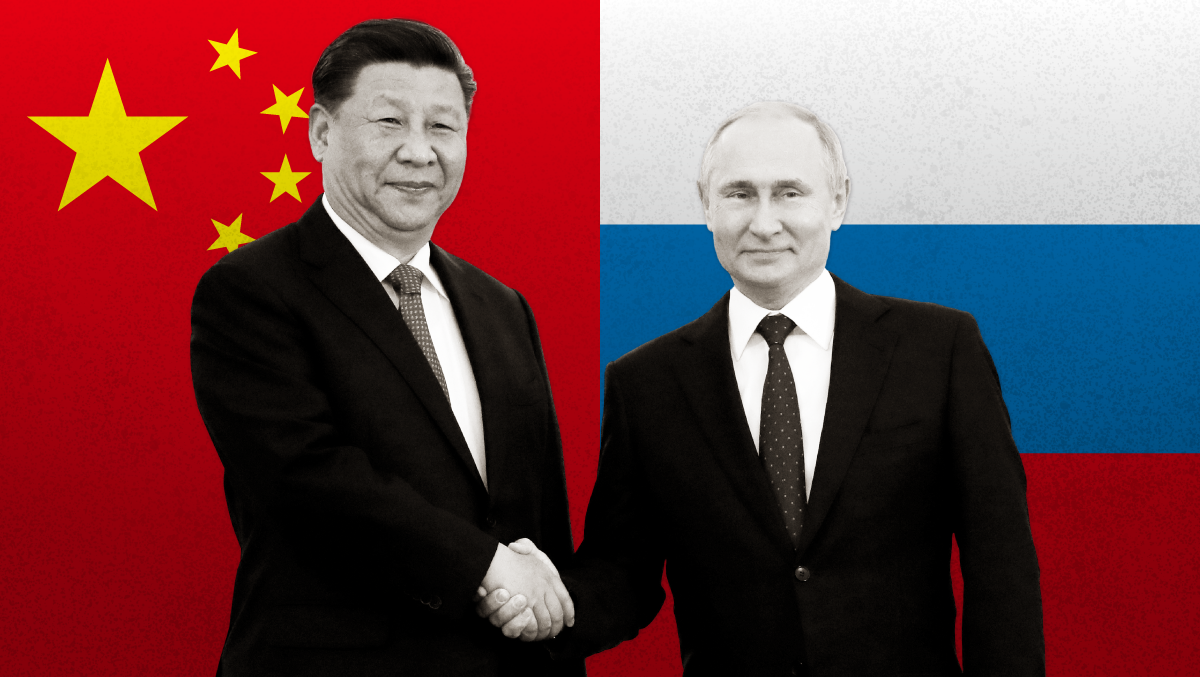
– In fact, we are talking about a strategy of neutralizing a country as an independent subject of international relations and bringing it to a state in which none of the United States’ competitors among the great powers, above all Russia and China, can take advantage of its economic, transit, energy, or geopolitical potential.
Iraq and Afghanistan became illustrative examples. The level of chaos and institutional collapse there is such that implementing any long‑term projects or strategic initiatives by external actors is simply impossible. The potential of these states has been burned out — not captured, but deliberately neutralized.
Source: BBC
Essentially, this is the American version of the principle “if I can’t have you, no one will.” And today, apparently, the same logic is being applied to Iran — not so much its direct defeat as its removal as an independent center of power.
From a strategic point of view, the objective is to reduce Iran to a state in which it is incapable of actively influencing its regional environment — politically, economically, militarily, or ideologically. In this context, U.S. actions appear systemic and multilayered, covering all key spheres of international activity.
– If Washington plays a global strategy game, while Warsaw lives next to war, who today truly understands the price of decisions — the player or the neighbor?
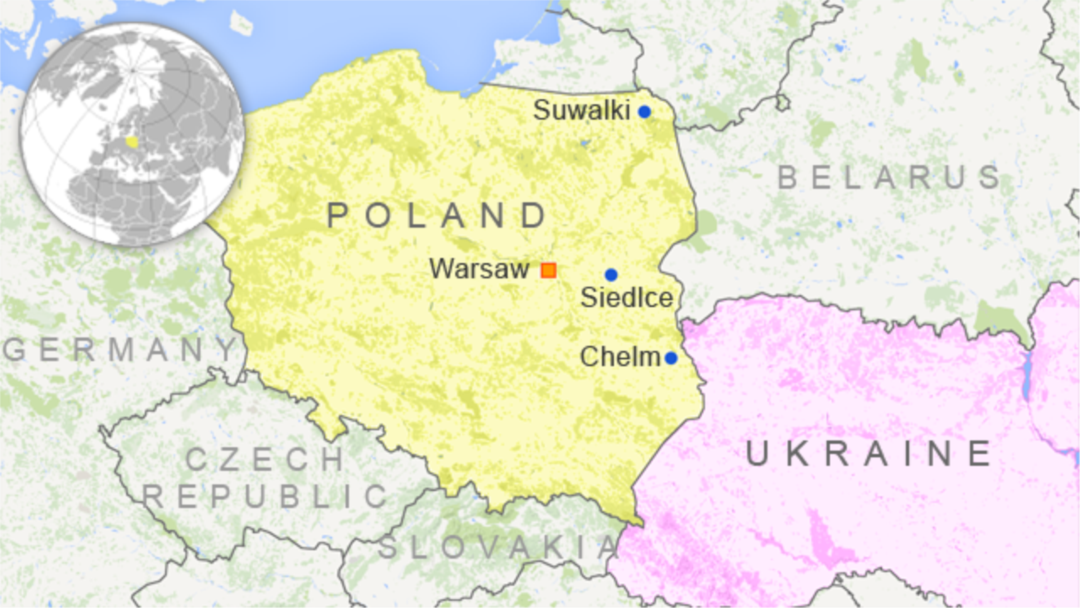
– You in Azerbaijan look at Iran as something concrete, just as we in Poland look at Ukraine. It is a specific country, with specific places whose names mean something. I even know people in Baku whose parents were born in Tabriz. Iran is something concrete — specific places, specific memories, specific people, specific relationships.
Source: voanews
It is the same for us with Ukraine. For the United States, however, it is simply a place on a map. It is a set of abstract strategic calculations. The fate of specific places, specific people, specific relationships, just as in the case of Ukraine, does not interest them. It simply does not fall within their sphere of interest or understanding. For them, these are numbers, data points in a computer game.
It is like a child playing a computer game. That is how the United States conducts international politics, because the situation in Ukraine or Iran will never affect a single American directly. This is a very important point that explains a great deal about how the United States behaves in international affairs.
– If we look at Iran through the eyes of global techno‑corporations, does it appear as a threat, or as an ideal testing ground for modernization under American control?
– As long as something does not directly affect the lives of Americans, essentially anything is permissible. From a strategic standpoint, it is important for the United States that Iran be immersed in internal contradictions and have no friends. That, in fact, has already been achieved, even without direct American intervention.

Source: uwa
After last summer’s attack and the 12‑day war, it became possible to ensure that both internally and externally Iran, and the Iranian regime, face nothing but problems. From an economic perspective, of course, there is the issue of oil control. But since the United States itself produces large volumes and controls other regions, including the Persian Gulf, the oil issue is secondary to the possibility — this is the optimistic scenario — of acquiring Iran as a kind of carte blanche for its companies.
If you look at Iran from the perspective of Elon Musk and other people whose interests are represented by Trump, Iran is a country where everything is possible, a country that has not undergone modernization. When you are in Iran, you feel as if you are in a museum, as if everything stopped 50 years ago. Things that take us two clicks on a smartphone take several hours there — absolutely basic aspects of everyday life.
From the perspective of major players in modern technologies, this is an ideal country for conducting all kinds of experiments, especially since Iran itself can pay for it all. In the optimistic scenario, it would mean acquiring a laboratory for new technologies, including experiments on living organisms. In the pessimistic scenario, it is about preventing anyone from acquiring Iran as such a territory at all.
– Is it still possible today to be neutral, or has neutrality become a luxury of the past?
– Beyond the strategic and economic aspects, there is also an ideological dimension. In this new world, where gray zones are shrinking, where great powers take buffer territories into their zones of influence — Russia with Ukraine, for example, and the United States doing the same, having brought Venezuela into its zone — gray zones are disappearing.
Every country must make a choice about which zone of influence it wants to belong to — American, European, Russian, or Chinese. Essentially, there are two great powers, and one must choose whom to depend on.
By the way, the European Union must also make this choice. Will the EU be a colony of China or a colony of the United States? It will no longer be an independent player.

Source: venezuelanalysis
This choice must be made now. That is a separate discussion. For many years, Iran tried to play the game of independence, and it largely succeeded. It was neither communist nor capitalist; it was its own system, with its own integrated ideology. We may like it or dislike it, but it was a clear position, independent of everyone else.
In the new world, however, there will be no such countries. And the United States is making it clear that either you are with us, and then we can talk, or you are not with us, and then we will destroy you, bomb you, allow Israel to strike you with missiles, and so on.
In this sense, the nuclear deal is a kind of indicator, a symbolic bow. You bow to us, and then we can discuss various options. Otherwise, the gray zones will continue to shrink. Every country in the world must make its choice. And this choice stands not only before Iran, although it stands before it in a particularly acute way, but before all countries in the modern world.


Similar news