Jakub Koreyba: Ukraine conflict moving toward negotiations, not escalation - INTERVIEW


Today’s international agenda is directly linked to the search for ways to end the war in Ukraine. The unfolding events between Kyiv, Moscow, and Washington affect not only Europe but also the broader regional context, impacting the interests of neighboring states, including Azerbaijan.
This is why audiences in Baku are eager to understand the essence of the ongoing processes and hear expert opinions on how realistic the steps toward de-escalation are and what prospects lie ahead for the future.
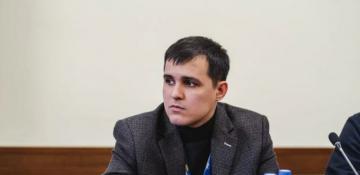
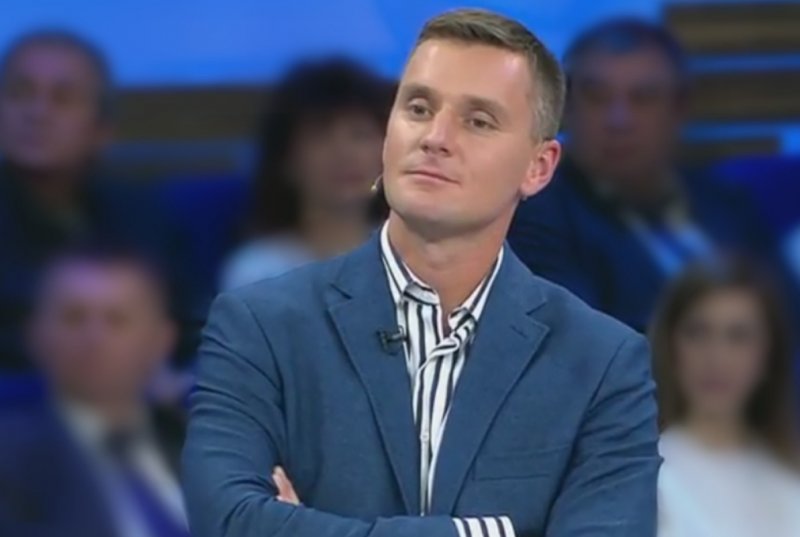
Polish political scientist Jakub Koreyba, in his conversation with News.Az, reflects on the key differences between the February and August meetings of Volodymyr Zelensky and Donald Trump, the likelihood of dialogue with Vladimir Putin, and the political prospects for Kyiv.
- Mr. Koreyba, if we compare the February and August meetings between Volodymyr Zelensky and Donald Trump, what key differences would you highlight in their content and outcomes? To what extent do these two meetings illustrate the evolution of the U.S. approach to Ukraine and Trump’s personal interaction with Zelensky?
- The conflict in Ukraine and Russian-Ukrainian relations directly concern all of us. We are all Russia’s neighbors, and Poland in particular shares a border with both Russia and Ukraine. Therefore, the events unfolding between these countries—their conflict and the war—affect us, perhaps not always directly, but certainly indirectly. This is why the issue of settlement, ending the war, and finding a lasting peace is our top priority. It concerns not only Polish interests but also those of Europe, the region, and the entire international community. Peaceful coexistence and stable neighborhood relations are essential for everyone surrounding Russia and Ukraine.
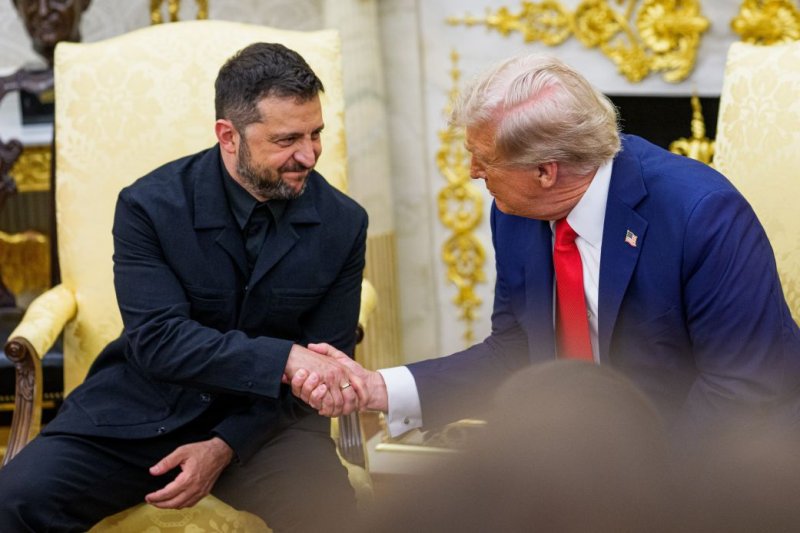
In this context, the August meeting was of particular importance. Unlike the February meeting, which essentially pushed the negotiation process backward, the latest meeting demonstrated qualitative progress. Evidence of this progress lies in the initiation of preparations for bilateral and later trilateral negotiations—something that until recently seemed utterly impossible.
Not long ago, both Russian and Ukrainian leaders were categorically declaring they would not meet with each other. Today, according to President Donald Trump, both have expressed readiness to take that step. This is a truly significant breakthrough.
Essentially, this means we are at the very beginning of real peace talks. It is an extremely positive sign that signals a shift from a logic of military escalation to a logic of de-escalation. Whereas before, the priority was continuing the conflict, the parties are now beginning to move toward compromise.
Thus, we can say that we are witnessing the beginning of the end of this war. This is crucial for everyone: for Russia’s neighbors, Ukraine’s neighbors, and, most importantly, for the Russians and Ukrainians themselves, who bear the direct burden of this war. For the region, this represents a new and promising dynamic, opening up the prospect of restoring peace, stability, and normal coexistence.
- A meeting between Volodymyr Zelensky and Russian President Vladimir Putin is expected soon. In your view, what will be the main focus of the talks: a peace settlement, the status of the occupied territories, or a search for a temporary compromise? Additionally, what risks and opportunities does dialogue with Putin hold for Ukraine given the current international context?
- This is a question that could be discussed for hours because of its enormous complexity and many layers. However, there is one key term you used that I would like to emphasize—temporary compromise. In my opinion, this term most accurately describes today’s reality.
Based on my personal and research experience, as well as scientific observations and life circumstances, I harbor no illusions about a long-term reconciliation between Russia and Ukraine. I lived in Russia for twelve years and in Ukraine for several years, and I am convinced that as long as both countries retain genuine sovereignty—that is, the right to determine their policies and act based on their own interests—conflict between them is inevitable. It is embedded in the very logic of their relationship, their history, their geopolitical positioning, and the contradiction of their national projects.
The most that can be achieved today is to mitigate the manifestations of this conflict and prevent it from escalating into another full-scale war. The essence is to ensure that sharp disagreements between the two countries are resolved not through weapons, but through other means—even if those means involve arduous negotiations and painful compromises, rather than the price of human lives. The goal is to prevent conflicts—past, present, and future—from turning into streams of new casualties.
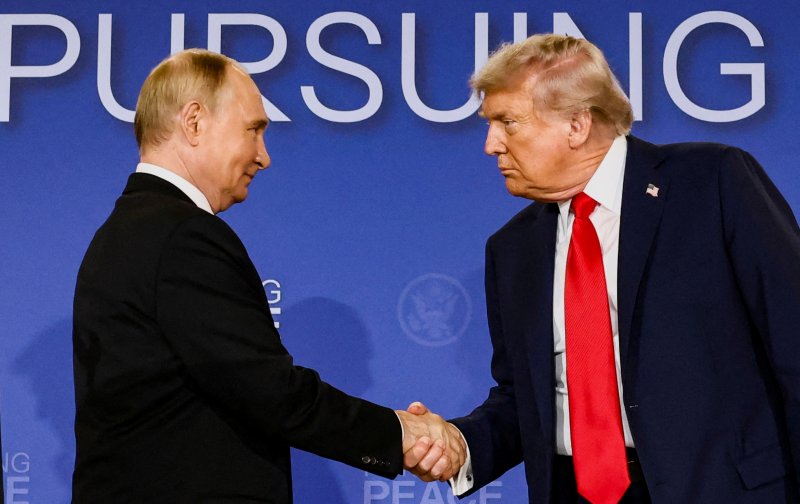
From this perspective, a meeting between Zelensky and Putin may provide an opportunity—a chance to shift the resolution of contradictions into a non-military dimension. For this reason, the central theme of their potential dialogue must be stopping the war, halting the mutual destruction, and ending the loss of human lives. Everything else is a matter for the future. The first priority is to stop the bloodshed; only then can political agreements and possible forms of coexistence be explored.
This approach is justified at least from a humanitarian standpoint. The end of armed hostilities alone is already a huge step forward—it is already better than war. The further political development should be seen as a second stage, one that can only be approached once the guns fall silent.
Therefore, the most appropriate course today is to focus on achieving this temporary compromise. It may not solve all problems or eliminate fundamental contradictions, but it will stop death and suffering. And that is a goal worth negotiating for.
- Ukraine is preparing for presidential elections. How do you assess Volodymyr Zelensky’s chances of reelection, given the wartime context and external political support? To what extent could meetings with world leaders, particularly Trump and potentially Putin, influence his electoral campaign?
- I deliberately avoid commenting on domestic political processes in other countries. I am neither a Russian nor a Ukrainian citizen, so I will not speculate about whom I would vote for if I were a Ukrainian voter. That is a matter solely for the citizens of Ukraine—their right, their choice, and their responsibility.
Nevertheless, it is impossible to ignore the fact that Ukraine is in a situation where its internal processes are tightly intertwined with external factors. International politics, the positions of other states, and their direct or indirect interference and influence significantly shape the internal balance of power in Kyiv. In such circumstances, the winning candidate is the one who manages to secure the support of key foreign policy players—those states and centers of power whose positions have a direct impact on Ukraine’s internal dynamics.
In this regard, Volodymyr Zelensky’s prospects appear, to put it mildly, problematic. There is no doubt that at the start of the war, he played a historic and heroic role, managing to lead his people and refusing to flee the country at its moment of greatest peril. This act alone has inscribed his name in both national and world history as a heroic president.
However, heroism is one thing, while governing a country in peacetime—especially after a war—requires entirely different qualities. Ukraine faces a period of extremely difficult reforms: deep, painful, systemic changes without which neither its stability nor long-term development is possible.
We, who live in post-Soviet countries—be it Azerbaijan, Poland, or others—understand well how difficult it is to reform the legacy of the post-Soviet system, with all its resistance, bureaucracy, vested interests, and internal conflicts. This is precisely what Ukraine will face in the near future.
The question is who is capable of shouldering this immense burden. Personally, I am not certain that Volodymyr Zelensky possesses the qualities and political flexibility necessary to carry out such sweeping transformations. Ultimately, however, the final decision rests solely with the Ukrainian people.


Similar news