New Cold War: China and the U.S. are waging proxy battles across the globe


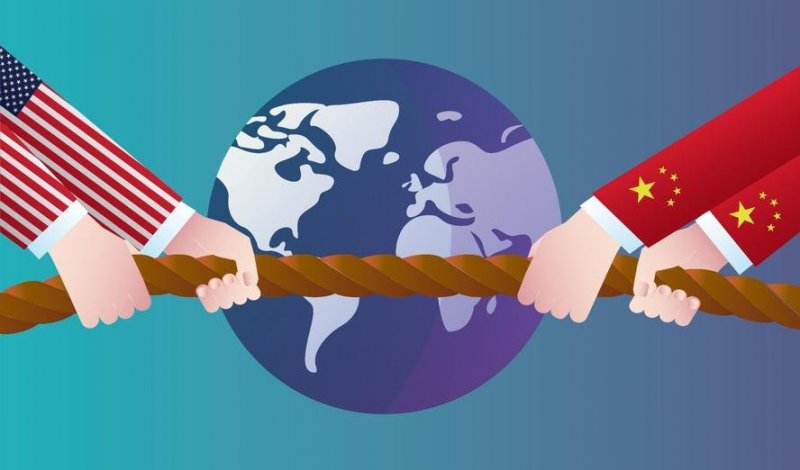
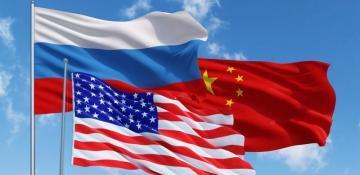
In today’s fractured world, few conflicts are taken at face value. When tensions erupt between smaller states, observers instinctively search for the hidden hands of great powers. Once, it was the United States and the Soviet Union. Later, the U.S. and Russia. Today, the dominant geopolitical narrative has shifted again — and the new confrontation runs through Washington and Beijing.
Now, whenever conflict ignites across Eurasia, analysts race to trace its roots to one of two capitals. If China is even loosely connected to one side, the conclusion often follows automatically: Beijing must be involved. As for the U.S., its omnipresent role in global affairs usually requires little investigation — Washington’s fingerprints are rarely hard to spot.
The latest Iran–Israel war, like the recent spike in tensions between India and Pakistan, is being interpreted by many as a proxy clash in the wider U.S.–China rivalry. But this is not merely an academic exercise in attribution. Understanding how and why the world’s two superpowers engage in indirect warfare is essential to understanding the future of global order — or disorder.
The new geography of power
As China has risen, it has steadily displaced traditional Western power centers and repositioned the global axis of influence from the northern rim of Eurasia to the Pacific. It now commands tools long reserved for the world’s leading empires — diplomacy, trade corridors, infrastructure finance, and yes, covert influence.
The only nation capable of pushing back with equal weight is the United States. And conversely, the only true rival to U.S. global dominance is China. This is not a contest of ideologies. It is a high-stakes competition between two titanic economies with opposing strategic imperatives — one trying to preserve its supremacy, the other determined to claim a share of it.
For this reason, direct confrontation is unlikely. As in previous eras, the world’s great powers will avoid open war. Instead, they will fight on third-party terrain — through economic coercion, military partnerships, and hybrid strategies. The Cold War may be over, but Cold War logic persists.
Consider Russia’s war in Ukraine — it has often been framed, not without reason, as a U.S.–Russia proxy conflict. In many ways, Washington has achieved its strategic goal. By tying Russia down in a war of attrition, the U.S. has drained Moscow’s resources, isolated it diplomatically, and weakened its global posture. For now, Russia is no longer a truly global actor.
But the hybrid war with China is different. These are not asymmetric adversaries. The U.S. and China are the world’s two largest economies. Their clash plays out most intensely in trade, technology, and financial systems — yet the shadow of military confrontation looms, especially in third-party states. Beijing and Washington now court allies, supply weapons, and shape outcomes in theaters ranging from Africa to South Asia to the Middle East.
The proxy battlefield: South Asia
Take the brief but alarming flare-up between India and Pakistan. On the surface, it seemed another round in a decades-old regional rivalry. But beneath that, many saw the signs of external provocation. Pakistan is China’s longtime strategic partner. India, meanwhile, is central to America’s Indo-Pacific strategy.
Here, geography is everything. The Karakoram Highway linking China to Pakistan is a cornerstone of Beijing’s Belt and Road Initiative — and a key corridor in China’s attempt to redirect global trade. The U.S., by contrast, seeks to pivot global supply chains away from China and into friendly partners like India. A major Indo-Pakistani war would paralyze that corridor, wrecking Beijing’s infrastructure plans in South Asia and creating the kind of chaos Washington’s China hawks might welcome.
Fortunately, that crisis de-escalated. Despite tough rhetoric from both sides, India and Pakistan stepped back from the brink. No logistics were destroyed, no mega-projects bombed. But the shadow players behind the scenes didn’t blink — they merely reloaded.
A more dangerous front: Iran and Israel
The same cannot be said for the Israel–Iran war, which is already far more dangerous — and far more revealing.
According to Russian political analyst Sergey Markov, the Israel–Iran conflict is not just a regional war — it is a proxy battle between China and the United States. Markov believes that China could respond through Pakistan, providing Iran with indirect support. Pakistani officials have even issued nuclear warnings, saying that if Israel deploys nuclear weapons, Islamabad may respond in kind.
Meanwhile, military analyst Alexander Mikhailov argues that Israel is acting as an American proxy, executing what he calls a multi-layered U.S. strategy to draw China into a Middle Eastern quagmire. The logic is familiar: destabilize China’s strategic partners, strain its resources, and force it into reactive positions.
Speculation is rife that Beijing is already providing Iran with clandestine military support. According to Telegram-based reports from channels like INSIDER BLACK, China and Pakistan are funneling weapons — including missile systems and precision arms — into Iran. The same reports allege that Chinese and Pakistani military advisors have been deployed quietly via land and air corridors. These claims are unverified — but they are widely believed.
By contrast, U.S. support for Israel is open and unapologetic. Defense officials justify it through longstanding bilateral agreements. According to Reuters, the aircraft carrier USS Nimitz has been rerouted from Vietnam to the Arabian Sea, joining the USS Carl Vinson and its 36 F/A-18 fighters and 12 F-35s. Dozens of U.S. tanker aircraft have been redeployed from Europe, underscoring the seriousness of Washington’s strategic commitment.
The U.S. is not just defending an ally — it is sending a message to China.
Who gets caught in the crossfire?
The question now is not whether the U.S. and China will go to war — it’s whether their competition will destroy the stability of every region they touch.
Middle powers, regional actors, and vulnerable states are now the chessboard on which this 21st-century great game plays out. The danger is real: infrastructure will be disrupted, trade routes imperiled, and local populations left to suffer the consequences of wars they did not choose.
Beijing will do everything it can to avoid the collapse of its partnerships — especially with energy-rich Iran and logistically vital Pakistan. Washington, for its part, seems increasingly determined to undercut China's influence wherever it rises, particularly in the Middle East.
The world’s two most powerful states are writing the rules of engagement. But for smaller countries, the imperative is different: to avoid becoming cannon fodder in a conflict not of their making.
Unfortunately, not all of them will succeed.


Similar news