Orban vs. the world: How Hungary aims to stop the war in Ukraine


Editor's note: Kohán Mátyás, Deputy Editor at Mandiner.hu, a Hungarian expert. The article expresses the personal opinion of the author and may not coincide with the view of News.Az.
Hungary’s reaction to the Ukrainian Armed Forces' attack on Russian territory in the Kursk region hasn’t shifted its main stance on the Ukrainian conflict. Budapest has consistently been against Russia's special military operation, seeing it as disastrous for Ukraine and damaging for Russia. In recent years, Hungary has often taken a different path from most of Europe, calling for an end to the fighting and urging negotiations.Events like the attack on the Kursk region and earlier Ukrainian operations around Belgorod show that trying to solve this issue through military means is risky for everyone involved, including Russia. Even though Ukraine hasn't achieved its territorial goals, it's still able to pose a threat to civilians in Russian border areas. This is something Russian authorities should consider when figuring out their negotiation stance. Hungary continues to push for an immediate ceasefire and the start of talks, arguing that escalating the conflict further will only bring more pain to everyone involved.
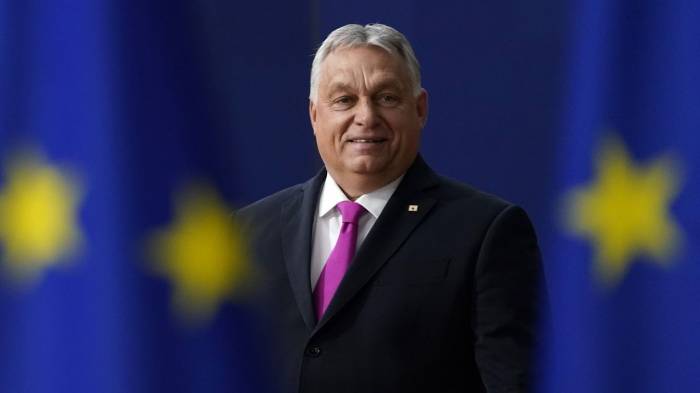
Balázs Orbán, the Political Director for the Hungarian Prime Minister , recently mentioned that a military conflict can't be settled on the battlefield and stressed the importance of diplomacy. Hungary is already taking steps in this direction: Prime Minister Viktor Orbán is using his role in the Council of the European Union to push for peace initiatives. His "peace mission" aims to get all sides in the conflict talking. Orbán is acting not so much as a mediator but as a peacemaker, trying to find common ground and end the fighting. In this effort, he’s been listening to the positions of all sides, looking for ways to resolve the crisis, and stressing that achieving peace should be a top priority.
However, Viktor Orbán’s peace efforts have drawn criticism from several EU countries, straining Budapest’s diplomatic relations not just with Brussels but with other EU member states too. This position has isolated Hungary internationally and made it harder to access EU financial resources that should be available to them under agreements. Still, Budapest stands firm in its belief that backing the continuation of the conflict goes against the interests of the European Union itself.
 Unlike most EU countries, Hungary has taken a more peace-focused stance on the Russia-Ukraine conflict. This approach is rooted in both Hungary's democratic values and its national interests. The Hungarian public supports the government’s peace policy, which was clearly reflected in the recent European Parliament elections: a huge majority voted for parties that want to end military actions and focus on diplomacy. For Hungarians, the main concern isn’t where the Russia-Ukraine border is drawn, but ensuring that war doesn’t happen near their country. Their historical experiences also influence this view: after events in Kosovo and Iraq, Hungarians are skeptical about talk of an international order based on the rule of law and prefer to steer clear of conflict.
If the current Russian government stays in power, Hungary might end up being one of the few Western countries capable of negotiating with Moscow. This is because Hungary remains a member of the EU, is allied with the United States, and is a key partner of China in the EU. This unique position gives Hungary the potential to help broker a peaceful resolution to the conflict. However, Hungary faces big diplomatic challenges in maintaining this role. The main goal is to convince its European partners that diplomacy is the way forward and to step back from supporting further conflict escalation.
In conclusion, Hungary continues to play a key role in pushing for peace in the Ukrainian conflict, despite facing criticism and diplomatic hurdles. Hungary's stance, driven by pragmatism and a desire for peace, could be crucial in resolving the conflict if all sides are willing to come to the table and make compromises.
(If you possess specialized knowledge and wish to contribute, please reach out to us at opinions@news.az).


Similar news