OSCE Minsk Group is gone, but Armenia still stalls peace – INTERVIEW


By Asif Aydinly
As Armenia seeks to navigate a new geopolitical landscape, its relationship with neighboring Georgia and the broader implications of its foreign policy choices have come under increasing scrutiny. In an exclusive interview with News.Az, Andrey Petrov, Deputy Director General of the Russian information and analytical agency Vestnik Kavkaza, offers an in-depth analysis of Armenia’s recent diplomatic moves, the real motives behind Yerevan’s engagement with Tbilisi, and the broader context of its evolving ties with Azerbaijan, Russia, and the West. Petrov also shares his perspective on the Armenian government's readiness to accept key conditions for peace with Azerbaijan and the long-term ambitions of Prime Minister Nikol Pashinyan.

– Recently, there has been increased high-level contact between Armenia and Georgia. What is driving this activity, and what do both sides hope to gain from it?
– In my view, these are primarily routine, protocol-level interactions between neighboring countries. The foreign policy trajectories of Georgia and Armenia have diverged significantly. Tbilisi has entered a phase of confrontation with the European Union, striving to defend its sovereignty, maintain as stable a relationship as possible with Russia, and hoping to reset its dialogue with the United States should Donald Trump return to power. Meanwhile, Yerevan expects nothing from a potential Trump administration and is willing to sacrifice ties with Moscow and part of its sovereignty in exchange for integration into the EU—under any available format.
Today’s Armenia is largely repeating Georgia’s path from 15 years ago: a government overthrow, the rise of anti-Russian forces, and a sharp pivot toward the West. Therefore, the most the Georgian leadership can do is try to warn Yerevan against repeating the mistakes made during the Saakashvili era.
It’s possible that Armenia, by stepping up its dialogue with Georgian counterparts, is seeking a potential mediator in the Armenia-Azerbaijan normalization process. However, the Armenian approach to this issue has no chance of gaining support from Tbilisi. Yerevan is looking for mediators who would take its side and apply pressure on Baku. But that strategy is outdated—Azerbaijan has succeeded in establishing a direct bilateral dialogue, and its effectiveness proves that third-party involvement is unnecessary.
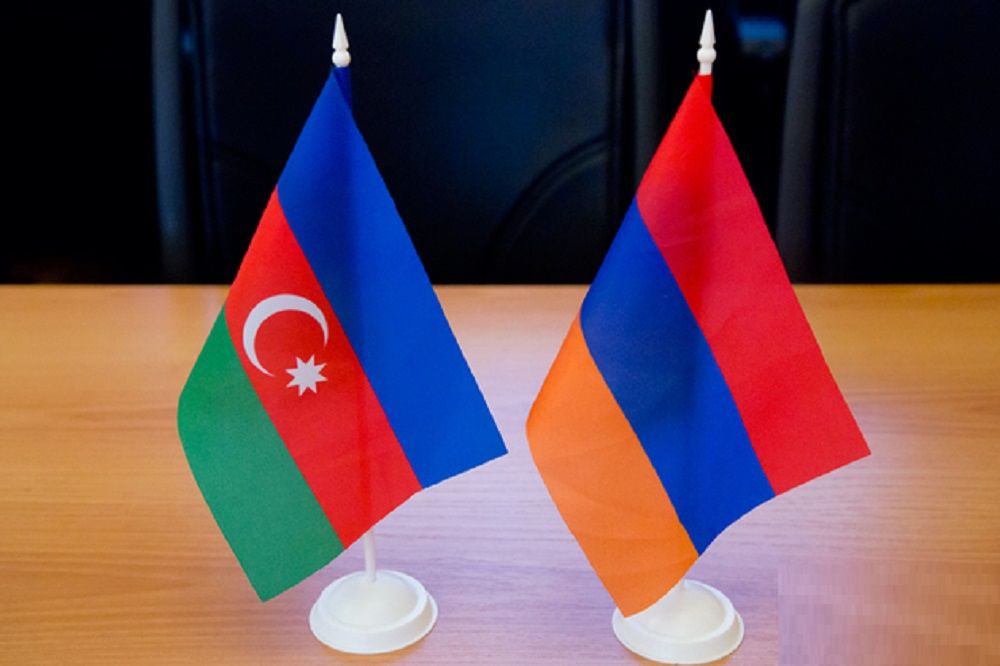
The situation is even clearer when it comes to Georgia: the country is closely tied to Azerbaijan through mutually beneficial economic projects. Thanks to Azerbaijani initiatives, Tbilisi has become a participant in global routes for the transportation of energy and goods. Georgia is willing to provide a platform for negotiations and the signing of a peace agreement and supports the idea of such a treaty—but it will never back Yerevan’s anti-Azerbaijani interests.
Source: TASS
– For a long time, the Armenian authorities refused to meet Azerbaijan’s key conditions for signing a peace agreement—namely, the dissolution of the OSCE Minsk Group and constitutional amendments. Yet recently, Yerevan expressed readiness to take these steps. What, in your opinion, caused this shift?
– Nikol Pashinyan’s government is operating according to a very recognizable pattern: as long as there is an opportunity to stall negotiations and postpone decisions, that’s exactly what it does. But once the situation reaches a point where further delays are no longer possible, Yerevan concedes without hesitation.
Since the Second Karabakh War, all progress in the peace process has come exclusively from Azerbaijan. Baku compels Yerevan to make concessions—and Yerevan complies. This is a consequence of the Armenian elite’s distorted perception of reality, which for years was shaped by illusions of their own invulnerability. Neither the defeat in 2020 nor the swift dismantling of the separatist regime in Khankendi in 2023 changed this mindset.
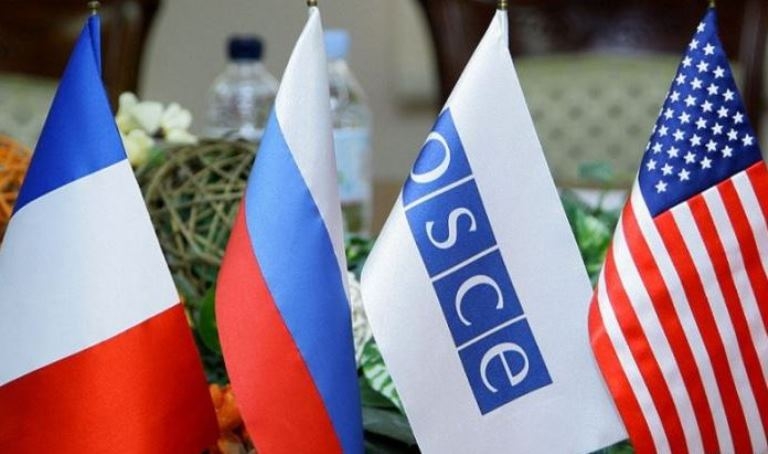
Pashinyan’s team still believes that Armenia is out of harm’s way, and therefore sees no urgency in normalizing relations with Azerbaijan. Yerevan is using all unresolved post-war issues as bargaining chips in its foreign policy dealings with the West. The OSCE Minsk Group—effectively defunct—was something Yerevan tried to preserve for years as a gesture of loyalty to Paris and Washington. Now that U.S. interest in Armenia is waning, there is no longer a need to cling to the Minsk Group.
Similarly, Yerevan delayed finalizing the peace treaty in hopes of a shift in U.S. policy following a potential Trump return. But once it became clear that Trump favors Baku, the Armenian side quickly agreed to the full text—to simulate a peace-seeking attitude and attract at least some Western attention.
Now we are witnessing a new Armenian tactic: on one hand, the authorities agree to dissolve the OSCE Minsk Group, but only after the peace treaty is signed. This directly contradicts Azerbaijan’s position, which insists on the opposite sequence. Yerevan’s approach is clearly designed to stall the process while shifting the blame onto Baku, all while presenting a supposedly constructive image to Western partners.
Armenia’s anti-Azerbaijani rhetoric is not aimed at Baku or regional players—it is intended for Western audiences. Armenian elites are still dreaming not of stability in the South Caucasus, but of reorienting their country toward Europe.
As for the constitutional amendments, Pashinyan has personal motives as well: by rewriting the Basic Law, he can consolidate power. He turns 50 this year—physiologically, he could remain in office for another 20–25 years, but that would require a solid legal foundation. He is willing to remove from the Constitution references to the Declaration of Independence that contain territorial claims against Azerbaijan because resolving the Karabakh conflict represents major political capital for him.
However, constitutional reform takes time. Simply deleting references to separatist documents doesn’t solve everything—Pashinyan wants a political system where he is insulated from opposition and no longer dependent on parliamentary elections. It is quite likely that Armenia will return to a presidential system without term limits.
Additionally, Pashinyan is not entirely confident in his political resilience. The recent election results in Gyumri, where his party failed to secure 50%, show a drop in popularity. That’s why the referendum has been postponed to the summer of 2026—after the parliamentary elections, when it can be held under more controlled conditions.
Although this delays the signing of a peace agreement by at least a year and a half, it is acceptable for Azerbaijan. The main priority is eliminating all threats to its territorial integrity. A referendum in 2025 could have ended in failure and led to the return of a nationalist opposition in 2026, which would immediately annul all agreements. Therefore, Baku’s objective is not just to achieve a signed treaty, but to ensure a political configuration in Armenia that allows for its implementation.
Source: News.Am
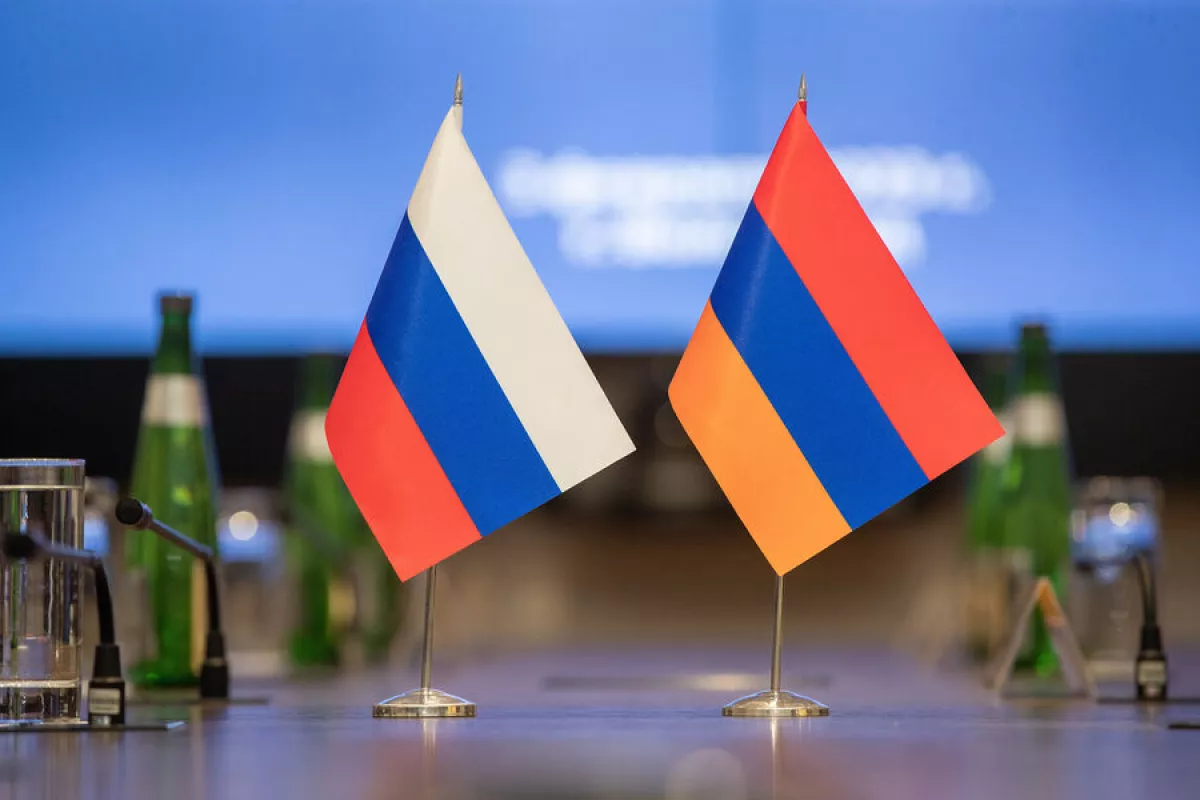
– In recent months, Armenian media has increasingly highlighted Yerevan’s desire to normalize relations with Russia, which have significantly deteriorated in recent years. How sincere is this desire on the part of the Armenian leadership?
– In my opinion, this is not a genuine reassessment of Armenia’s foreign policy course, but yet another tool of diplomatic bargaining. Yerevan is using its outreach to Moscow purely as leverage to pressure the West. Pashinyan’s government has no real interest in restoring political ties with Russia—its strategic goal remains unchanged: integration into the Western world. Relations with Moscow only matter to Yerevan if they come with economic benefits. This is Pashinyan’s formula: “Live in Europe, earn in Russia.”
Realizing that Armenia’s pro-Western course is losing external support—the U.S. is showing indifference, and the EU simply lacks the resources to meet Armenia’s ambitious demands—Pashinyan gave the green light to restore high-level contacts with Russian state institutions. This is not due to a change in political ideology or strategic priorities, but a purely tactical move: to remind the West that Armenia can always pivot toward Moscow if its demands go unmet.
In this context, the visit of Frank-Walter Steinmeier to Yerevan was a clear example: Armenian authorities succeeded in alarming Europe with the prospect of renewed closeness to Russia. This tactic will now be used regularly. Every time Yerevan feels it is receiving insufficient attention or support from the EU, it will demonstratively strengthen dialogue with Moscow—not to restore a real alliance, but purely to “rattle the nerves” of its European partners.
This maneuver may continue for quite some time—as long as the European Union remains interested in supporting Armenia as an anti-Russian outpost in the South Caucasus.


Similar news