Who is Domingos Simões Pereira and why is he important in Guinea-Bissau politics?


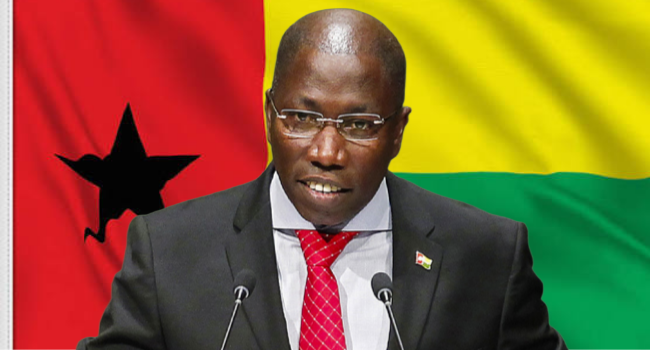
Domingos Simões Pereira is one of the most influential politicians in Guinea-Bissau and the country's leading opposition figure.
He is the president of the African Party for the Independence of Guinea and Cape Verde (PAIGC), the historic party that led Guinea-Bissau's independence struggle against Portuguese colonial rule, News.az reports.
RECOMMENDED STORIES
Over the past decade, Pereira has emerged as a central figure in the country's political landscape, serving as prime minister and repeatedly challenging for national leadership.
What is his political background?
Pereira was born in 1963 in Farim, northern Guinea-Bissau. Trained as an engineer, he studied in the former Soviet Union and later in the United States and Portugal.
Before entering domestic politics, he gained international experience as Executive Secretary of the Community of Portuguese Language Countries between 2008 and 2012, a role that increased his diplomatic profile across the Portuguese-speaking world.
Which political party does he lead?
Pereira leads the African Party for the Independence of Guinea and Cape Verde, commonly known as PAIGC.
Founded by independence leader Amilcar Cabral, the party has dominated much of Guinea-Bissau's political history since independence in 1974.
PAIGC remains one of the country's largest and most organized political movements.
Has Pereira served in government?
Yes.
Following parliamentary elections in 2014, Pereira became Prime Minister of Guinea-Bissau.
His appointment was initially seen as a turning point for a country long plagued by military coups, political instability and economic challenges.
However, his tenure lasted only about a year after a power struggle with then-President Jose Mario Vaz led to his dismissal in 2015.
Why is he considered the main opposition leader?
Pereira has remained at the forefront of opposition politics since leaving office.
He was PAIGC's presidential candidate in the 2019 election and narrowly lost to Umaro Sissoco Embalo after a disputed vote.
Since then, he has continued to challenge Embalo's administration and has become the principal voice of the opposition.
What happened in the 2019 presidential election?
The election was one of the most contentious in Guinea-Bissau's recent history.
Embalo was declared the winner in the runoff election, but Pereira and PAIGC disputed the results, alleging irregularities and calling for a legal review.
The dispute triggered months of political uncertainty before Embalo consolidated power.
What is Pereira's political ideology?
Pereira is generally viewed as a center-left politician.
His platform has focused on:
-
Strengthening democratic institutions;
-
Economic reform;
-
Anti-corruption measures;
-
Expanding social services;
-
Enhancing relations with international partners;
-
Reducing military influence in politics.
He has also advocated for greater transparency and institutional stability.
Why has Guinea-Bissau experienced so much political instability?
Since independence, Guinea-Bissau has suffered repeated coups, attempted coups, political crises and frequent changes of government.
Weak state institutions, military intervention in politics, economic difficulties and political rivalries have often undermined democratic governance.
Pereira has argued that stronger institutions and constitutional reforms are necessary to break this cycle.
What role did Pereira play in the 2023 parliamentary elections?
Pereira helped lead the opposition coalition known as the Inclusive Alliance Platform Terra Ranka.
The coalition won the parliamentary elections, giving the opposition significant influence in the National People's Assembly and strengthening Pereira's political standing.
The result demonstrated continuing support for PAIGC despite years of political conflict.
Why has he clashed with President Umaro Sissoco Embalo?
The rivalry between Pereira and Embalo has defined Guinea-Bissau's politics in recent years.
Their disagreements have centered on:
-
Electoral legitimacy;
-
Constitutional authority;
-
The role of parliament;
-
Government formation;
-
Relations between the executive and legislative branches.
Both leaders have accused each other of undermining democratic institutions.
Has Pereira faced detention or political pressure?
Yes.
During periods of heightened political tension, Pereira and other opposition figures have reported pressure from state authorities.
Political confrontations between the government and opposition have raised concerns among international observers about democratic governance and political freedoms in Guinea-Bissau.
What is his relationship with the military?
Pereira has generally advocated for limiting military involvement in politics and strengthening civilian control over state institutions.
This position is particularly significant in Guinea-Bissau, where the military has historically played a major political role.
How is he viewed internationally?
Pereira is well known among African, European and Lusophone diplomatic circles due to his previous role at the CPLP and his years in national politics.
Many international partners see him as an experienced statesman and a key actor in Guinea-Bissau's democratic process.
However, like many political leaders, he also faces criticism from opponents who question aspects of his governance record and political strategy.
Could he become president in the future?
Yes.
Despite previous electoral defeats, Pereira remains one of the strongest political figures in Guinea-Bissau and is widely considered a potential presidential contender in future elections.
His influence within PAIGC, his national profile and his international connections make him one of the country's most significant political actors.
Why is Domingos Simões Pereira important beyond Guinea-Bissau?
Pereira's political career reflects broader challenges facing several West African countries, including democratic consolidation, civilian governance, constitutional stability and economic development.
His rivalry with President Embalo and his efforts to strengthen opposition politics continue to shape Guinea-Bissau's democratic trajectory and are closely watched by regional organizations and international partners.
By Faig Mahmudov


Similar news