Plans and prospects: What to expect from BRICS countries in the coming years?


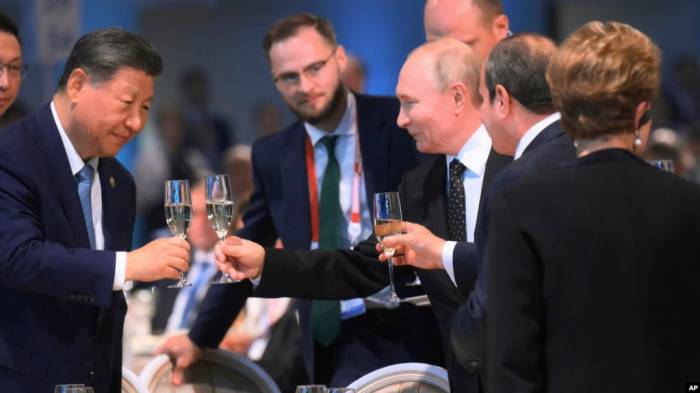
On October 22, 2024, the 16th BRICS Summit kicked off in Kazan, showcasing the ambitions of its member countries amidst global economic and political upheavals. Russia, as the host, organized a series of meetings, negotiations, and discussions covering key topics—ranging from economic cooperation and logistics to the transition to a low-carbon economy and financial sovereignty. It seemed like the perfect moment to strengthen BRICS's position as an alliance capable of offering alternative solutions. However, instead of a cohesive plan, the countries revealed a kaleidoscope of ideas, which are still far from forming a unified strategy.
On the first day of the summit, Russian President Vladimir Putin met with Chinese President Xi Jinping , Indian Prime Minister Narendra Modi, South African President Cyril Ramaphosa, and Dilma Rousseff, President of the New Development Bank. Notably, Brazilian President Lula da Silva could not attend in person due to a head injury but actively participated in the discussions via video link. Despite the Brazilian leader’s health issues affecting the atmosphere, his determination remained undiminished. Speaking from the screen, Lula strongly criticized wealthy nations for failing to uphold their own emission reduction promises, reminding everyone that "we have only one planet," and thus, all must take responsibility for its future.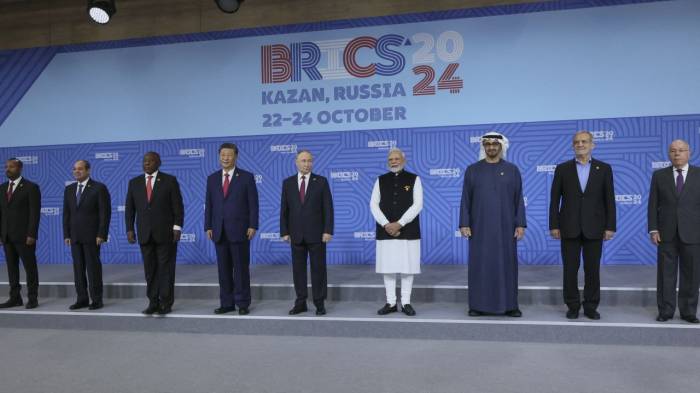
The topic of energy transition took center stage, highlighting contradictions within BRICS countries . While developed nations set their rules, the Global South, including BRICS, insists on a fair and tailored approach to low-carbon development. For instance, Xi Jinping emphasized that China is ready to expand cooperation in green energy, including the production of lithium batteries and photovoltaic panels. This statement was not just a declaration but a signal of Beijing’s desire to dominate the green tech market, strengthening its influence on global supply chains.
Lula da Silva did not hold back, expressing disappointment over the failures of developed countries in fulfilling climate promises and called for a more equitable distribution of responsibilities. Meanwhile, India, through Prime Minister Narendra Modi, promoted the idea of "green credit" and the International Solar Alliance initiative. Modi made it clear that India sees new economic potential in green growth, but not on Western terms. This was a manifesto of sorts, asserting that the green economy should not be a tool for economic dominance, and BRICS countries need to find their own path in this matter.
Another crucial topic raised at the summit concerned resource exploration. BRICS includes both major producers and consumers of energy resources, creating unique conditions for cooperation. China, seizing the opportunity, announced the establishment of an international BRICS center for deep-sea resources. Xi Jinping noted that China is prepared to develop this potential, especially given the capabilities of the new drilling vessel "Meng Xiang" (meaning "Dream" in Chinese). The vessel has already begun trials and can drill at depths of up to 11 kilometers, opening vast prospects for scientific research and the extraction of oil and gas. This project reflects not only China’s technological leadership but also its quest for resource independence.
Meanwhile, Russia is advocating the creation of a common platform for mineral exploration and extraction, which will facilitate the exchange of expertise and technological solutions. President Vladimir Putin also proposed establishing a BRICS platform for precious metals and diamonds, underscoring the strategic importance of resources for the economies of Russia and other bloc members.
Financial cooperation and the desire to reduce dependence on the US dollar were among the hottest topics at the summit. Vladimir Putin stressed the need to create a new investment platform to support BRICS economies and proposed the opening of a grain exchange to protect markets from external interference and speculation. This proposal appears to be an attempt to counterbalance Western commodity exchanges and strengthen food security.
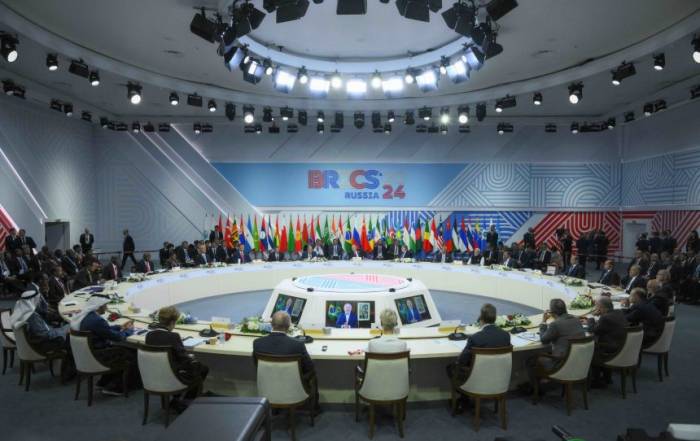
However, the real "cherry on top" was the discussion on dedollarization. Xi Jinping and Ethiopian Prime Minister Abiy Ahmed supported strengthening BRICS’s financial infrastructure and developing alternative payment mechanisms to reduce costs for commercial transactions between bloc countries. Iranian President Pezeshkian went even further, asserting that countries should abandon the use of the US dollar due to its instability and financial issues in the US. This was an open challenge to the established global financial order, and it seems that support for this idea will only grow.
In 2024, BRICS countries launched regular dialogues on logistics and transport, creating subgroups to tackle the most pressing issues. Among the proposals were the creation of a permanent logistics platform and the improvement of transport routes.
Russia is pushing the idea of an electronic transport communication platform and a reinsurance pool, which should reduce risks and costs for participants. Interestingly, India shared its experience gained from the GatiShakti Portal, which facilitates the planning and development of multimodal connections. This is an example of how BRICS countries can share technological solutions that ease infrastructure development and reduce logistical costs.
The BRICS Summit in Kazan demonstrated that member countries are ready to discuss and promote ideas that could reshape the economic landscape of the Global South. However, the big question remains: Will all these ambitious projects become a reality, or will they remain subjects of diplomatic speeches and formal statements? To become a powerful player on the world stage, the alliance needs more than just a parade of initiatives. While each nation protects its national interests under the guise of common goals, there is hope that future steps will be more concrete and genuinely help build a new, multipolar world order.
(If you possess specialized knowledge and wish to contribute, please reach out to us at opinions@news.az).


Similar news