Riyadh talks, Trump’s strategy, and regional tensions: An interview with Ruslan Aisin


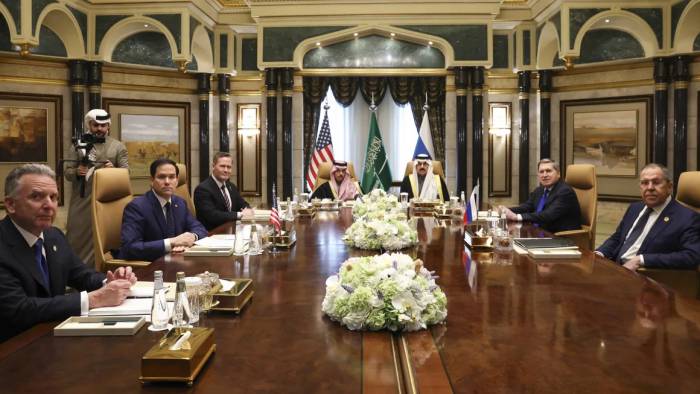
As Russia and the United States hold their first round of negotiations in Riyadh, questions arise about the prospects for peace in Ukraine and the broader geopolitical implications. Meanwhile, Ukrainian President Volodymyr Zelensky traveled to Ankara for talks with Turkish President Recep Tayyip Erdoğan. Is Ukraine seeking a new strategic ally, or is it simply looking for military assistance? At the same time, tensions are rising in the Baltic region, fueling concerns about potential Russian aggression.
 To discuss these pressing issues, News.Az spoke with Ruslan Aisin, a prominent Tatar political analyst, journalist, and public figure.
"Why is everything being decided without Ukraine?"
- The U.S. and Russia have begun negotiations in Riyadh. Could this lead to a peaceful resolution in Ukraine?
- It’s hard to say at this point. What’s concerning is that these discussions are happening without Ukraine’s direct involvement. This raises serious questions in Kyiv’s political circles—why are key decisions being made without Ukraine at the table? From what we know, the conditions proposed by Russia and potentially accepted by Trump are extremely unfavorable for Ukraine. Russia insists on retaining all occupied territories and demands guarantees that Ukraine will never join NATO. Additionally, Moscow wants to prohibit American troops from being stationed in Ukraine or anywhere in the region.
- Do you think Trump is sincere in his desire to bring peace to Ukraine?
- I believe Trump’s motivations are more about political optics than a genuine commitment to peace. He wants to show that he can solve complex conflicts that the Biden administration has struggled with. Trump approaches foreign policy like a businessman—he believes that economic deals and financial leverage can resolve geopolitical crises. His philosophy is simple: what cannot be solved with money can be solved with a very large sum of money.However, the reality is different. He promised to end the war in one day, yet nearly a month has passed, and there is still no ceasefire. That raises doubts about whether his approach is actually viable or if it’s just campaign rhetoric.
Trump, Putin, and China: A secret deal?
- Some analysts speculate that Trump might be willing to accept Russia’s demands in exchange for support in his broader rivalry with China. What’s your take on this?
- That is a very real possibility. If you look at the conditions that Russia is proposing, they are overwhelmingly favorable to Moscow. I don’t rule out the idea that Trump might accept them, believing that he can count on Putin’s support in his own geopolitical struggle against China.Some of these negotiations could even be happening behind closed doors. There’s a historical parallel here—the 1938 Munich Agreement, where Western leaders tried to appease Hitler. We may be witnessing a similar scenario unfold between Trump and Putin.
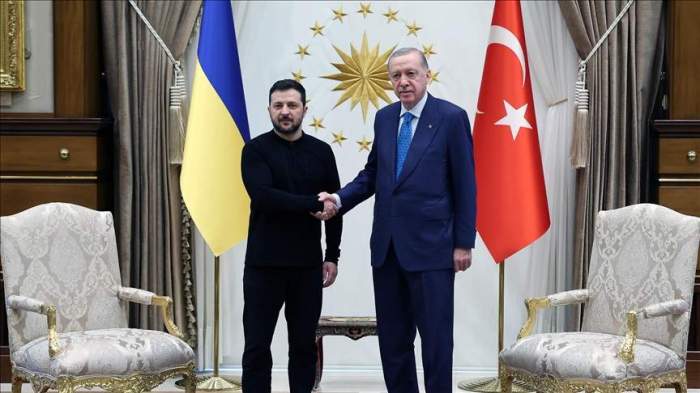 Turkish President Recep Tayyip Erdogan (R) and Ukrainian President Volodymyr Zelenskyy (L) shake hands as they pose for a photo at the Presidential Complex in Ankara, Turkey on February 18, 2025. Photo: Anadolu Agency
Zelensky’s visit to Türkiye: A strategic shift?
- While U.S.-Russia negotiations were happening in Riyadh, Zelensky visited Türkiye. What does this indicate?
- Zelensky’s trip to Ankara signals that Ukraine is actively seeking new strategic partnerships. Türkiye is an emerging power in the region, not only within NATO but also in the broader Middle East and the Turkic world. Erdoğan maintains strong relationships with both Putin and Western leaders, making Türkiye a key player in balancing regional dynamics.Ukraine is likely exploring stronger military cooperation with Türkiye. The Turkish military is one of the most combat-ready forces in NATO, and with Washington shifting its focus elsewhere, Ankara could become a more significant partner for Kyiv in both security and defense.
Baltic region: The next flashpoint?
- The Baltic states have expressed concerns about Russian aggression. Do you see any real risks?
- Absolutely. If Russia achieves peace in Ukraine on its own terms, it will regain strength and might turn its attention to the Baltics. The three Baltic states—Lithuania, Latvia, and Estonia—are NATO members, but that does not make them invulnerable.One major concern is the Suwalki Gap, a narrow land corridor between Poland and Lithuania that serves as NATO’s lifeline to the Baltic states. If Russia were to attempt an incursion, it would likely face strong resistance from Poland, which has a well-equipped and highly motivated military. However, Moscow could use hybrid warfare tactics, similar to those in Ukraine, to destabilize the region.The key question is: how will NATO respond? The alliance has security guarantees, but recent U.S. political shifts have created uncertainty about Washington’s long-term commitment to defending its allies.
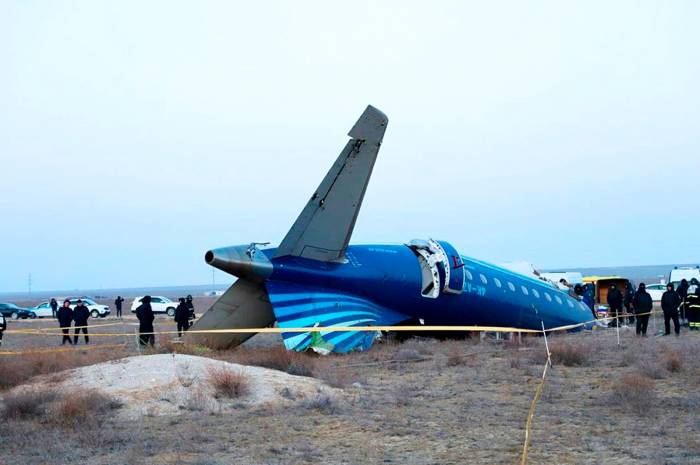 An Azerbaijan Airlines (AZAL) passenger plane crashed near the airport of Aktau, Kazakhstan, on Dec. 26, 2024. Photo: AP
Azerbaijan-Russia relations after the aircraft incident
- Azerbaijan-Russia relations have been tested after the recent downing of an Azerbaijani aircraft in Russian airspace. How significant is this event?
- This is a serious issue. Russia’s actions show blatant disregard for Azerbaijan’s sovereignty. Despite their strategic partnership, Baku will not simply ignore such an incident.Azerbaijan has grown significantly in influence on the international stage, and its leadership is unlikely to tolerate such provocations. If Moscow does not recognize its mistake and offer an apology, this could escalate tensions.
- Do you see this incident leading to a long-term shift in Azerbaijan-Russia relations?
- It depends on Russia’s next moves. Azerbaijan has already demonstrated its ability to pursue an independent foreign policy, and Moscow cannot expect to act with impunity. If Russia fails to acknowledge its actions, we may see a gradual shift in Azerbaijan’s geopolitical orientation—perhaps toward deeper cooperation with Türkiye and other regional players.
What comes next?
- With so many geopolitical tensions at play, what do you expect in the coming months?- The next few months will be decisive. If the U.S. and Russia continue talks, we may see an attempt at a negotiated settlement in Ukraine—but whether it will be just and sustainable is another question. At the same time, other regions—including the Baltics and the South Caucasus—are facing new security challenges.
The world is undergoing a major power shift, and countries must be prepared to navigate these turbulent times with strategic foresight.


Similar news