Behind closed doors: What did Russia and the U.S. really discuss?


Editor's note: Darya Grevtsova is the Deputy Director of the Institute of Political Studies and a Russian political scientist. The article expresses the personal opinion of the author and may not coincide with the view of News.Az.
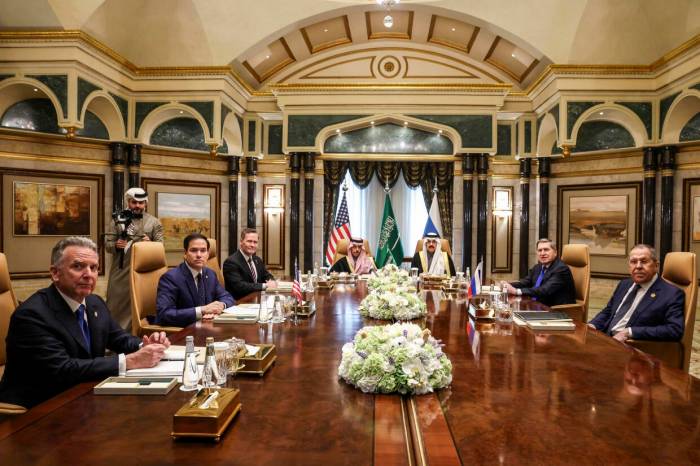
The negotiations between Russia and the United States in Saudi Arabia have become one of the most significant diplomatic events in recent times. Although the outcomes of the meeting remain largely classified, the very fact that dialogue is taking place between two countries in deep confrontation raises numerous questions. Are Washington and Moscow truly ready for compromises? Or are we merely witnessing tactical maneuvers aimed at temporarily easing tensions?
The negotiations, it seems, were held behind closed doors, with both sides preferring not to disclose the details of any agreements, if any were reached at all. However, it is known that one of the key results was an agreement to gradually restore the operation of diplomatic missions. This step is undoubtedly important: diplomatic communication channels between the countries had been practically destroyed, and contacts were conducted at a highly restricted level. Nevertheless, the restoration of embassies is a necessary step to establish working contacts.
Another significant aspect was the formation of working groups to address the Ukraine conflict. While the mere fact that this issue was discussed at such a level indicates serious intentions, the key question remains: what will this lead to? Moscow and Washington continue to hold diametrically opposed positions.
One of the key issues remains the potential easing of sanctions. Donald Trump, first and foremost a businessman, views foreign policy through the lens of economic benefits. He has already stated that American businesses have lost hundreds of billions of dollars due to anti-Russian sanctions. At the same time, the impact on Russia has been far less devastating than Washington had hoped: Moscow has adapted, strengthened cooperation with China and Global South nations, and its economy continues to grow.
Thus, the U.S. may come to realize that sanctions pressure is not yielding the desired results. However, any move to lift them will meet fierce resistance from European allies, who remain committed to confrontation. The European Union has become a hostage to its own decisions: sanctions have backfired on Europe itself, triggering an energy crisis, but admitting their inefficacy would mean questioning the entire Brussels strategy of recent years.
The reaction of European allies to the Russia-U.S. negotiations was predictably negative. French President Emmanuel Macron, in particular, took an active stance, initiating a series of meetings with EU leaders and preparing to travel to the U.S. to discuss the situation with Trump.
European elites are concerned about the potential shift in American policy: if Washington moves toward reconciliation with Moscow, it would undermine the EU’s strategy, which has been built on rigid opposition to Russia.
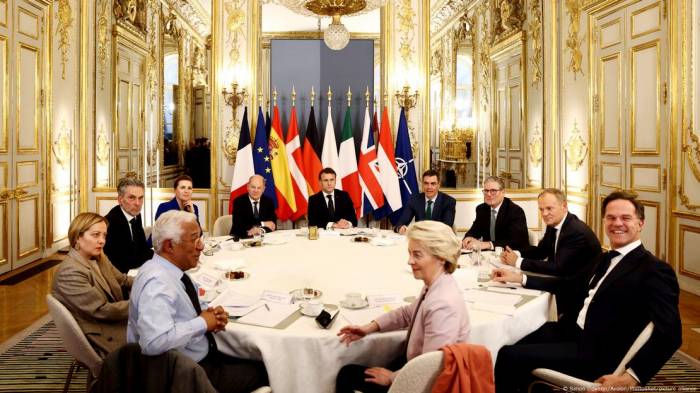 European crisis talks in Paris this week brought no decisive moves. Photo: Simon Dawson/Avalon/Photoshot/picture alliance
However, Europe is far from united. Some countries, including Hungary and Slovakia, advocate for a more pragmatic approach and question the effectiveness of further escalation. Moreover, within the EU itself, public dissatisfaction is growing, with citizens increasingly questioning the continuous financial drain into a conflict that brings no tangible benefits to Europe. If Washington genuinely begins adjusting its policy toward compromises, it could create a serious rift within the EU.
The Russia-U.S. negotiations are a significant signal, but it is still too early to talk about a real convergence of positions. Both sides are pursuing their own interests, and strategic disagreements remain fundamental. However, if Washington realizes that sanctions have failed to achieve their goal and that Ukraine is turning into a protracted conflict with no clear victory in sight, we may see initial attempts to revise the American strategy.
The question remains: how far is the U.S. willing to go in seeking compromises, and what consequences will this have for the global geopolitical balance of power?
(If you possess specialized knowledge and wish to contribute, please reach out to us at opinions@news.az).


Similar news