SOCAR and Tatneft explore joint market expansion opportunities with new products


By Faiq Mahmudov
The State Oil Company of Azerbaijan (SOCAR) and Russia's PJSC Tatneft are in talks to establish a joint venture for lubricant production, as announced by Rufat Mahmud, General Director of SOCAR RUS, a SOCAR subsidiary. Mahmud highlighted that both parties have already signed two roadmaps: one focused on trading oil products and the other on potential joint ventures in oil refining. The proposed lubricant production facility could be located in Azerbaijan or in third countries, but definitely not in Russia, as Mr. Mahmud clarified. "We have much to learn from each other and many joint initiatives in the works," he noted. "This includes the digitalization of production processes and sharing expertise in petrochemical production. Additionally, we're exploring opportunities for joint market expansion." News.Az reached out to experts for insights on the potential benefits of establishing a joint venture for lubricant production.

Energy expert Zafar Valiyev told News.Az that the State Oil Company of Azerbaijan (SOCAR) has long-standing cooperation with Russian oil, gas, and energy companies. "We have extensive collaboration with Russian energy firms, such as Lukoil, Rosneft, Gazprom, Neft, and Tatneft, particularly in the development of oil fields in the Azerbaijani sector of the Caspian Sea, and in the transportation of oil and gas," he said. "This partnership includes the joint use of terminals and infrastructure for import and export operations. For many years, we utilized the Baku-Novorossiysk oil pipeline, which traverses both Azerbaijan and Russia. However, this pipeline has ceased operations recently due to the hazardous situation in the Black Sea."
Valiyev also highlighted the cooperation in gas exports and imports, mentioning the collaboration with Gazprom in utilizing the Baku-Novo-Filya gas pipeline in reverse mode for both export and import activities.
He noted that companies from both countries, including SOCAR, Lukoil, Rosneft, Tatneft, and Gazprom, have significant experience in the production and export of lubricants. "Azerbaijan has a long tradition of processing high-quality lubricants, dating back to the Soviet era when the country operated two specialized oil refineries," Valiyev explained. "One refinery focused on open oil products, while the other specialized in various types of lubricants. These traditions continue today. From January to July 2024, SOCAR's oil refinery processed 37.9 thousand tons of various lubricants and oils, with some used domestically and the rest exported."
Valiyev further mentioned that Azerbaijan plans to produce approximately 14,000 tons of different lubricants by the end of the year. "In addition to SOCAR, there are several private factories and industrial parks in Azerbaijan, such as the Technol and Aminol oil refineries in Sumgayit, each with an annual production capacity of around 30-32 thousand tons. There is also a smaller facility in the Balakhani Industrial Park and the Industrial Experimental Plant, which produces a wide range of high-quality lubricants like litol, solidol, hydraulic oils, and transformer oils. The plant, originally part of the National Academy of Sciences and now under the Ministry of Education, continues to produce oils essential for the energy sector, including T1500 transformer oil and various motor and turbine oils."
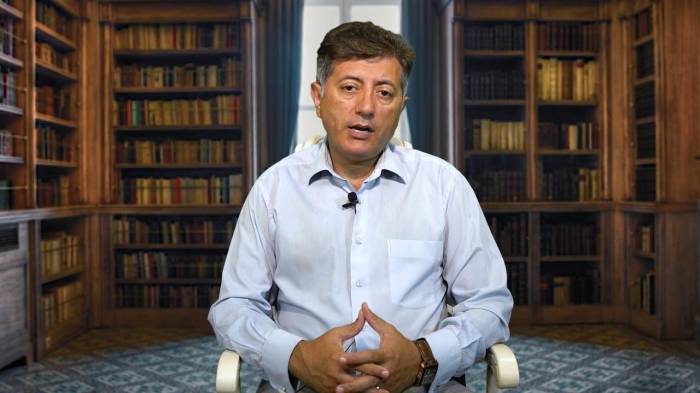
Ilham Shaban, head of the Oil Research Center, told News.Az that a joint venture with Tatneft could enhance the production of higher-quality oils and lubricants. "Both Russian energy companies and SOCAR have extensive experience in producing high-quality lubricants," Shaban noted. "The contributions of research institutes and their innovative ideas are also crucial in this field. Some lubricants could be exported to distant markets. For instance, part of the lubricants produced by the State Oil Company of Azerbaijan, aimed at international trade, is currently exported to Ukraine, Moldova, Georgia, and other countries. If the product range and quality are further improved, the export destinations could expand even more. In short, identifying the primary target markets for the joint venture should be the first step. Once the sales markets are defined, we can proceed with production and start the new processing phase."


Similar news