Southern Syria erupts: Druze–Bedouin clashes spark Israeli airstrikes


Editor's note: Moses Becker is a special commentator on political issues for News.Az, a PhD in political science and an expert on interethnic and interreligious relations. The article expresses the personal opinion of the author and may not coincide with the view of News.Az.
In December 2024, following Israel’s crushing defeat of Hezbollah and the weakening of Iran, the regime of Bashar al-Assad collapsed, and power in Syria was seized by Islamists from the Hay'at Tahrir al-Sham (HTS) group, led by Ahmad al-Sharaa.
It is important to recall that the modern Syrian state is a legacy of the well-known Sykes-Picot Agreement of 1916, when France and Britain divided the "inheritance" of the Ottoman Empire. After gaining independence from France in 1946, the young republic resembled a patchwork of provinces populated by Druze, Alawites, Kurds, Bedouins, and Syrian Arabs. Pursuing a divide-and-rule policy, France had effectively partitioned the country into several quasi-states along religious and ethnic lines. The Druze, too, received their own entity, known as Jabal al-Druze.
This situation could not last indefinitely. After a series of coups, it was the Alawite Hafez al-Assad who, in 1970, attempted to forge a unified, unitary state, establishing a centralized regime that kept the country together. His son Bashar, who inherited power, faced first an attack from the Islamic State and later a prolonged civil war.
The new government under Ahmad al-Sharaa was not welcomed by all, particularly by the Alawites and other minority groups who were removed from power. Despite efforts to form a unified government and build ties with Western countries—and even with Israel—the situation in Syria remains extremely tense. Unemployment, destruction, and instability continue to fuel old prejudices and hostility. Intercommunal conflicts now erupt over seemingly trivial incidents.
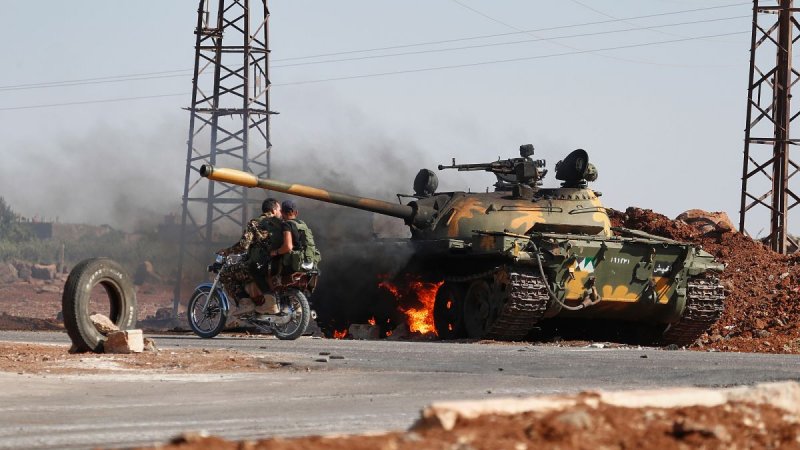
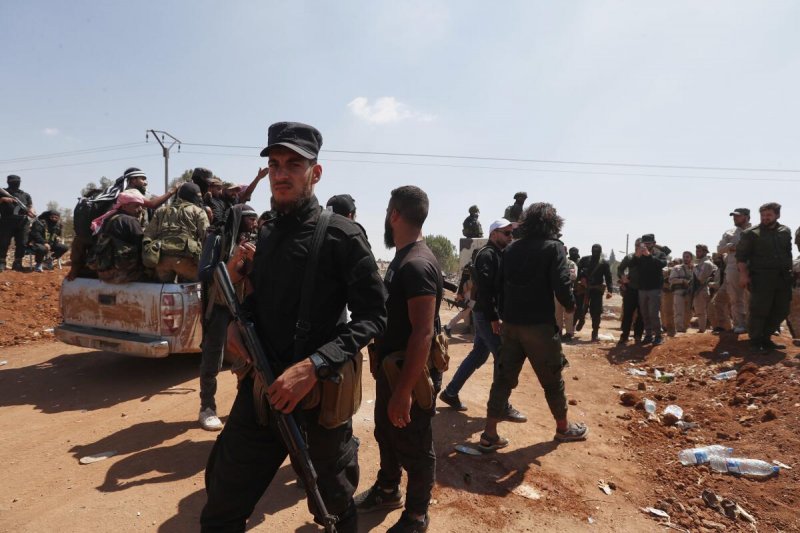 Syrian government security forces block Bedouin fighters from entering Sweida province in Busra al-Harir village on Sunday. (Omar Sanadiki / Associated Press)
On Friday, July 11, in southern Syria, a group of armed men stopped a vehicle traveling from Damascus to Suwayda. The driver, a vegetable merchant, was abducted, blindfolded, beaten, robbed, and later dumped in a remote area. Passersby found him and brought him to a hospital. In retaliation, Druze militias kidnapped several Bedouins—not the actual attackers, it seems, but individuals from the same tribe. As a result, the conflict escalated to an intercommunal level.
By Sunday, July 13, clashes had erupted in Suwayda Province between Druze and Bedouins, involving not only small arms but also mortars. The Damascus government deployed forces to the region. Officially, they were meant to serve as peacekeepers, but in reality, these Islamist fighters sided with their fellow Sunni Bedouins. A threat emerged that the Druze might suffer the same fate as the Alawites had in March 2025, when violent attacks by Sunnis led the Alawites to launch an uprising in the Tartus and Latakia provinces.
However, unlike the Alawites, the Druze have a powerful protector: Israel, where a small but well-integrated Druze community of around 150,000 people lives. Many of them serve in combat units of the Israel Defense Forces and even hold command positions.
Today, the global Druze population exceeds 1.5 million. The majority live within a territory less than 200 kilometers in diameter, divided between Syria, Lebanon, Israel, and Jordan. Yet they are united by religion and kinship ties. Southern Syria is home to the world’s largest Druze community—up to 850,000 people. In addition to this, around 25,000 Druze reside under Israeli sovereignty in the Golan Heights, most of them holding Syrian citizenship.
The most critical factor in this equation is that the main Druze population centers are located in the Syrian provinces of Quneitra, Daraa, and Suwayda—areas that form a buffer zone between Israel and Syria. This is precisely why the Israeli government will never allow Damascus to fully regain control over this territory. Israel’s first prime minister, David Ben-Gurion, once envisioned an independent Druze state in the south and a Christian one in the north of Syria.
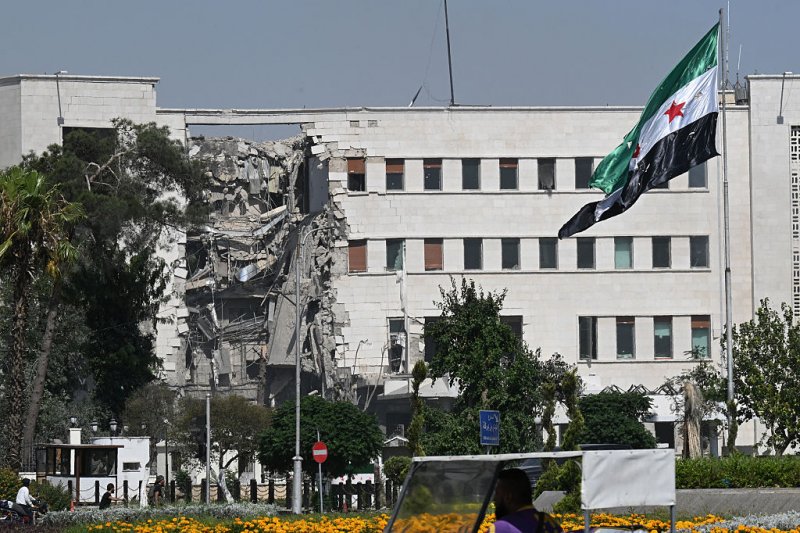 Damage to the Syrian Defense Ministry headquarters in Damascus after an Israeli airstrike on July 16. (Louai Beshara / AFP)
Reflecting this strategic perspective, Israeli Prime Minister Benjamin Netanyahu declared that he would not allow the army of the new Syrian regime—or any allied armed groups—to operate south of Damascus. He emphasized: “We will not tolerate any threat against the Druze community in southern Syria.”
On Monday, July 14, Israeli aircraft began bombing columns of government forces, including tanks, moving toward Suwayda. On Wednesday, July 16, a series of airstrikes targeted Damascus. The Ministry of Defense and the General Staff were bombed, and a strike was also carried out near the presidential palace as a warning.
At the same time, Druze from the Israeli-controlled Golan Heights began moving into Syria. On Tuesday, July 15, several dozen individuals reportedly crossed the border in the Golan area. By Wednesday, their number had reached around 1,000.
In response, Netanyahu issued a special address to Israeli Druze, assuring them that the IDF was acting to protect the Druze in Syria and urging them not to cross the border in order to avoid danger and prevent interference with the military operation. Meanwhile, the Israeli army deployed additional forces to the Golan Heights.
To prevent further escalation, Syria’s transitional president Ahmad al-Sharaa ordered an immediate ceasefire in Suwayda Province.
“The president of the republic calls on all parties to allow the Syrian state, its institutions, and its forces to responsibly uphold the ceasefire, ensuring stability and ending the bloodshed,” read a declaration published on the press office’s official Telegram channel.
That same day, U.S. Special Representative for Syria Tom Barrack announced that Israeli Prime Minister Benjamin Netanyahu and Syrian transitional president Ahmad al-Sharaa, with Washington’s backing, had agreed to a ceasefire. He also stated that the U.S. was calling on Druze, Bedouins, and Sunnis to lay down their arms to help build “a new unified Syrian identity.”
According to media reports, after the withdrawal of troops, official state security forces will remain in the region to control roads near Suwayda. As part of the ceasefire agreement, a joint committee of Druze and Damascus representatives will be established to investigate violations committed during the latest escalation in the border region.
That the conflict drew the attention of the Shiite “Axis of Resistance” is evidenced by the following report:
“July 19, 2025. Tashkent, Uzbekistan – AN Podrobno.uz: Syrian leader Ahmad al-Sharaa has fled Damascus with his family and disappeared without a trace. The reason cited is a military coup in the Syrian capital,” reported Al-Mayadeen, a television channel affiliated with Hezbollah. No other sources have confirmed this information, but it appears that Syria’s former power brokers are not yet ready to give up their interests in the country.
(If you possess specialized knowledge and wish to contribute, please reach out to us at opinions@news.az).


Similar news