Strike on Hamas: What does the elimination of Mohammed Deif mean for the region? – INTERVIEW


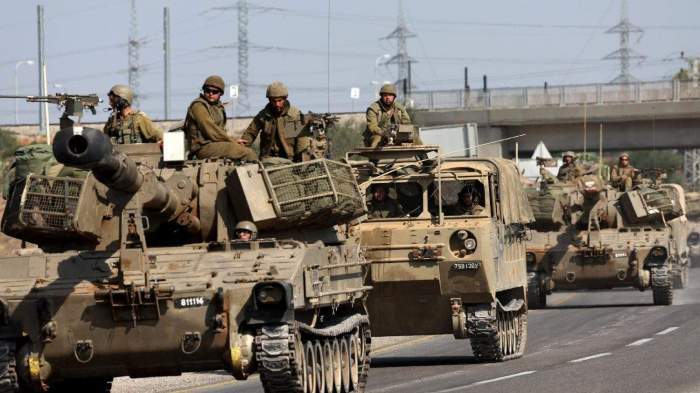
Professor of Political Science and Director of the Post-Soviet Conflicts Program at the Begin-Sadat Center of Bar-Ilan University, Zeev Khanin, speaks to News.Az about the current geopolitical situation in the Middle East, Israel's main objectives regarding Hamas, and Iran's role in supporting anti-Israeli movements. Khanin provides a detailed analysis of the challenges and prospects facing Israel and the international community in their quest for long-term stability and security in the region.
- The goals were formulated back in October last year, after October 7th. Essentially, they have remained the same: the destruction of Hamas, its military and civilian structure; the return of Israeli hostages; and creating a situation in which Gaza will no longer be a launchpad for terrorist threats to Israel.
As of today, achieving all these goals simultaneously is in doubt. At one point, it seemed possible to either free the hostages or destroy Hamas, but not both together. Hamas is not willing to return the hostages without receiving strong guarantees for the survival of its leaders. They care little about the population of Gaza, be it militants, activists, or ordinary residents. If even one leader survives and declares "We won!", for them, it will be a victory.
- Do you consider it possible to achieve all the stated goals simultaneously, such as the destruction of Hamas and the release of hostages? What obstacles stand in the way of their implementation?
- How much Israel can prevent this remains in question. Whether Hamas is willing to return the hostages, when, in what condition, and in what number in exchange for halting the IDF's military operation in the Gaza Strip and a long-term truce is unknown. However, any ceasefire could resume at any moment.
- How realistic is the prospect that Hamas will return the hostages in exchange for halting the IDF's military operation in the Gaza Strip?
- The goal today is to ensure Hamas does not remain in power. Israel hopes to negotiate with Americans, Europeans, and moderate pro-Western Arab regimes, such as those in the Saudi bloc, for a new regime in Gaza. This regime should not rely on Hamas or the Palestinian Authority (although this is partly possible). Hamas and its leaders should not be part of the governance, economic development, education, and other spheres.
- What role does the international community, particularly the USA, EU, and Arab countries, play in creating a new governance regime in Gaza without Hamas?
- There are several projects to implement this plan, but our allies and adversaries believe that Israel should undertake this entire mission. In Israel, there is an opinion about the need to reoccupy the Gaza Strip, including military bases and Jewish settlements, but it is unclear if this is realistic. Until there is a decisive military victory, talks about the governance system in Gaza will remain theoretical.
- How do you assess the symbolic and strategic significance of the elimination of Muhammad Deif? Will this affect Israel's ability to achieve its goals in the region?
- Deif's elimination shows that Hamas's strategy, believing their leaders are untouchable, is ineffective. Israel can eventually reach all of them. This was demonstrated by the one-day war with Iran in April this year. 99% of drones and missiles were intercepted before reaching Israeli territory. In response, Israel destroyed the air defense system covering nuclear material production facilities in Natanz with its air force.
This means that if necessary, Israel can reach not only Iran's proxies but also Iran's main military potential, and no tools available to the Tehran regime will be an obstacle. Thus, the tightening noose around Hamas leadership's necks may make them slightly more amenable to the issue of releasing hostages. How and in what context this will happen is still unclear, but an additional pressure tool has emerged that should not be neglected.
- What long-term political, economic, and social measures need to be taken to achieve sustainable stability in Gaza and prevent future threats from Hamas and other radical groups?
- At the same time, it is important to understand that achieving long-term stability in Gaza requires not only military pressure but also political and economic efforts. Without this, any victory will be temporary, and Hamas or another radical group will be able to regain strength and continue to threaten Israel's security.
- What steps can the international community take to promote the recovery and development of Gaza, and how can this affect long-term stability in the region?
- The international community, including the USA, EU, and Arab countries, must play a key role in creating new conditions for peaceful coexistence. This could include developing economic aid programs, rebuilding Gaza's infrastructure, and creating new jobs to reduce poverty and despair that contribute to the support of radical groups.
Moreover, it is necessary to establish a constructive dialogue with moderate Palestinian leaders to find an acceptable solution to the conflict for all parties. This may be a complex and lengthy process, but without it, it is impossible to ensure lasting peace in the region.
Against this backdrop, military operations can only serve as a temporary measure to contain terrorist threats but not a solution to the problem. The elimination of key figures like Deif demonstrates Israel's determination to fight terrorism but also underscores the need for a more comprehensive approach to resolving the conflict, including political, economic, and social measures.
Thus, combining tough measures against terrorists with long-term strategies for the recovery and development of the region can lead to a more stable and secure situation for all parties involved in the conflict.
Iran is trying to position itself as the leader of the axis of resistance in the Middle East, forming it as part of the Global South opposing the imperialist Global North led by the USA and its NATO allies. Iran's role is twofold: on the one hand, it strives to acquire nuclear weapons; on the other, it does not abandon its globalist ambitions, including the second stage of the Islamic Revolution in its Shiite variant, dominance in the world through proxies and networks of influence in Europe, Latin America, Africa, and other regions.
Iran also seeks geopolitical dominance in the Eastern Mediterranean, the Persian Gulf region, the South Caucasus, and Central Asia. This poses a colossal threat, which is taken seriously in Israel, Azerbaijan, and several other countries. I hope it is also realized in Washington, although sometimes it seems they are occupied with other issues. In the European Union, there are groups that understand the seriousness of this threat, especially in the context of Iran's influence on immigrant communities and anti-Israeli movements. Anti-Israeli and anti-Semitic protests in Western university campuses, especially in the USA, are often funded by Iran and Qatar.
- What is Iran's role in supporting anti-Israeli and anti-Semitic movements in the West, and how does this affect the overall geopolitical situation?
- Iran prefers to act through its proxies, such as Hezbollah, Hamas, Shiite militias in Syria and Iraq, Yemeni Houthis, and other groups. Gaza is a testing ground, but the situation in Lebanon will be an even greater test. If a full-scale war breaks out there between Israel and Hezbollah, resulting in its destruction, it will be a heavy blow to Lebanon. As Defense Minister Yoav Galant expressed, Lebanon could return to a medieval state. This is a harsh prospect, but Israel did not initiate this conflict.
If, as a result of a diplomatic solution, Hezbollah loses its influence, and a real security zone is created, this will be a serious defeat for Iran. Iran will lose an important ally in the form of Hezbollah, and its ambitions in the region will be seriously undermined. However, whether Iran can intervene directly remains unclear. Events are developing so rapidly that this assessment may lose relevance by the time of publication, but it only underscores the instability and volatility of the current geopolitical situation.


Similar news