Syria and Israel: A fragile opening for regional peace


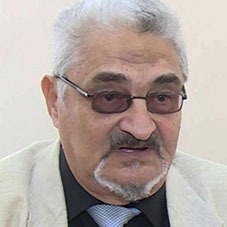

Editor's note: Moses Becker is a special commentator on political issues for News.Az, a PhD in political science and an expert on interethnic and interreligious relations. The article expresses the personal opinion of the author and may not coincide with the view of News.Az.
The fall of President Assad’s regime, along with the defeat of Hezbollah and the effective collapse of Iran’s regional influence, has opened new opportunities for reshaping the Middle East. According to Israeli Prime Minister Benjamin Netanyahu, Israel has “changed the face of the Middle East” by delivering “serious blows to the Iranian axis” in Gaza, Lebanon, and Syria.
These developments paved the way for the victory of Syrian opposition forces led by Hayat Tahrir al-Sham, headed by Abu Muhammad al-Julani (real name: Ahmed Hussein al-Sharaa). In its political program, the organization stresses that it rejects the ideas of the Islamic State (ISIS), has no plans to establish a caliphate, refrains from using radical Islamist methods, and does not engage in terrorist attacks. Portraying themselves as pragmatists, at least in the eyes of the international community, the Islamists have embarked on building a new state based on national rather than sectarian identity.

Source:Freepik
For the first time in many years, a government has been formed in Syria that includes representatives of Druze, Alawites, Christians, and women. This marks a significant step towards uniting the country after years of conflict. However, critics point to serious shortcomings, particularly the absence of a system of checks and balances and the influential roles still held by jihadist groups.
Nevertheless, an important first step has been taken, inspiring cautious optimism. Addressing clashes between Alawites and Islamist military units, Al-Sharaa personally condemned the killings of innocent civilians, stating that such actions “threaten the country’s unity” and pledged to restore justice.
Positive signals and new initiatives
As a positive development, The New York Times highlighted the agreement between the new Damascus government and Kurdish forces, which many see as a diplomatic victory in efforts to end the conflict.
Still, experts warn that merely incorporating different ethnic and religious groups into the government will not solve the fundamental issues of governance. The new administration must symbolize real change in Syria and demonstrate greater openness toward the West.

Source: Reuters
Among other notable innovations, Syria has established a Ministry of Sports, and an Alawite was appointed to lead one of the ministries. Amjad Badr, a Druze, was named Minister of Agriculture, while the Ministry of Social Policy and Labor was entrusted to a Christian woman, who appeared at the cabinet inauguration ceremony in a white pantsuit — a symbolic gesture underscoring new attitudes toward women’s rights.
New relations with Israel
In light of these changes, President Al-Sharaa’s statement that Israel no longer has any reason to attack Syria — since Hezbollah and Iranian forces have been expelled — was especially encouraging.
Although Al-Sharaa did not directly mention the numerous Israeli strikes that had destroyed Syria’s navy, air force, and other military assets, he emphasized that the fall of Assad, with support from Washington and Ankara, represented a “victory over Iran’s dangerous political project” in the region. His mention of U.S. support was no accident: in recent days, American forces have begun withdrawing from Syria, signaling backing for the country's unity.
Source:Business Insider
Encouraging signs have also emerged in Israeli-Syrian relations. U.S. Presidential Envoy Steven Witkoff, in an interview with journalist Tucker Carlson, stated that "Lebanon could normalize relations with Israel, and the same is possible for Syria.” He suggested that interim President Ahmed al-Sharaa has changed significantly: “People evolve. At 55, you are a different person than at 35. I realize myself that, at 68, I am not the same person I was 30 years ago. Perhaps Al-Julani [Ahmed al-Sharaa, also known as Abu Muhammad al-Julani] has changed. They have expelled Iran.”
Witkoff also proposed that normalization between Lebanon, Syria, and Israel could become part of a broader regional peace initiative. “Imagine Lebanon normalizing ties with Israel, then Syria doing the same, and Saudi Arabia signing a normalization agreement with the Jewish state — all because peace has been achieved in Gaza. That’s a prerequisite for normalization with Saudi Arabia,” he explained.
The new Syrian government’s stance
In an interview with The Times, Ahmed al-Sharaa stated that Syria would not be used as a platform for attacks against Israel. He urged Israel to withdraw from the western Syrian territories it occupied during the opposition's advance on Damascus, emphasizing that the original justification — the presence of Hezbollah and Iranian militias — is no longer valid.
Al-Sharaa reaffirmed Syria’s commitment to the 1974 disengagement agreement and expressed readiness to welcome back UN observers. “We do not seek conflict with Israel or with anyone else,” he declared.
It is worth noting that the new Syrian leadership is unlikely to press the issue of the Golan Heights, which the United States has recognized as part of Israel.
President Al-Sharaa also called for lifting sanctions on Syria and creating conditions for the return of displaced citizens. Addressing the possible implementation of Sharia law, he stressed that Syria would respect personal freedoms while taking Islamic customs into account.
The role of Azerbaijan and Türkiye
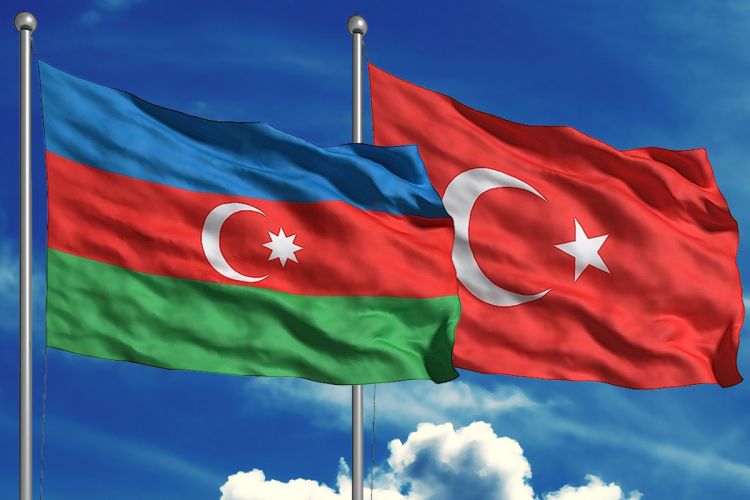
As part of its efforts to balance regional influence, the new Syrian government supports the involvement of Türkiye and Azerbaijan in developing the country’s oil and gas fields. Syrian leaders believe this cooperation would bolster Israel’s confidence in the stability of the new regime.
In March, a significant agreement was signed between Syrian Democratic Forces (SDF) leader Mazloum Abdi and Ahmed al-Sharaa, transferring control of oil and gas fields previously held by Kurdish forces back to the central government.
According to Syrian officials, strengthening ties with Azerbaijan is expected to help ease Israel’s concerns regarding the new transitional government, which Israeli authorities still view with caution.
The evolving dynamic between Syria and Azerbaijan underscores a broader strategy by Damascus to balance regional influences and present a more moderate image to the international community. By engaging trusted regional partners, the new Syrian leadership aims to rebuild the country's economy, strengthen its diplomatic standing, and reassure neighboring states — particularly Israel — of its commitment to peace and stability.
(If you possess specialized knowledge and wish to contribute, please reach out to us at opinions@news.az).


Similar news