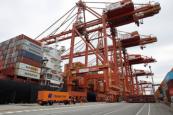
Syrian authorities turn against Russia? Military convoy blocked at Tartus


Editor's note: Russian military-political analyst, expert in the field of strategic security, specialist in the Middle East and Africa Vladimir Bekish. The article expresses the personal opinion of the author and may not coincide with the view of News.Az.
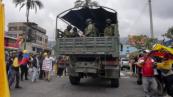
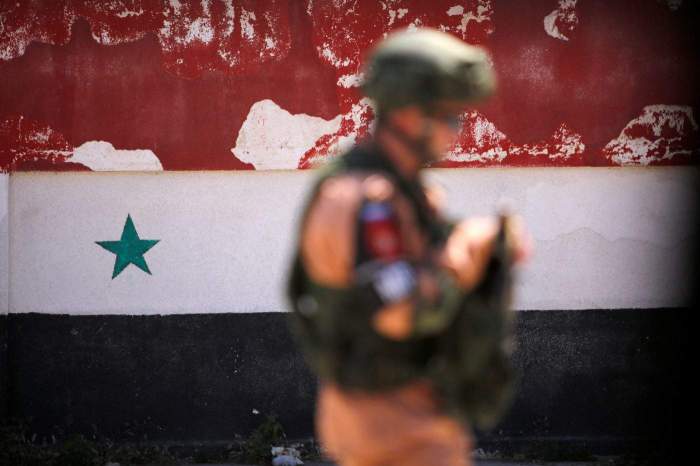
Information has emerged that the situation for the Russian military in Syria has begun to deteriorate and may even escalate further. Recently, an attempt was made to evacuate weapons, military equipment, and personnel of the Russian contingent from Latakia by sea, through the Russian military base in the port of Tartus. A convoy of around thirty vehicles carrying weapons and missiles departed from Latakia and arrived in Tartus. However, upon arrival, the convoy was blocked at a checkpoint—reportedly by order of the Syrian Ministry of Defense. After waiting for eight hours without permission to proceed, the Russian military convoy was forced to return to Latakia.

This event is highly significant. First and foremost, the very fact of an evacuation attempt and the removal of weapons and equipment from Russian bases in Syria suggests that the fate of Russia’s military presence in the country has been sealed. As we recently reported, these bases are unlikely to remain operational, despite optimistic statements from Russian officials and politicians regarding possible agreements with the new Syrian authorities. In reality, it appears that these bases no longer function as before.
Another crucial detail is the question of why the weapons were not transported by air from the Latakia base. The reason likely goes beyond the sheer volume of equipment requiring multiple large aircraft for transport. The more probable explanation is that Syrian airspace is now closed to Russian military aviation. Notably, just days ago, Syria granted Türkiye the right to use its airspace for both civilian and military flights, including operations against opponents of the new Syrian government and Turkish interests.
A further intriguing aspect of this situation is how the Russian convoy, despite carrying a substantial load of weapons, military equipment, and ammunition, was initially able to leave Latakia without obstruction. Such movements typically require authorization from the authorities. The fact that the convoy was able to reach Tartus without incident—despite the more than 100-kilometer journey—raises questions. However, the most striking aspect of this episode is that the Russian military evidently received initial permission to move the convoy from Latakia to Tartus. It is logical to assume that Russian forces had informed Syrian authorities of their intentions beforehand. The convoy would not have embarked on the journey without prior coordination. Yet, upon arrival, it was denied entry into the Tartus base and forced to wait for eight hours—only to be turned back.
This suggests one thing: during the movement of the Russian convoy, something changed internally within the Syrian government. The situation shifted dramatically, and not in Russia’s favor. Most likely, the order to block the convoy’s entry into Tartus came from the highest levels of the Syrian leadership. This decision was probably made following discussions with Syria’s key allies—particularly Türkiye. It appears that Türkiye strongly recommended, if not outright demanded, that Russia refrain from withdrawing its military equipment, effectively using it as leverage against Moscow in regional negotiations.
But this is not the only concern. The current situation regarding Russian military assets in Syria could have even more serious consequences. If the Syrian authorities simply wanted to expel the Russian military presence, they would likely facilitate the evacuation process. Instead, the fact that weapons and equipment are not being removed suggests a different scenario—one in which Russian military assets are becoming bargaining chips, or even hostages.

One possible outcome is that if Russia fails to retrieve its weapons and military equipment, Syrian forces will simply seize them. This would be advantageous for Syria, as it would gain advanced weaponry free of charge. The alternative scenario is that if Russia insists on retrieving its military assets, it may have to negotiate with Syria—potentially even paying for the right to remove its own equipment. In this case, the terms of such an arrangement would be dictated by Syria, giving Damascus the upper hand in negotiations.
A broader and more concerning implication of this development is that Syria’s growing assertiveness toward Russia signals a shift in the region’s geopolitical dynamics. Given the ongoing crisis in and around Gaza, Russia’s standing in the Middle East appears increasingly precarious.
What can Russia do in this situation? If its military personnel and equipment remain in Syria, Moscow will likely attempt to maintain its presence on Syrian soil as an operational force rather than as hostages. This means seeking an agreement with Syrian authorities to continue Russian military operations—something Russian diplomats still express hope for following visits to Damascus. Additionally, Moscow may attempt to reach a compromise with Türkiye, urging Ankara to allow the Syrian government to keep Russian bases operational under certain conditions. However, this seems highly unlikely. Syria and Türkiye may agree to extend Russia’s presence, but likely under terms that would be highly unfavorable to Moscow.
There is also another possible course of action—one that seems increasingly probable given the broader instability in the Middle East. This option is a military one.
The logic behind such a move is straightforward. Russia still has military assets in Syria, and they remain under the control of Russian forces. The current situation poses a direct threat to Russian personnel, as well as to the secure storage and legal use of Russian weapons. There is a real risk that if these weapons are seized, they could fall into the hands of hostile actors, including terrorist groups. Russia perceives itself as a great power—sovereign, independent, and unwilling to be dictated to by other nations.

Given these factors, Russia may decide to launch a special combat operation to secure and extract its military assets from Syria—by force if necessary. This could involve breaking through checkpoints, neutralizing opposition forces, and ensuring the retrieval of Russian equipment. Such an operation would send a clear message about Russia’s strength and resolve on the global stage.
For now, we wait to see what will unfold…
(If you possess specialized knowledge and wish to contribute, please reach out to us at opinions@news.az).


Similar news