Syria sets new terms: Moscow must choose between Assad and its bases


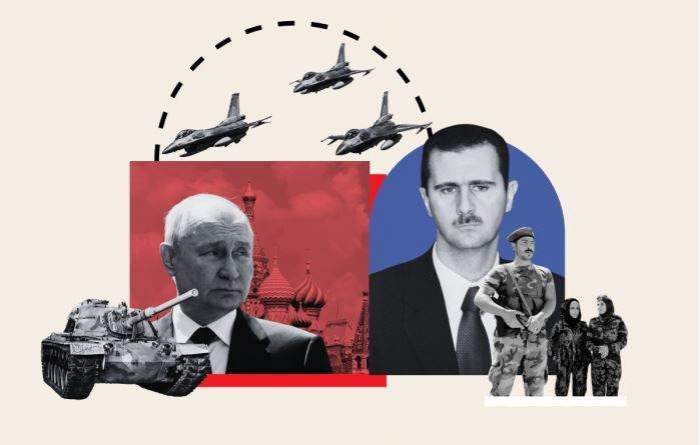
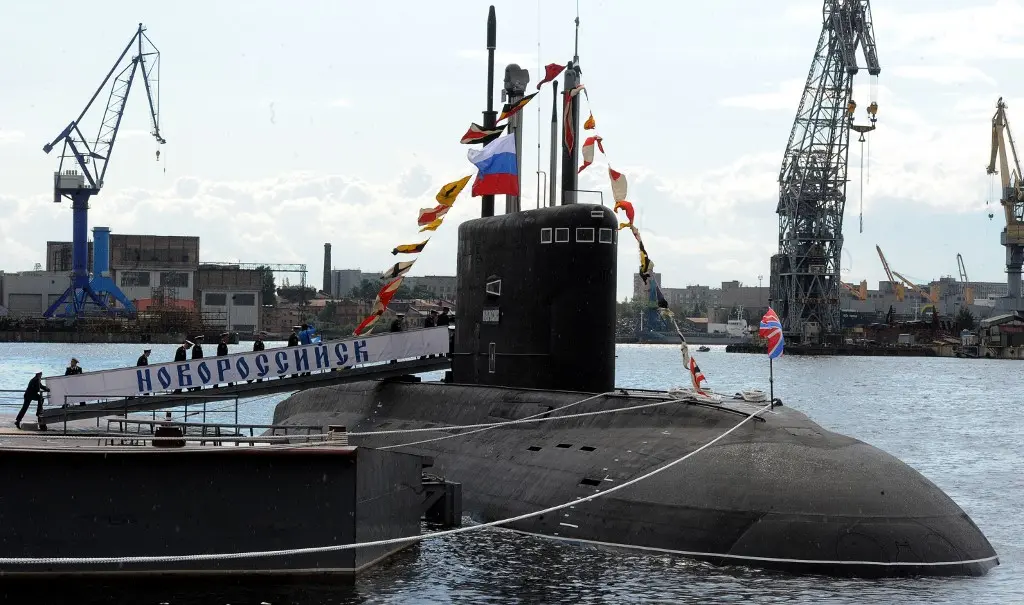
Syria will retain Russian military bases in Tartus and Khmeimim if it aligns with its national interests. This was stated by Murhaf Abu Kasra, the Minister of Defense of Syria’s transitional government, who emphasized that relations with Russia have "significantly improved" since "there are no eternal enemies in politics." His words were cited by The Washington Post.
However, a clear emphasis can be noted in this statement: "primarily in Syria’s interests." This implies that the retention of Russian bases is not an end in itself but is considered solely within the context of Damascus' benefit. It is quite likely that these words can be interpreted as a hint at the possibility of revising the terms of Russia’s military presence or even the gradual dismantling of these bases if more attractive alternatives arise.
The new Syrian leadership is clearly demonstrating a desire to reassess the country’s foreign policy priorities. Judging by a series of recent events, Syria is leaning toward closer ties with Arab states, particularly Türkiye, Saudi Arabia, and Qatar.
There are numerous examples of this. One of the first high-ranking foreign officials to visit Damascus just four days after the change of power was the head of Türkiye’s National Intelligence Organization, İbrahim Kalın. He not only held official meetings but also performed prayers in one of Syria’s main mosques, which carried symbolic significance. Shortly after, Türkiye’s Foreign Minister Hakan Fidan followed, becoming the first diplomat to visit the Syrian capital after the regime change.
In mid-January, a Syrian delegation led by Foreign Minister Asaad Hassan al-Shibani paid a visit to Ankara. The delegation also included the Minister of Defense and the head of Syria’s General Intelligence Service, indicating that military aspects dominated the discussions. The main topics of the talks were security mechanisms and potential joint initiatives. In addition to Türkiye, Syria has also intensified contacts with Saudi Arabia and Qatar, seeking their support in the post-conflict reconstruction process.
Another significant development was reported by Reuters, which stated that on February 4, Syrian transitional government leader Ahmed al-Sharaa met with Türkiye’s President Recep Tayyip Erdoğan. According to sources in Syrian intelligence, the negotiations focused on a defense pact under which Ankara would be allowed to establish military bases in Syria. Specifically, discussions included two facilities in the east of the country, as well as granting Türkiye the right to use Syrian airspace for military operations. In return, Ankara committed to providing military support to Damascus in the event of external threats.
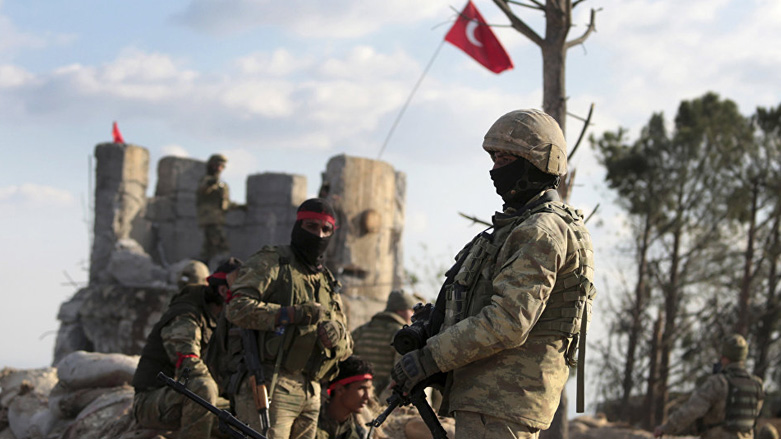
Moreover, an official representative of the transitional government reported that discussions also touched upon Türkiye’s preparation of a new Syrian army. This could mean that Ankara views Damascus as a strategic ally and aims to play a key role in shaping the new regional security architecture. If such a scenario materializes, Türkiye will have the opportunity to strengthen its influence in Syria for years to come.
Clearly, the simultaneous presence of both Türkiye’s and Russia’s military bases in Syria will create serious contradictions. Two competing centers of power within one state is a formula for potential conflicts. Therefore, it is logical to assume that, ultimately, only one country will be able to maintain its military presence in Syria. Judging by recent events, that country is likely to be Türkiye.
At the same time, the new Syrian regime has already outlined the conditions under which Russian bases may remain. These include handing over former President Bashar al-Assad, who fled the country with Russian support, to Damascus and paying compensation for the damage inflicted on the Syrian people during his rule. Clearly, such demands are inherently unacceptable to Moscow. Russia is unlikely to voluntarily surrender Assad to his adversaries, knowing that his fate would be sealed. As for compensation, Damascus' demands are expected to be substantial, making it an almost impossible task for Russia under current circumstances.
All of this leads to a highly predictable scenario: Russia will lose its military bases in Tartus and Khmeimim, and Türkiye will take over. In effect, this could signify Syria’s transformation into a zone of Türkiye’s influence, if not de facto its protectorate.
A subtle confirmation of this shift was the recent publication of a new official map of Syria, which omitted the Golan Heights, annexed by Israel in 1967, as well as the Alexandrette region, ceded to Türkiye in 1939. This suggests that Damascus is willing to reconsider territorial issues and adapt to geopolitical realities, inevitably drawing it closer to Ankara.
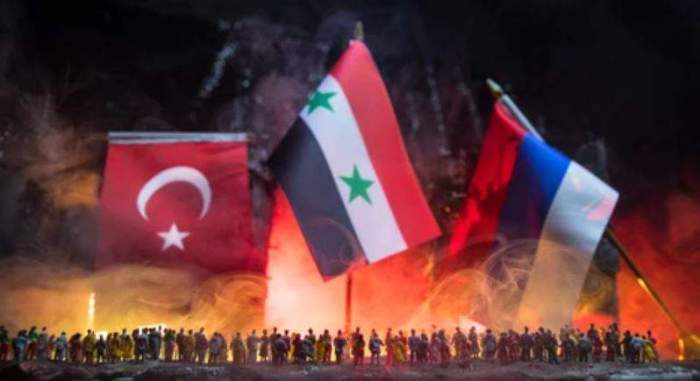
Thus, we are witnessing a major shift in the balance of power in Syria. In recent years, Russia has played a key role in the country’s affairs, but its influence is now rapidly declining. Türkiye, on the other hand, is expanding its presence, securing strategic agreements with the new Syrian government. This once again confirms that in international politics, there are no permanent allies or enemies—only interests. And today, Syria is betting on new partners who can offer it greater opportunities for recovery and development.
(If you possess specialized knowledge and wish to contribute, please reach out to us at opinions@news.az).


Similar news