“There cannot be a state within a state, or an army within an army” — Analyst warns of inevitable conflict between Syria and the YPG


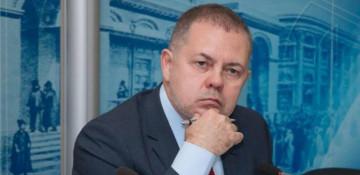
News.Az presents an interview with Ibrahim Kelesh, a retired Colonel and former Strategy Expert at ASSAM (Justice Defenders Strategic Research Center).
–While Israel-Druze tensions continue in Syria, a new crisis has emerged between the Syrian Army and the YPG. What is happening?
–For Syria to become a functioning state, it must operate under one army, one state, and one flag. However, in the current situation, especially east of the Euphrates, the YPG controls a separate area with its own armed forces — effectively a separate army. In the Sweida region, there are also some armed Druze groups. Such a fragmented structure poses a major obstacle to the formation of a unified state.
Back in March, Mazloum Abdi Şahin, the head of the YPG, made an eight-point agreement with Syrian President Ahmed al-Shara. However, the YPG has not fulfilled its obligations under this agreement and seems unwilling to do so. Vital underground resources such as oil, natural gas, and energy-generating dams remain under YPG control. The organization is using these resources to generate revenue, preventing the Syrian state from accessing them.
A conflict like this was inevitable. The tension stems from the fact that there cannot be a state within a state or an army within an army. The YPG clearly has demands for autonomy or a separate structure — something a unified Syria cannot accept.
Another development is that the YPG has reportedly supported these separatist Druze elements in Sweida, sending terrorists under the guise of humanitarian aid. Therefore, the YPG must either comply with the eight-point agreement or be forcibly dealt with. This was a matter of timing, and current developments suggest the endgame is approaching. The Syrian state wants to rise again — and must break free from the YPG chain. That is its natural right as a sovereign state.
In my view, once Syria regains enough strength, it will act. The YPG's presence also poses a threat to Türkiye. The YPG threat must be eliminated. Given their close ties to Israel, the YPG-controlled region resembles a cancerous cell that must be removed immediately. Otherwise, Syria cannot reestablish itself as a state.
–What do you say about Foreign Minister Hakan Fidan’s recent statement regarding Syria: “If you use violence to divide and destabilize the region, we will consider it a direct threat to our national security and intervene”?

Source: Reuters
–This is consistent with Türkiye’s long-standing stance. Back in August 2016, we launched Operation Euphrates Shield in Jarablus and Azaz to eliminate the threat posed by ISIS. A terrorist organization located right on our border constantly causes problems for Türkiye, even if it remains within Syria’s borders. ISIS’s presence enabled the organization to carry out attacks inside Türkiye.
That’s why we launched Euphrates Shield, Operation Olive Branch in Afrin, Operation Peace Spring, and Operation Spring Shield in Idlib — all aimed at countering terrorism. Although ISIS may no longer be active, the PKK’s Syrian branch, the YPG, still exists and remains armed. It is a threat both to Syria and to us. Many Syrians who came to Türkiye as refugees want to return to their homeland, but the presence of this terrorist group prevents them.
This is a serious threat to Türkiye, and Ankara consistently expresses its determination to address it. The recent developments in Sweida, Israel's territorial encroachments near Quneitra in western Damascus, and the YPG’s sustained presence east of the Euphrates — along with its ties to Israel and support to Druze separatists — show that this cancer must be removed.
It’s just a matter of time. Hopefully, the YPG will soon either comply with the agreement and surrender its arms under the authority of the Syrian state or face military intervention. Türkiye will not allow this situation to continue indefinitely. The moment action is deemed necessary, it will be taken.
–U.S. Ambassador to Türkiye and Special Envoy to Syria, Tom Barrack, said he met with both Syrian and Israeli representatives and that both sides seek de-escalation and dialogue. What could be going on behind the scenes?
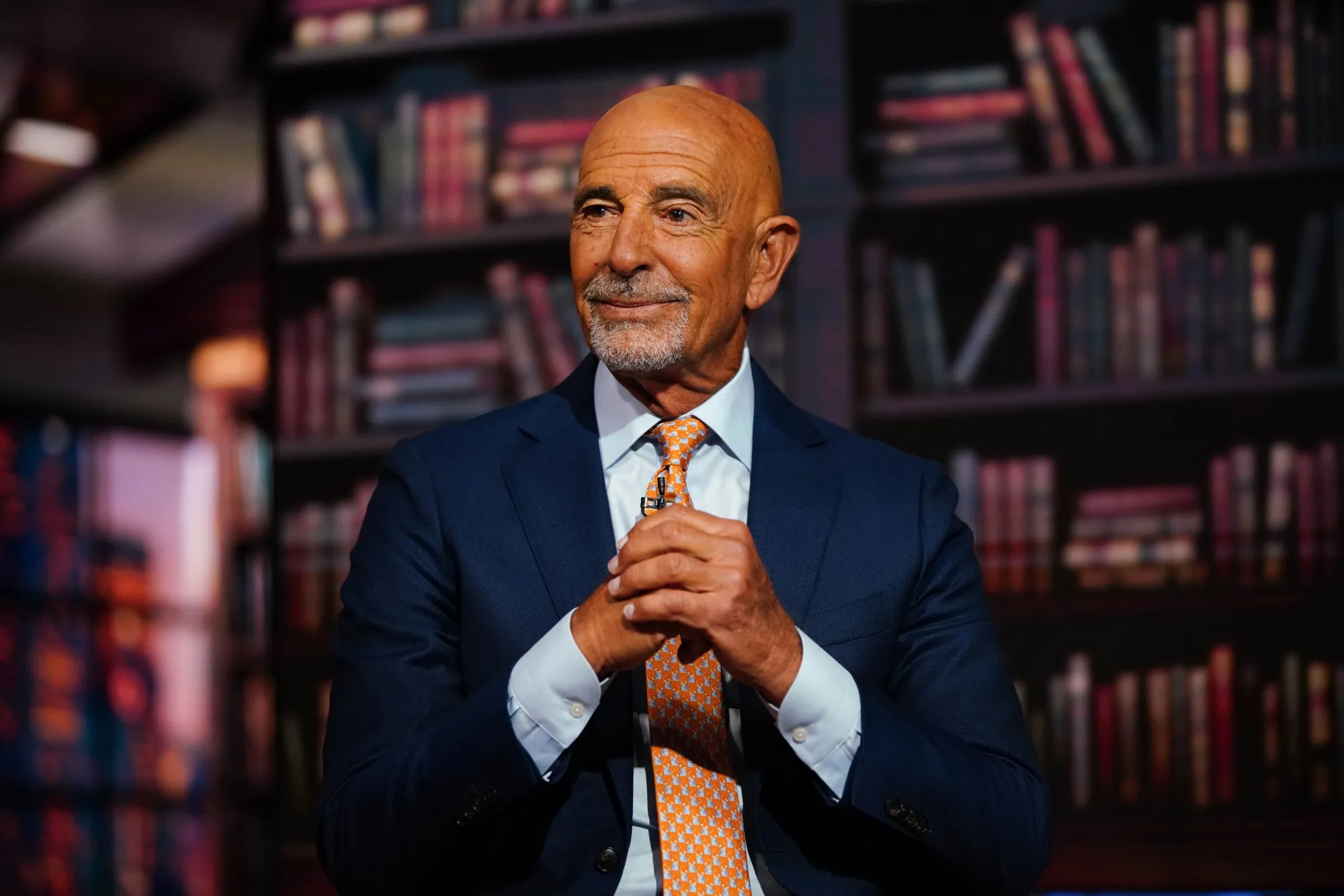
Photo: U.S. Ambassador to Türkiye
–Tom Barrack’s statements should be evaluated on a day-by-day basis. Some of his remarks — if not attributed to him — could easily be mistaken for Turkish officials' statements. But other statements clearly favor Israel. This reflects the broader position of the U.S. under Trump: not alienating Israel, while simultaneously attempting to engage with the Syrian regime.
Trump has been unable to implement many of his policies due to the pressure from the Jewish lobby in the U.S. The same applies to Barrack. While many of his statements are valid and align with Türkiye’s stance, others, such as demands for Syria to recognize Israel or join the Abraham Accords, are unacceptable.
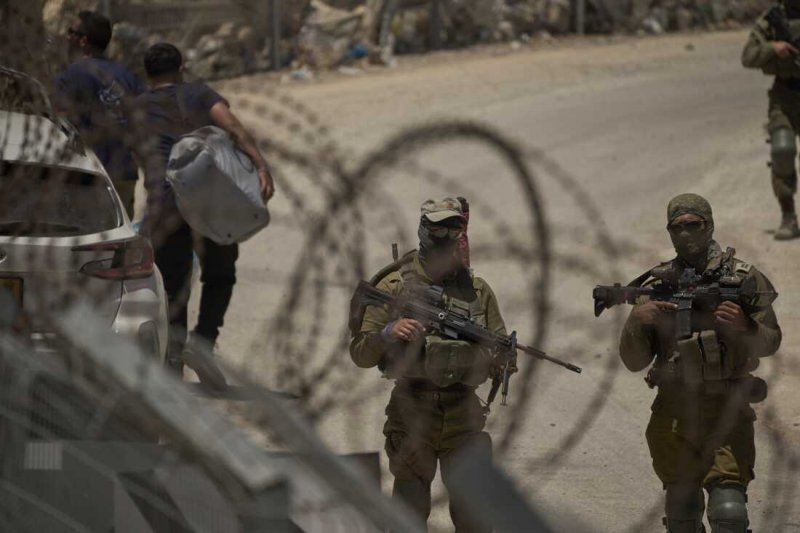
Source: Xinhua
Likewise, Israel’s desire to see demilitarized zones in areas like Sweida and Deraa — with no Syrian army presence — is echoed by Barrack. However, they avoid addressing the key issue: Sweida is Syrian territory, and what happens there is Syria’s internal matter. They also fail to mention the disarmament of separatist Druze groups. So, while Syria is asked to pull back its legitimate army, armed separatist militias are left untouched. That’s unacceptable.
Barrack makes some valid points, but also some that lean toward Israel. Syria may accept certain provisions of the U.S. proposals but will reject others — particularly demands for demilitarization in southern regions. I don’t think Syria will agree to those terms.
–What about the U.S. interest in leasing the Zangezur Corridor for 100 years — a proposal that Azerbaijani President Ilham Aliyev rejected, saying, “No operator, trader, or tenant can act on our land”? What is the U.S. really after?
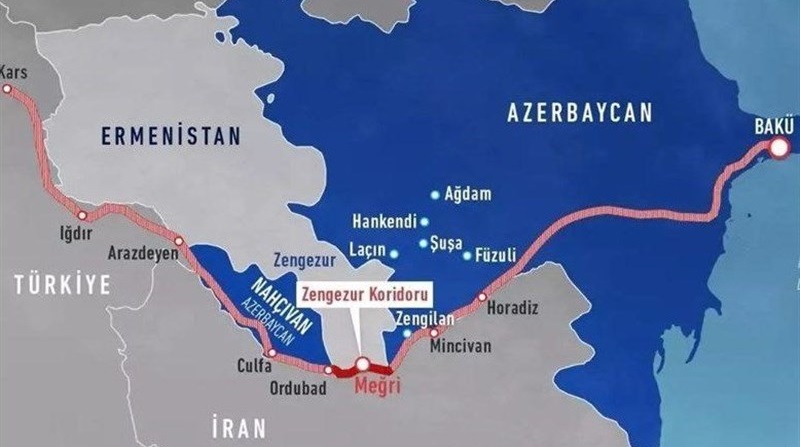
Source: Iranpress
–To understand U.S. intentions, we must ask: Who benefits from the Zangezur Corridor? Once opened, it would allow Chinese goods to reach Europe via the Turkic republics and the Caspian Sea. This benefits China and also serves Turkish interests, as it connects us with our Turkic brothers by land.
Countries like Azerbaijan, Turkmenistan, Kyrgyzstan, Kazakhstan, and Uzbekistan would be able to export their goods globally much more efficiently. The U.S. wants to lease the corridor not for its own logistical needs, but to prevent China from growing stronger. China currently relies on sea and air routes, which are costly and slow. So, it supports the corridor.
Meanwhile, the U.S. seeks to contain both China and Russia strategically. By renting this corridor for 100 years, Washington aims to restrict China’s growth and place long-term obstacles before Russia.
Russia, despite being tied down in Ukraine, will eventually reassert itself in the region. When that time comes, this corridor would be just as important for Moscow — as a link to China and the Turkic world. So, the U.S. sees long-term strategic value in blocking it.
I commend President Ilham Aliyev for his clear and firm rejection of the U.S. proposal. No state should allow foreign powers to dominate its territory. The U.S., once it enters a region, behaves like a virus.
–Do you think tensions between Azerbaijan and Russia are escalating or staying the same? What might happen next?

Source: APA
–“You can’t dry today’s laundry with yesterday’s sun.” The conditions have changed. Russia, especially since the Soviet era, has treated countries like Azerbaijan as part of its backyard and tried to keep them close.
But Russia’s methods are neither polite nor lawful — they reflect lingering imperial ambitions. Russia continues to act toward Azerbaijan and others in this way.
A hostile relationship between Baku and Moscow benefits no one. But any relationship must be between equals — not one of submission.
Azerbaijan has grown stronger, especially by ridding its army of old Soviet weaponry and developing a modern defense system. Its economy has also improved. As a result, Azerbaijan now speaks out for its just cause with greater confidence and strength — something it couldn’t do in the past.


Similar news