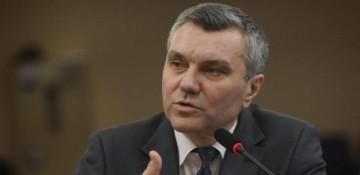
“Trump wants a deal with Russia to fight China” — Jakub Korejba explains Ukraine plan


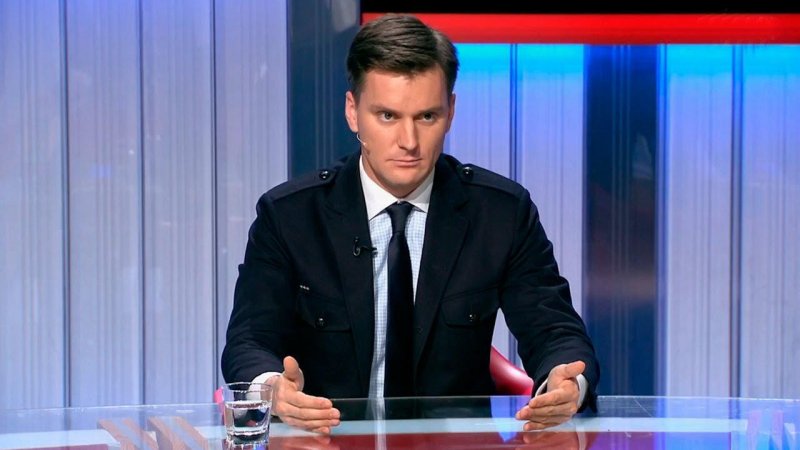
In a world where the boundaries of conflict increasingly run not along maps but along lines of interest, Central and Eastern Europe has become the space where the toughest geopolitical projects of our era collide. Poland and Russia, two states that for centuries have represented opposing models for the region, are now turning their uneasy dialogue into a test of the wider European order. Against this backdrop, the words of those who understand Warsaw’s logic from within take on particular importance.
News.Az spoke with Polish political analyst Jakub Korejba, a commentator unafraid of sharp formulations and frank assessments. His perspective offers a view of current developments in Ukraine, Europe, and Russia without illusions, yet with uncommon analytical precision.
– How do you assess Trump’s “Ukraine plan”? What does this document reveal about the U.S. approach to the conflict?

Source: Reuters
– First of all, we must understand the main point: neither Ukraine’s independence nor its long-term interests are priorities in U.S. foreign policy. Trump’s plan consists of 28 points, each of which reflects purely American rationality, not the wishes of Kyiv or Moscow. Its author is the U.S. president and his circle, and it is written according to the logic of American influence.
The United States views Russia, Ukraine, and the conflict itself only as instruments — mechanisms for advancing its own interests. For Washington, this is a local confrontation between two post-Soviet states that will not escalate into a world war, which means it can be managed: prolonged, shortened, or manipulated, depending on U.S. benefit.
The second important conclusion is that America does not see Ukraine as part of the West, either strategically or economically. The country wants to join NATO but cannot: it lacks the internal conditions and governance stability. This was evident before the war, and during the war the situation has not improved. Americans admit into Western structures only those who both want to join and are capable of doing so. Ukraine wants to, but cannot; Russia could, but does not want to.
Hence the logic of Trump’s plan: Ukraine is a buffer zone between Russia and the American sphere of influence in Europe. Poland, the Baltic states, and Romania — these are “ours.” Ukraine, Belarus, and Moldova — they are not.
Finally, the document clearly reflects Trump’s desire to execute a “reverse Kissinger” — to quickly seal a grand bargain with Russia in order to gain its support in the global struggle against China. To do that, he needs to end the war as quickly as possible, and he does this at the expense of both Kyiv’s and Moscow’s interests.
– Can we say that the U.S. is indeed ready to leave Ukraine in a “gray security zone”?

Source: BBC
– Yes, that is exactly the case. The U.S. treats Ukraine as a geopolitical territory between two worlds, not as a future member of NATO or the EU. And this is not only the result of the current war. It stems from Ukraine’s foreign policy in the 1990s and 2000s, when Kyiv practiced multivectorism, trying to sit on two chairs at once — between the West and Russia. People said, “We need to go to NATO,” but the Ukrainian elites were thinking about something else.
Now the price of this multivectorism has become obvious: the U.S. is not ready to integrate a state that cannot ensure basic institutional stability.
That’s why Washington sees Ukraine not as a future part of the West but as a buffer, a sanitary cordon. The U.S. is not making strategic investments there — it is managing the situation, not building a long-term partnership.
– Recently, the Polish ambassador was attacked in St. Petersburg. Can we say that Russian-Polish relations have reached rock bottom?

Source: mezha.net
– It sounds emotional, but it is incorrect. The attack is a tragic and unacceptable incident, but it is not rock bottom — merely another manifestation of objective reality.
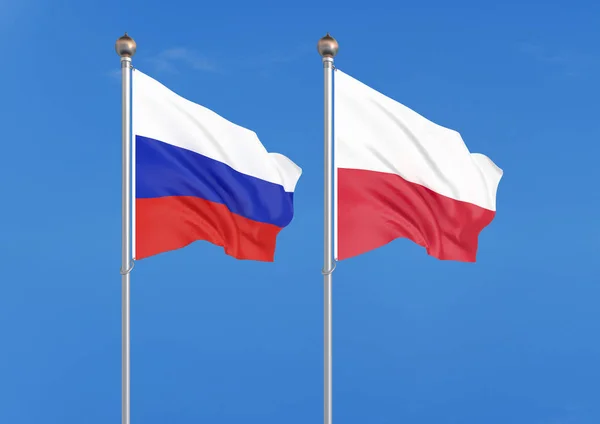
Russian-Polish relations have always been conflict-driven. This is not about hatred, Russophobia, or Polonophobia — it is about geopolitical position. Russia and Poland are two countries that for centuries have offered mutually exclusive models for organizing Central and Eastern Europe.
Russia sees the region between Germany and Russia one way. Poland sees it another way. And these two projects cannot coexist. In game theory, this is called a “zero-sum game”: the victory of one is automatically the defeat of the other.
That’s why conflicts repeat themselves for hundreds of years. Ukraine, for example, could theoretically avoid such a collision. But Russia and Poland cannot.
Today, tensions are rising because Russia is deeply bogged down in the Ukrainian war, essentially “stuck”, while also losing positions elsewhere. Poland, on the contrary, is increasing its influence. This generates irritation and emotional outbursts in Russia.
So the attack is not “rock bottom,” but a symptom of chronic geopolitical confrontation.
– In your opinion, what could change Russian-Polish relations? Is a compromise possible?
Source: TASS
– Not in the coming decades. Compromise is impossible by the nature of the relationship itself.
As I said, Russia and Poland are two countries with incompatible geopolitical projects. Their interaction is an eternal argument over what Eastern Europe should look like.
Until one of these projects defeats the other — through economic, political, or military-strategic superiority, relations will remain tense, conflictual, and sometimes aggressive. Emotions are secondary. This is not about hatred or even history, although history plays a part. This is about geography and strategy.
Change is possible only when one side achieves a major victory. Until then, tension will remain the norm.


Similar news