US wants to punish China for COVID-19: Is Wuhan solely to blame?



By Tural Heybatov
On Monday, a detailed report from members of the U.S. House of Representatives was published, naming China as responsible for the global spread of COVID-19. This report, which took two years to compile, asserts that the virus most likely originated from a laboratory in Wuhan, China. The report suggests that an incident in the Wuhan Institute of Virology may have triggered the pandemic, citing claims of inadequate biological safety standards at the facility. The document notably emphasizes that, based on nearly all scientific criteria, if evidence for a natural origin existed, it would have surfaced by now. However, these conclusions rely heavily on terms such as "likely," "apparently," and "probable," leaving room for interpretation and debate.
In 2021, the World Health Organization (WHO), in collaboration with Chinese authorities, released a report following an international mission to Wuhan. This report concluded that the most likely scenario for the origin of COVID-19 involved the virus being transmitted from bats to an intermediary species, which subsequently infected humans. Despite this conclusion, the lab-leak theory continued to garner attention. Genome sequencing confirmed that the virus was a betacoronavirus, a category extensively studied at the Wuhan Institute of Virology.The WHO sent a special commission to Wuhan in early 2020 to assess the lab-leak theory. However, the commission’s findings did not substantiate this hypothesis. Despite the lack of conclusive evidence, the U.S. government remained persistent in advocating this theory. Additionally, it emerged that American institutions had indirectly financed some research activities at the Wuhan Institute. Specifically, the National Institutes of Health (NIH) had provided grants to the EcoHealth Alliance, a non-governmental organization, which subsequently channeled funds to Wuhan's virology lab. This funding became a focal point in debates over U.S. involvement in potentially risky research abroad.
In July 2023, the United States ceased its funding for the Wuhan Institute of Virology after the lab failed to provide the NIH with requested documentation. Reports about safety concerns at the facility only intensified the scrutiny. Earlier in March 2023, FBI Director Christopher Wray reiterated the hypothesis that COVID-19 could have originated from a lab incident in Wuhan. His statement reignited discussions about the role of laboratory research in the pandemic.
Adding to the controversy, some theories suggested that the virus was developed as part of a secretive Chinese research program, separate from U.S. funding. In her book, What Really Happened in Wuhan: The Cover-Ups, the Conspiracies, and the Classified Research, journalist Sharri Markson argued that the U.S. had unknowingly supported controversial experiments in Wuhan. According to her, the Wuhan lab’s work was integrated into a secret Chinese version of the Global Virome Project (GVP), an international initiative to identify viruses with pandemic potential. Markson claimed that by 2018, China had launched its independent version of the GVP without U.S. oversight.
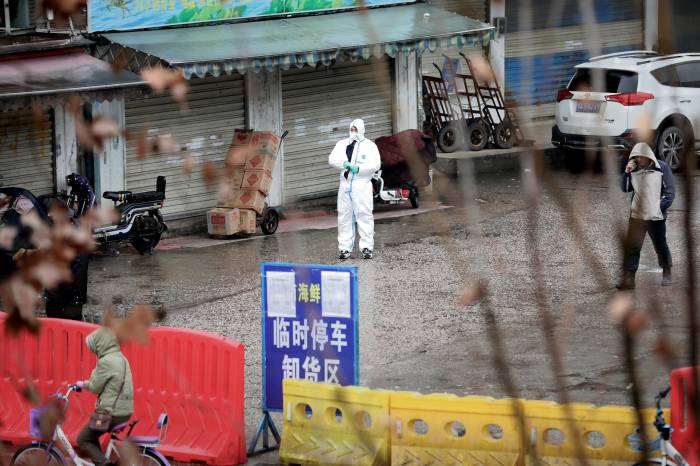
Reports indicated that alongside China’s National Natural Science Foundation, the NIH was a significant contributor to SARS-related research in Wuhan. Moreover, representatives from the NIH and the University of Texas Medical Branch in Galveston had reportedly visited the Wuhan lab as part of collaborative projects. These revelations raised questions about the extent of international cooperation and accountability in virological research.
When the pandemic began to unfold in late 2019, then-U.S. President Donald Trump was quick to assign blame to China. His administration argued that Beijing’s actions—or lack thereof—had facilitated the virus’s spread. Trump’s rhetoric intensified tensions between the two superpowers, framing China as a central adversary during his presidency. Critics noted that this narrative also served domestic political purposes, shifting focus from the U.S. response to the pandemic.
The lab-leak theory gained further traction as investigations revealed that Wuhan’s research included efforts to enhance viral functions—a controversial practice known as "gain-of-function" research. Notably, the U.S. had paused similar research domestically in 2014 due to safety concerns, only to resume it in 2017. By 2018, the Wuhan lab reportedly began working with live viruses under projects partly funded by the U.S. This timeline fueled allegations that international research practices may have indirectly contributed to the outbreak.
The congressional report highlighted that the U.S. suffered significant financial losses during the pandemic, including over $190 billion lost to fraudulent schemes. Some experts speculate that Washington may seek to recover part of this amount by holding Beijing accountable for the pandemic. Such efforts could involve demands for compensation for the economic and human toll inflicted by COVID-19. While these intentions remain speculative, the Trump administration’s history of prioritizing China as a geopolitical rival suggests that similar accusations may resurface during Trump’s 2024 presidential campaign.
As debates over COVID-19’s origins persist, global health authorities warn of new pandemic threats on the horizon. The WHO has flagged potential risks from H5N1 avian influenza, a new variant of smallpox spreading in Central Africa, and the Marburg virus—a deadly pathogen similar to Ebola . The first outbreak of the Marburg virus was reported in October 2024 in Rwanda , putting several African regions at risk. Given the virus’s ability to spread between humans, epidemiologists anticipate outbreaks of Marburg fever in various parts of the world.
These looming threats underscore the need for enhanced global collaboration in pandemic preparedness. Experts argue that lessons from COVID-19 must inform future strategies to mitigate risks posed by emerging infectious diseases. Ironically, the controversies surrounding Wuhan’s research reflect the broader challenges of balancing scientific exploration with safety and ethical considerations.
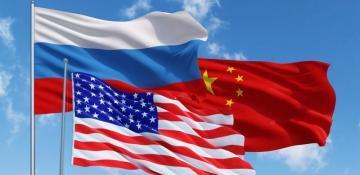
The ongoing debates over COVID-19’s origins reveal deeper geopolitical tensions between the U.S. and China. While the pandemic’s immediate threat has subsided, its legacy continues to shape international relations and public health policies. As the world braces for potential new pandemics, the questions raised by COVID-19—about transparency, accountability, and global cooperation—remain as pressing as ever.


Similar news