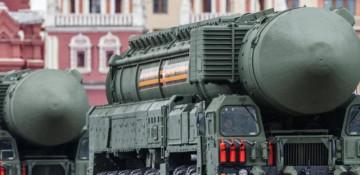
What prompted Russia to act so radically. Why "Oreshnik"?


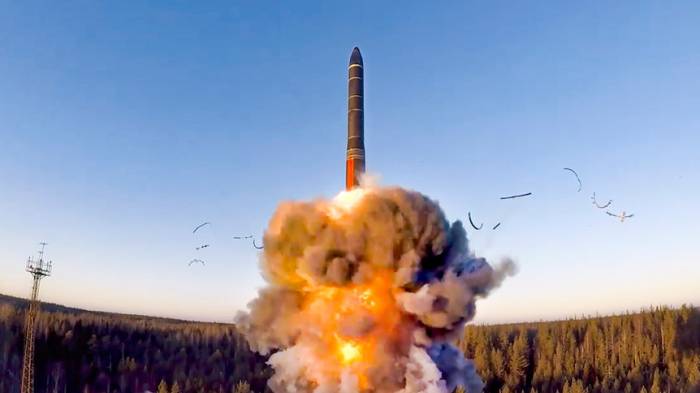
A ground-based intercontinental ballistic missile was launched from the Plesetsk facility in north-western Russia in December 2020. Photo: Russian Defence Ministry Press Service
By Asim Mustafayev
On November 21, Russia launched another strike on Ukraine, drawing significant attention both domestically and internationally. This time, the Russian military claimed to have used its latest development—a medium-range ballistic missile called “Oreshnik.” This strike became a pivotal event, not only in the context of the ongoing conflict but also in the broader geopolitical landscape. However, the question arises: what prompted Russia to take such a drastic step?
According to President Vladimir Putin, the strike was a retaliatory measure against Ukraine’s use of long-range weaponry supplied by the United States and the United Kingdom. He pointed to missile attacks that occurred on November 19 using ATACMS systems and on November 21 with Storm Shadow and HIMARS missiles. These strikes had specific consequences for Russian territory. In the Bryansk region, a munitions depot caught fire following a strike. While no significant destruction was reported, the incident highlighted the vulnerability of such facilities. In the Kursk region, one of the command posts of the "Sever" grouping was targeted, resulting in several fatalities, including security personnel and maintenance staff.Putin explained that the development of medium- and shorter-range missiles began in response to U.S. plans to produce and deploy similar missiles in Europe and the Asia-Pacific region. He emphasized that this was a necessary measure to maintain strategic balance. “The development of medium- and shorter-range missiles is our response to U.S. plans to produce and deploy such weapons in Europe and the Asia-Pacific region,” the Russian president stated.
Putin described the “Oreshnik” missile system as a cutting-edge development, a claim that sparked debate. Ukrainian experts analyzing debris from the strike in Dnipro suggested that some components of the missile dated back to the 1990s. This led to speculation that “Oreshnik” is not an entirely new system but rather a modernized version of older ballistic missiles. Ukrainian military analysts believe that an intercontinental missile may have been adapted for medium-range purposes, allowing Russia to showcase its technological prowess without creating a system from scratch.
Despite the technological features of “Oreshnik,” questions remain about its actual combat significance. Ukrainian and Western military analysts suggest that the missile may have been equipped with a non-lethal payload during the attack. This theory is supported by the absence of large-scale destruction or numerous casualties. Analysts view this action as a political demonstration aimed at exerting psychological pressure on the Ukrainian population. In the context of a transitional period in the U.S., with changes in leadership, Moscow may have calculated that Western support for Ukraine would waver.
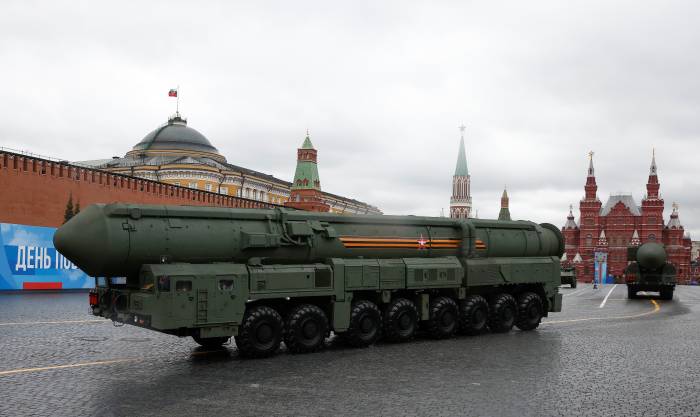
Russian Yars intercontinental ballistic missile systems drive along Red Square during a military parade on Victory Day, which marks the 76th anniversary of the victory over Nazi Germany in World War Two, in central Moscow, Russia May 9, 2021. Photo: REUTERS
Some experts emphasize that such actions by Russia do not fundamentally alter the balance of power in the region. They argue that the likelihood of nuclear escalation resulting from such strikes remains extremely low. Despite frequent statements by Russian officials about the potential use of nuclear weapons, this rhetoric is perceived as a tool to deter the West from supplying arms to Ukraine. Analysts see this as a continuation of a "nuclear blackmail" strategy aimed at raising the stakes in the geopolitical game without actual plans to deploy nuclear arsenals.
European military experts also noted that the “Oreshnik” strike does not indicate significant changes in Russia’s military strategy. They believe it is more about pressuring the West, especially amid increasing volumes of military aid to Ukraine. European countries supplying advanced weaponry, such as the United Kingdom, France, and Germany, may have been perceived by Moscow as targets for demonstrating its readiness to escalate the conflict. Using long-range ballistic missiles serves not only military objectives but also a political purpose—to intimidate Western governments by emphasizing the possibility of strikes on European or British territory.
Interestingly, within Europe itself, many analysts interpret this event as a call to strengthen their own defenses. There is growing interest in creating a pan-European missile defense system capable of effectively protecting critical infrastructure. The “Oreshnik” strike is seen as a reminder that the threat of ballistic missiles remains relevant amid rising tensions between NATO and Russia.
Thus, the deployment of Russia’s new medium-range missile should be viewed not only in the context of the war in Ukraine but also as part of a broader strategy to exert pressure on the West. Moscow seeks to showcase its capacity for escalation, hoping such actions will prompt Western countries to reassess their roles in the conflict and potentially reconsider arms supplies to Ukraine.
However, most experts believe the “Oreshnik” strike failed to achieve its goals. In response, the U.S. and its allies reaffirmed their commitment to supporting Ukraine, emphasizing that Russia’s tactics of intimidation will not reduce military aid. On the contrary, such actions by Moscow only strengthen the resolve of Western countries to continue assisting Kyiv and bolster the defense of NATO’s eastern flank.
The “Oreshnik” missile strike was less of a military event and more of a political act. It aimed to create tension and instill fear both within Ukraine and on the international stage. However, its consequences are likely to be the opposite of Moscow’s expectations, reinforcing the determination of Ukraine and its allies to resist further pressure.


Similar news