When mosques burn and children die: Who will stop the madness?


Editor's note: Qaiser Nawab is the President of the Pakistan-Azerbaijan Alumni Association PAAA, and an expert on Azerbaijan and Central Asia. The article expresses the personal opinion of the author and may not coincide with the view of News.Az.
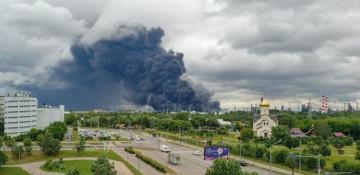
The early hours of May 6–7, 2025, will remain etched in the minds of many in South Asia as a night of unnecessary suffering and avoidable escalation. As civilians in Muridke, Kotli, Muzaffarabad, and Bahawalpur slept, Indian fighter jets crossed the Line of Control, targeting what New Delhi claimed were “terrorist infrastructures.” Instead, the world witnessed the tragic bombing of civilian areas—including a mosque—resulting in the loss of innocent lives, including women and children.
As Chairman of the Belt and Road Initiative for Sustainable Development (BRISD), and as a Pakistani deeply invested in the pursuit of peace and multilateralism, I must express both my sorrow and condemnation. These actions not only violate Pakistan’s sovereignty but also contravene the spirit of the UN Charter and international humanitarian law.
The Indian government’s justification for this strike—retaliation for the April 22 attack in Pahalgam—fails the test of proportionality and due diligence under international law. That tragic attack, which claimed 26 lives, has yet to be investigated transparently or subjected to independent scrutiny. Instead of pursuing legal recourse through bilateral or international mechanisms, India opted for unilateral military action.
In response, the Pakistan Armed Forces, exercising their legitimate right under Article 51 of the UN Charter, acted with restraint—but with necessary resolve. According to official statements, corroborated by multiple media outlets, the Pakistan Air Force (PAF) successfully intercepted and downed at least five Indian fighter jets, including three Rafale aircraft, one SU-30 MKI, one MiG-29, and one Heron combat drone. A key Indian Army command post was also targeted in the counteraction.
This was not an act of retaliation, but an act of self-defense—executed with surgical precision and a clear message: Pakistan seeks peace but will not compromise its sovereignty.
As Chairman of BRISD, I have long championed connectivity, sustainable development, and regional cooperation as the alternatives to hostility. The events of May 6–7 underscore just how far we remain from those ideals. Every airstrike, every civilian casualty, and every escalation pulls us further away from the shared prosperity South Asia so desperately needs.
This is not merely a territorial conflict. The ripple effects of military escalation are felt in water security, trade, environmental degradation, and youth mobility across the region. India’s decision to halt water flow through the Baglihar Dam on the Chenab River—a unilateral move—further exacerbates environmental and human insecurity in downstream Pakistan. Hydrologists warn that such disruptions could reduce irrigation water availability to over 5 million acres of farmland, threatening the livelihoods of thousands of farmers in Punjab and Sindh.
Such water manipulation undermines the spirit—if not the letter—of the Indus Waters Treaty, one of the few successful bilateral agreements on water management. Weaponizing water is not only unethical—it is dangerous.
My deepest concern remains with the innocent civilians—especially in Kashmir. In Muzaffarabad, entire families have been displaced, homes turned to rubble, and a sacred mosque reduced to debris. In times of war, the first casualty is truth—but the second is always humanity.
Targeting civilian infrastructure and religious sites violates the Geneva Conventions and risks expanding this conflict into uncharted and catastrophic territory. These are not acts of strength—they are acts of savagery.
It is time for the world to take principled notice. I call upon the United Nations, the Organization of Islamic Cooperation (OIC), the Shanghai Cooperation Organization (SCO), the Commonwealth, and other multilateral forums to denounce this violence and facilitate an immediate cessation of hostilities.
We need not choose sides—we need to choose peace. Silence from the international community will only embolden further violations.
Pakistan, for its part, has consistently extended the hand of dialogue. Whether in matters of climate, trade, health, or geopolitics, Islamabad has advocated for inclusive diplomacy. We are not afraid of confrontation—but we much prefer cooperation.
There is still time to step back from the brink. Diplomatic engagement—however difficult—remains the only sustainable solution. Track II diplomacy, backchannel negotiations, and neutral mediation by trusted third parties must be revived and actively supported.
Moreover, civil society organizations, youth forums, and regional think tanks should be empowered to facilitate dialogue. Having worked extensively with Indian youth at international conferences, I know firsthand the power of shared humanity. Peace-building must not be left solely to politicians and generals—it must be democratized and decentralized.
If India truly seeks to lead in the region, then it must also lead in maturity, responsibility, and diplomacy.
South Asia is home to one-fifth of humanity. We cannot afford to be prisoners of our past. It is time to embrace a future rooted in mutual respect, the rule of law, and shared development.
Let May 6–7 not be remembered for the bombs that fell, but for the call to reason that followed.
Let us work together—not as adversaries, but as neighbors—with a common goal: peace, dignity, and prosperity for all.
Pakistan stands ready. The question is: will others join us in choosing the path of peace?
(If you possess specialized knowledge and wish to contribute, please reach out to us at opinions@news.az).


Similar news