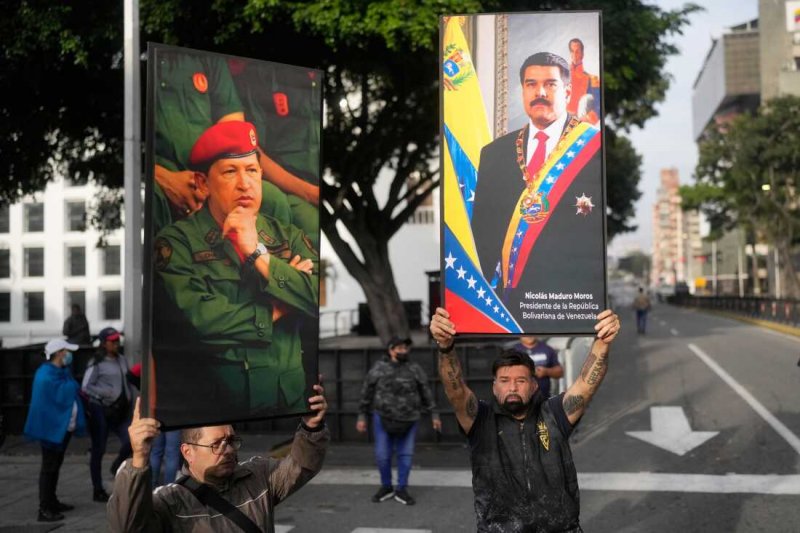
The collapse of power in Venezuela and the removal of Nicolás Maduro marked a watershed moment for Latin America and for the broader architecture of global power politics. For years, Venezuela had been treated as a frozen crisis — isolated, sanctioned, weakened, yet politically intact. Its sudden collapse demonstrates that the era of indefinite containment is ending. In its place emerges a far more assertive logic: when sanctions and diplomatic pressure fail to deliver results, Washington is increasingly willing to accelerate outcomes.
This shift raises a fundamental question with implications far beyond Venezuela: which country could be next?
From containment to acceleration
For decades, U.S. strategy toward unfriendly regimes followed a familiar pattern: economic pressure, diplomatic isolation, support for civil society, and the long-term expectation of internal decay. Venezuela’s collapse suggests a recalibration. The new logic prioritizes speed, regional signaling, and deterrence. It sends a message not only to adversaries but also to allies: prolonged ambiguity is being replaced by clearer red lines.
This does not mean that every targeted country will face military intervention. Rather, it indicates a broader spectrum of pressure — political, financial, legal, informational, and covert — applied with greater intensity and coordination.
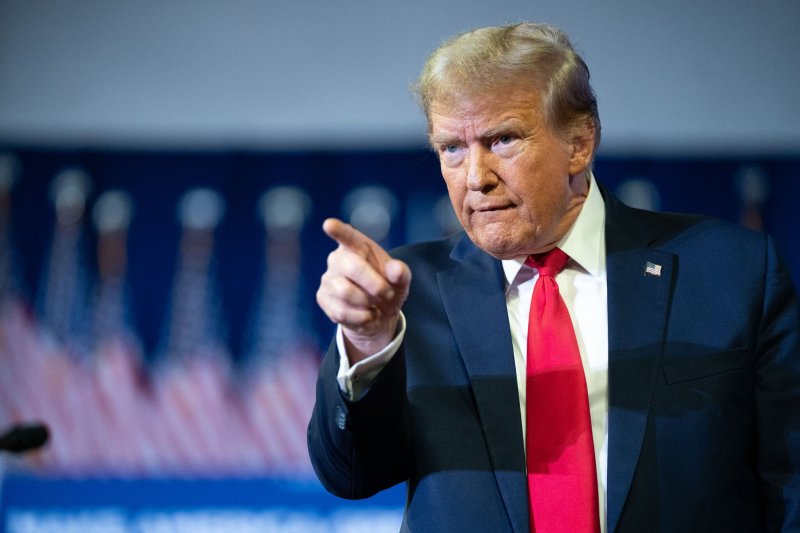 Photo: The New York Times
How countries enter the “risk zone”
The Venezuelan case reveals a consistent framework used by Washington to assess risk and opportunity. Countries most likely to face intensified pressure tend to share several characteristics:
- strategic relevance (energy, resources, logistics, geography);
- political divergence from U.S. preferences;
- cooperation with rival powers such as China, Russia, or Iran;
- internal fragility — economic distress, elite fragmentation, or public dissatisfaction.
None of these factors alone is decisive. Together, however, they create a window in which external pressure can be both justified and effective.
Iran — the central systemic challenge
Iran remains the most significant long-term challenger to U.S. influence outside the great power competition with China. Unlike Venezuela, Iran is not merely a regional actor. It shapes security dynamics across the Middle East, influences global energy markets, and maintains an extensive network of regional allies.
However, Iran also represents the most dangerous scenario. Direct military confrontation risks regional escalation, global economic shock, and unpredictable consequences. As a result, Washington’s strategy toward Iran is likely to remain indirect: tightening economic pressure, reinforcing regional containment, and exploiting internal tensions, particularly economic grievances and social dissatisfaction.
Rather than sudden regime change, the U.S. objective appears to be strategic paralysis: limiting Iran’s ability to project power while increasing the internal cost of confrontation.
Cuba — vulnerability without protection
Cuba’s position has changed dramatically. For decades, it survived through external patronage, first from the Soviet Union and later indirectly through allies such as Venezuela. Today, those safety nets are gone.
The country is experiencing a deep structural crisis marked by energy shortages, declining productivity, currency instability, and a mass exodus of its population. Unlike earlier periods, the Cuban leadership now faces exhaustion rather than ideological confrontation.
This makes Cuba a particularly sensitive case. Washington does not need dramatic action. Sustained pressure, selective engagement, and calibrated incentives could gradually reshape the internal balance. The risk for Havana is not invasion but erosion — a slow loss of control under economic and social strain.
Colombia — pressure through security narratives
Colombia represents one of the most revealing developments in the post-Venezuelan environment. Historically framed as a key U.S. ally, Colombia is now increasingly discussed through the lens of security failure and narcotics production.
Statements by U.S. President Donald Trump criticizing Colombia over cocaine flows are not merely rhetorical. They reopen a familiar framework in U.S. policy: the use of anti-narcotics discourse as a justification for external pressure.
What makes this particularly significant is that such pressure does not require ideological confrontation. It can be framed as technical, security-driven, and humanitarian, while still enabling deep political leverage. Colombia’s proximity to Venezuela further increases its strategic relevance in any broader regional recalibration.
Nicaragua — the laboratory effect
Nicaragua’s importance lies less in its size and more in its function. Under President Daniel Ortega, the country has become a symbol of entrenched authoritarianism in Central America.
Historically, smaller states like Nicaragua have served as testing grounds for pressure strategies. Sanctions, diplomatic isolation, financial restrictions, and support for opposition movements can be applied at relatively low cost while sending signals to neighboring countries.
Success in Nicaragua would reinforce the credibility of pressure elsewhere. Failure would expose the limits of U.S. leverage. Either way, it remains a key indicator of Washington’s evolving toolkit.
 Photo: Screen grab
Bolivia — resources as destiny
Bolivia’s relevance is defined by the future rather than the present. Its lithium reserves place it at the center of global competition over energy transition technologies. As demand for electric vehicles and energy storage accelerates, access to lithium becomes a strategic concern.
In this context, political instability in Bolivia is no longer a domestic issue. It intersects with global supply chains, industrial policy, and strategic autonomy. Any government perceived as limiting Western access to these resources may face growing external pressure.
Bolivia illustrates a broader trend: in the 21st century, resource geography increasingly shapes political vulnerability.
The post-Maduro moment signals a transition in global power behavior. The United States is moving away from indefinite containment toward selective acceleration, choosing moments and locations where pressure can yield decisive results.
Iran remains the central systemic adversary. Cuba embodies symbolic erosion. Colombia represents pressure through security frameworks. Nicaragua serves as a testing laboratory. Bolivia reflects the geopolitics of future resources.
The critical question is no longer if pressure will be applied, but how precisely, how quickly, and with what regional consequences.
In this new phase, stability is provisional, alliances are conditional, and geopolitical patience is increasingly in short supply.
News.Az