Who controls Venezuela’s oil — and what changes after Maduro’s removal


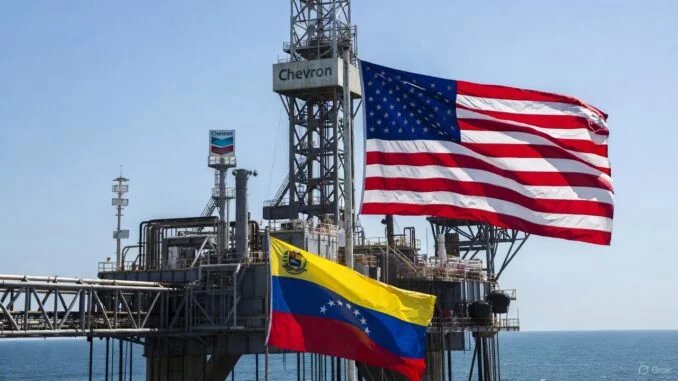
Venezuela’s oil sector has long ceased to be merely an economic industry. Under sanctions, international isolation, and chronic underinvestment, it has turned into a core geopolitical instrument, where access to oil fields reflects political alignment rather than market logic. Formally, all oil assets remain under the control of the state company PDVSA, yet the real structure of production in 2024–2025 reveals a clear hierarchy of foreign access, News.Az reports.
How much Venezuela produces — and why it cannot cope alone
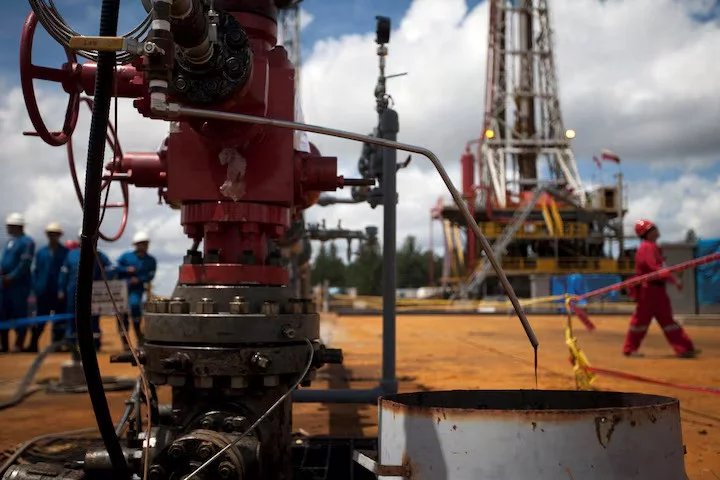
Crude oil drips from a valve at an oil well operated by Venezuela's state oil company PDVSA in Morichal July 28, 2011. REUTERS/Carlos Garcia Rawlins
In 2024, Venezuela’s average crude oil production stood at around 900,000–1,000,000 barrels per day, periodically approaching the symbolic threshold of one million bpd. This marked a recovery from the collapse of the early 2020s but remained far below historical peaks. The rebound was driven largely by foreign joint ventures, which provide capital, management capacity, and — most critically — technology for heavy and extra-heavy oil production.
Without these partners, a significant share of Venezuela’s oil output would be technically unviable.
The United States: largest volumes, shallowest political access
The logo of Venezuelan state oil company PDVSA is seen on a fuel tank truck, in Caracas, Venezuela May 14, 2025. REUTERS/Leonardo Fernandez Viloria
Despite sanctions and confrontational rhetoric, the United States is the largest foreign contributor to Venezuela’s oil production by volume. This involvement is concentrated entirely in one company: Chevron.
In 2024, PDVSA–Chevron joint ventures produced around 200,000 barrels per day. By early 2025, output rose to approximately 230,000–240,000 barrels per day, accounting for roughly one quarter of Venezuela’s total production. Chevron operates in the Maracaibo Basin and the Orinoco Oil Belt, where U.S. technology is essential for sustaining output from heavy crude fields.
Yet American access remains narrow, conditional, and license-based. Chevron does not control assets, operates strictly under U.S. Treasury authorisations, and does not make direct cash payments to the Venezuelan state. In effect, the U.S. extracts the largest volumes while holding limited institutional leverage over the sector.
China: fewer barrels, deeper strategic control
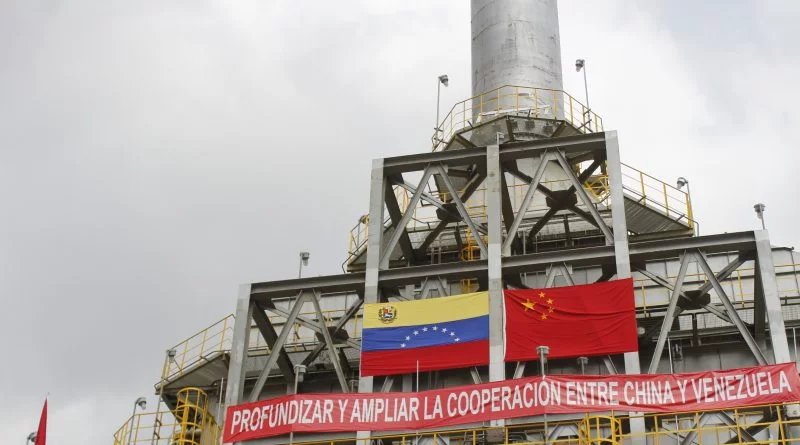
Source: venezuelanalysis.com
China’s role follows an entirely different logic. Through CNPC and affiliated structures, Beijing gained access to key blocks in the Orinoco Oil Belt, Venezuela’s most resource-rich province.
In 2024–2025, Chinese joint ventures produced between 60,000 and 100,000 barrels per day. The flagship Sinovensa project alone delivered around 60,000–65,000 barrels per day during parts of 2024. While these volumes trail U.S. output, the strategic meaning is far greater.
China secured long-term, politically protected access to Venezuela’s most promising reserves, tying oil development to state-to-state loans, infrastructure projects, and diplomatic backing. Unlike Western actors, Beijing imposed no sanctions and no political preconditions, becoming Venezuela’s primary strategic energy partner.
Russia: political ally, limited economic weight
Photo stock
Russia’s presence in Venezuela’s oil sector has diminished since the late 2010s but has not disappeared. Through restructured joint ventures linked to former assets of Rosneft, Russia retains involvement primarily in western Venezuela, including the Boquerón and Perijá areas.
Actual production from these projects in 2024–2025 is estimated at 15,000–20,000 barrels per day. This volume is economically modest but politically meaningful, serving as a channel of geopolitical support rather than a driver of sectoral growth.
Europe: selective access for acceptable partners
The Repsol logo is displayed at a petrol station, in Arriate, Spain March 31, 2025. REUTERS/Jon Nazca
Among European countries, Spain holds the most stable position. Repsol produced around 20,000 barrels per day in 2024–2025 through projects such as Petroquiriquire, La Ceiba, and Tomoporo. Madrid’s comparatively softer stance toward Caracas enabled Repsol to remain where other European firms withdrew.
Italy is represented by Eni, which at various points delivered up to 40,000–50,000 barrels per day, including linked oil projects. Nevertheless, Italy’s role remains secondary and does not extend to Venezuela’s most strategic blocks.
After Maduro’s removal: a new oil power architecture
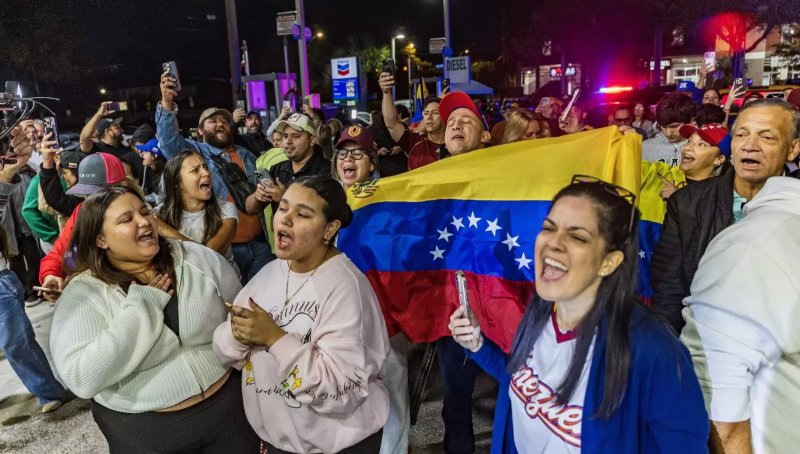
Following the removal of Nicolás Maduro, as announced by Donald Trump, Venezuela entered a fundamentally different political phase — one in which the oil sector becomes the central pillar of governance and external alignment.
With control over state institutions comes control over PDVSA, licensing mechanisms, export flows, and, crucially, direct leverage over oil wells and producing fields. This marks a structural shift in the balance of power within Venezuela’s energy system.
Under these conditions, U.S. access to Venezuela’s oil fields is no longer narrow or provisional. It becomes deep and broad — institutionally, legally, and strategically. What previously functioned as a limited, licence-driven presence now evolves toward de facto dominance, granting American companies priority access to the most valuable assets, particularly in the Orinoco Oil Belt.
This transformation inevitably forces a reassessment of Chinese and Russian roles. Their previously privileged access, built on political exclusivity, becomes subject to revision, renegotiation, or gradual displacement under the new power structure.
In this new reality, Venezuelan oil ceases to be an exception managed within a sanctions framework and instead emerges as a core instrument of U.S. influence in the Western Hemisphere, with American control over oil fields reaching a fundamentally new scale.


Similar news